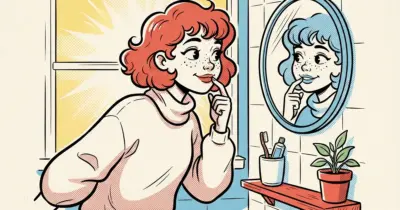
Do I Need Braces Quiz
Notice anything when you chew, talk, or catch your own smile in a mirror? This quiz gives you two separate readings — what you notice day to day, and how the look of your smile actually sits with you — in about 4 minutes. It won’t tell you whether you need braces; that call belongs to a dentist or orthodontist.
This test is not a diagnosis and does not replace a specialist. If something here worries you, talk to a professional.
No sign-up. Your result right away.
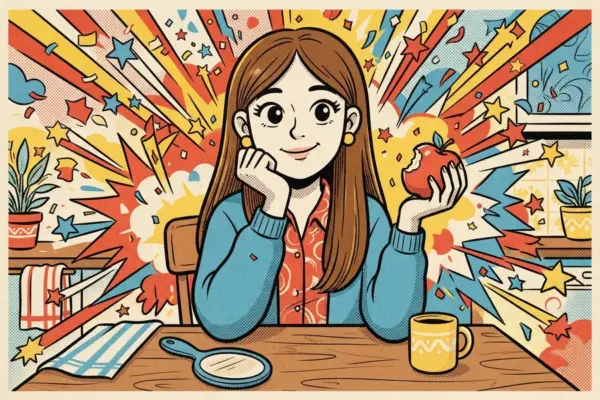
The Detail Hunter
«Nothing about your mouth stays unnoticed for long.»
The test is new — you are among the first hundred to take it.
You clock the little pop in your jaw before your first coffee, and you clock your smile in every store window on the way to work. Both readings came back active this time — what you notice day to day, and what you notice about the way it looks.
Being this observant comes in handy — you're the person who actually notices when something changes, instead of catching it three years later. The downside is that you don't get a neutral day off from noticing — even an ordinary Tuesday comes with your own commentary.
None of this needs to turn into a verdict tonight. It's exactly the kind of thing to bring up next time you're already in a dentist's or orthodontist's chair — no rush, no drama, just two observations you're allowed to mention.

The Easy Grinner
«Your smile has nothing to prove and it knows it.»
The test is new — you are among the first hundred to take it.
Someone snaps a photo mid-laugh, teeth and all, and you don't even glance at it twice before reposting it. Meanwhile your jaw's been clicking on and off for weeks — a real signal, just one that has nothing to do with how any of it looks to you.
That kind of comfort with your own smile is genuinely rare. It doesn't make your clicking jaw any quieter, though — how your smile looks and what your jaw is actually doing are two separate questions.
The jaw click still belongs on the list for your next dentist visit, not because anything looks wrong, but because a clicking joint is its own separate matter to bring up. Smile unbothered in the meantime.

The Smile Curator
«Nothing's wrong with your bite, and that's not the point.»
The test is new — you are among the first hundred to take it.
You chew, talk, and yawn without a single hitch — your jaw's never once complained. And still, you catch your reflection in an elevator mirror and immediately look for the one thing you'd change about your smile.
Wanting something different here doesn't need a functional problem behind it to count — wanting your smile to look different is a complete reason on its own, not a smaller one hiding behind a bigger one. Plenty of people carry exactly this, quietly, for years.
You don't owe anyone an explanation for wanting to like what you see in the mirror. That's reason enough to look into it, on your own terms and your own timeline.

The Steady Smile
«Today, your mouth simply isn't asking for attention.»
The test is new — you are among the first hundred to take it.
You eat an apple straight off the counter, laugh with your whole face at a group dinner, and catch your reflection in a shop window without a flicker of a reaction. Nothing about how your mouth works or how it looks is asking for your attention right now.
This is easy to take for granted exactly because nothing is demanding your attention. Mouths change, habits change, and how you feel about your own smile shifts over the years — which is exactly why checking in now, while everything's quiet, still makes sense.
You don't get a guarantee this stays true forever, and you don't need one — right now, both your readings are quiet, and that's a perfectly good place for you to be.
About this test
How this test works
This quiz is built on the same basic split that professional evaluation of orthodontic treatment need actually uses: one side for function and health signals — the mechanics of chewing, biting, speech, and jaw movement — and a separate side for how much the position or look of the teeth bothers the person looking at them. Both sides here are self-reported, not clinically measured.
The function questions cover everyday chewing, biting, speech clarity, jaw sounds or movement, tooth wear, and how easily the teeth can be cleaned between — things a person notices about their own mouth. The appearance questions cover a person's own reaction to how their teeth look, independent of any of that. The two are scored separately, because they don't necessarily move together.
This quiz can't measure a bite classification, the exact position of a tooth, jaw-joint structure, or anything an X-ray would show. Your age isn't the deciding factor — what matters is whether the gum tissue and jawbone underneath are healthy. That holds whether the person in the chair is eight, eighteen, or eighty. Two sources go further into what an orthodontist actually evaluates and treats and how that evaluation is done, exam and imaging included.
None of this adds up to a diagnosis. This quiz can't determine whether you need braces — that call belongs to a dentist or orthodontist, made in person after an exam and imaging, not to a set of self-reported answers.
Frequently asked questions
Can a quiz really tell me if I need braces?
Not on its own — a checklist like this can only reflect what you've noticed about your own mouth. Turning that into a real answer takes someone trained to examine your bite directly, usually with the help of X-rays.
Do I need braces if my teeth are only slightly crooked?
Slight crowding by itself doesn't answer the question one way or the other. How it actually affects your bite and speech carries weight, and so does how you feel looking at it — a dentist or orthodontist is the one who puts those two things side by side and decides.
Do all crooked teeth need braces?
No. Looks alone don't decide it. Some people have noticeable crowding and nothing about it bothers them — chewing feels normal and the smile doesn't cross their mind. For others, one of those things shows up without the other. So this quiz keeps the two findings apart, rather than guessing they'd match up.
Can adults get braces? Is it too late?
It's not too late. Eligibility comes down to whether your gums and jaw structure are in good shape — not how many birthdays you've had. People begin treatment well into their thirties, forties, and beyond, right alongside kids and teens.
How do I actually know if I need braces?
Pay attention to two separate things. First: what your mouth actually does — chewing, speaking clearly, opening your jaw, cleaning between your teeth, any visible wear. Second: how you feel about the way your smile looks, independent of any of that. Neither one settles it alone; a dental professional weighs both together, in person, with the help of X-rays.
Sources
- Brook, P. H., & Shaw, W. C. (1989). The development of an index of orthodontic treatment priority. European Journal of Orthodontics.
- Cardoso CF, Drummond AF, Lages EMB, Pretti H, Ferreira EF, Abreu MHNG. The Dental Aesthetic Index and Dental Health Component of the Index of Orthodontic Treatment Need as Tools in Epidemiological Studies. International Journal of Environmental Research and Public Health, 2011;8(8):3277–3286. doi:10.3390/ijerph8083277.
- Richmond S, Shaw WC, O'Brien KD, Buchanan IB, Jones R, Stephens CD, Roberts CT, Andrews M. The development of the PAR Index (Peer Assessment Rating): reliability and validity. European Journal of Orthodontics, 1992;14(2):125–139. doi:10.1093/ejo/14.2.125.
Three more tests on the same theme


Breakdown
There's a reason you answer the way you do
Most tests show you a slice of who you are. This one gets to the core: the classic 16-type personality test that goes back to Carl Jung, rebuilt from the ground up and way more accurate. It takes ten minutes, you only ever do it once — and you walk away with an answer most people never quite figure out: why you are the way you are. Why some people just get you, and why with others it's complicated. And that answer won't change: your type is yours for life.
Take the free testHow you compare
The test is new — you are among the first hundred to take it.
Three more tests on the same theme
About this test
How this test works
This quiz is built on the same basic split that professional evaluation of orthodontic treatment need actually uses: one side for function and health signals — the mechanics of chewing, biting, speech, and jaw movement — and a separate side for how much the position or look of the teeth bothers the person looking at them. Both sides here are self-reported, not clinically measured.
The function questions cover everyday chewing, biting, speech clarity, jaw sounds or movement, tooth wear, and how easily the teeth can be cleaned between — things a person notices about their own mouth. The appearance questions cover a person's own reaction to how their teeth look, independent of any of that. The two are scored separately, because they don't necessarily move together.
This quiz can't measure a bite classification, the exact position of a tooth, jaw-joint structure, or anything an X-ray would show. Your age isn't the deciding factor — what matters is whether the gum tissue and jawbone underneath are healthy. That holds whether the person in the chair is eight, eighteen, or eighty. Two sources go further into what an orthodontist actually evaluates and treats and how that evaluation is done, exam and imaging included.
None of this adds up to a diagnosis. This quiz can't determine whether you need braces — that call belongs to a dentist or orthodontist, made in person after an exam and imaging, not to a set of self-reported answers.
Frequently asked questions
Can a quiz really tell me if I need braces?
Not on its own — a checklist like this can only reflect what you've noticed about your own mouth. Turning that into a real answer takes someone trained to examine your bite directly, usually with the help of X-rays.
Do I need braces if my teeth are only slightly crooked?
Slight crowding by itself doesn't answer the question one way or the other. How it actually affects your bite and speech carries weight, and so does how you feel looking at it — a dentist or orthodontist is the one who puts those two things side by side and decides.
Do all crooked teeth need braces?
No. Looks alone don't decide it. Some people have noticeable crowding and nothing about it bothers them — chewing feels normal and the smile doesn't cross their mind. For others, one of those things shows up without the other. So this quiz keeps the two findings apart, rather than guessing they'd match up.
Can adults get braces? Is it too late?
It's not too late. Eligibility comes down to whether your gums and jaw structure are in good shape — not how many birthdays you've had. People begin treatment well into their thirties, forties, and beyond, right alongside kids and teens.
How do I actually know if I need braces?
Pay attention to two separate things. First: what your mouth actually does — chewing, speaking clearly, opening your jaw, cleaning between your teeth, any visible wear. Second: how you feel about the way your smile looks, independent of any of that. Neither one settles it alone; a dental professional weighs both together, in person, with the help of X-rays.
Sources
- Brook, P. H., & Shaw, W. C. (1989). The development of an index of orthodontic treatment priority. European Journal of Orthodontics.
- Cardoso CF, Drummond AF, Lages EMB, Pretti H, Ferreira EF, Abreu MHNG. The Dental Aesthetic Index and Dental Health Component of the Index of Orthodontic Treatment Need as Tools in Epidemiological Studies. International Journal of Environmental Research and Public Health, 2011;8(8):3277–3286. doi:10.3390/ijerph8083277.
- Richmond S, Shaw WC, O'Brien KD, Buchanan IB, Jones R, Stephens CD, Roberts CT, Andrews M. The development of the PAR Index (Peer Assessment Rating): reliability and validity. European Journal of Orthodontics, 1992;14(2):125–139. doi:10.1093/ejo/14.2.125.
