
Percy Jackson Cabin Quiz
Eighteen real cabins at Camp Half-Blood, and exactly one of them is already yours. Answer as yourself, not as who you’d like to be claimed by, and you’ll get an actual cabin match — a name, not a score — in about five minutes. It’s a fan-made sorting quiz, nothing official, just an honest one.
No sign-up. Your result right away.

Hermes
«You were never built to stay in one lane.»
The test is new — you are among the first hundred to take it.
You're the one who ends up knowing half the room by name within ten minutes, who drifts from one group to another without ever picking a side, who can talk to anyone about anything — pure Hermes, and it's never once had to try.
That kind of range is genuinely rare. Most people need years to move this easily between people, tasks, and situations without freezing up. You've just always had it, and it makes you useful everywhere, welcome everywhere, needed everywhere you go.
The catch is the same trait, flipped over: belonging everywhere can quietly mean never fully settling anywhere. You're not lost. You just haven't stopped moving long enough to find out what happens when you do.

Zeus
«You walk in like the room already agreed.»
The test is new — you are among the first hundred to take it.
You're the one already talking before anyone's finished setting up the meeting, already leading before anyone officially asked you to, already three steps into the plan while everyone else is still finding a seat — pure Zeus, and the meeting hasn't even started yet.
You've never had to rehearse this — people fall in line because the certainty reads as real, not performed, and you're already moving on instinct half a beat before anyone else finishes deciding.
Nobody's actually stress-tested that certainty; it just sits there, unchallenged, swelling to fill whatever room you're standing in. It draws more trouble your way than it repels, too — the bigger the presence, the bigger the target painted on it. What are you actually shielding by staying this loud? You haven't once stood still long enough to check.
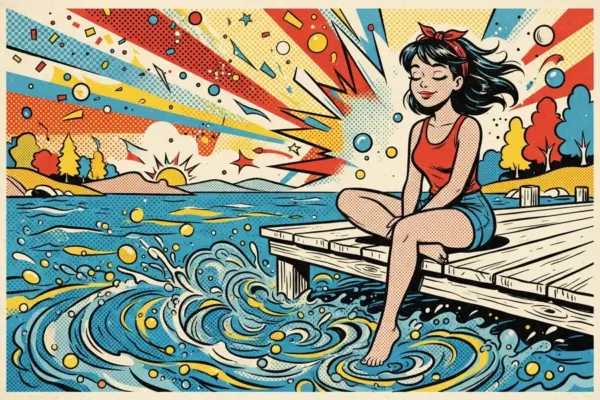
Poseidon
«You're calm on top. Something else runs underneath.»
The test is new — you are among the first hundred to take it.
You're the one who stays eerily level and unbothered while everyone else is losing it completely — pure Poseidon calm sitting right on the surface — right up until whatever's underneath finally surfaces, and even you didn't see it coming.
That's elemental control that was never studied, just there, steady in exactly the conditions that overwhelm everyone else. People relax around you because you make instability look survivable, like it was never really a problem at all.
What doesn't get talked about is that instinct nobody trained can catch even you off guard. The calm is real, and so is whatever it's sitting on top of.
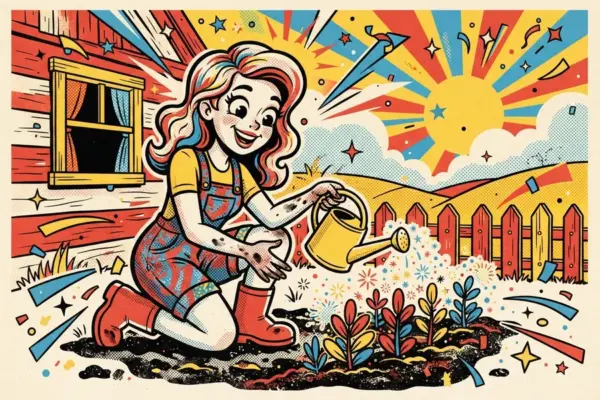
Demeter
«You keep things alive. That's the whole job.»
The test is new — you are among the first hundred to take it.
You're the one who notices the plant nobody's watered, who quietly restocks the snacks before anyone realizes they're gone, still tending to whatever needs tending long after everyone else has moved on — pure Demeter, and nobody had to ask twice.
None of this is about winning or discovering something shiny. You'll skip the flashy find every time if it means something already alive gets to keep breathing another season, and that trade has never once felt like a loss to you.
The flip side shows up the moment somebody suggests tearing out what's already working. You'll defend the old growth long after it's stopped paying you back, mistaking familiar for necessary. What would you actually plant if nothing needed rescuing first? You keep finding reasons to water yesterday's garden instead.
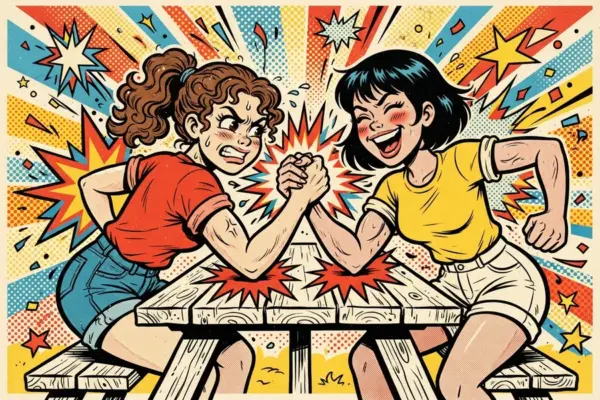
Ares
«You want the fight, not the walkover.»
The test is new — you are among the first hundred to take it.
You're the one who shows up hoping the other side actually brings it, who calls things out the second they go crooked, fearless in exactly the moments everyone else is looking for a way to hang back — pure Ares, no walkover accepted.
Other people brace when pressure lands on them directly; you lean into it, like the whole reason for showing up was finally getting hit with something worth answering.
Standing down doesn't come easily once winning is the only proof you trust. You'll keep swinging long after the real opponent's already walked off, hunting for the next thing worth hitting. Whatever you're actually guarding by refusing to lose, you've never once looked at it head-on.

Athena
«You solve it before anyone else finishes reading the problem.»
The test is new — you are among the first hundred to take it.
You've mapped three moves of a workable plan before your roommate finishes describing what's wrong, picking apart a genuinely hard puzzle out of pure stubbornness — classic Athena — and refusing to leave it sitting half-solved.
That's thinking clearly under complexity, seeing further ahead than the room usually needs — you're the person other people quietly wait on to say what the actual plan should be. It looks easy. It isn't.
The shadow side is that cleverness good enough to solve anything can slide into outsmarting people who never needed to be outsmarted. What do you actually feel the day a problem refuses to have a clean answer? You've never let yourself sit in it long enough to find out.

Apollo
«You're the reason the room's mood just changed.»
The test is new — you are among the first hundred to take it.
You're the one who loses three hours inside a song nobody asked you to learn, who keeps the energy from sagging the second it starts to, pure Apollo, lifting a room or steadying it depending on what it actually needs.
A room's temperature shifts the second you walk in, and you're the reason, whether that means turning the volume up or quietly turning it back down. People remember you were there long after they've forgotten what actually happened.
Take the audience away, though, and something in you goes quiet in a way that isn't restful. You've shaped the whole act around somebody depending on you, and an empty room doesn't know what to do with you yet. What's actually underneath once the lights go off? You keep changing the subject before you find out.
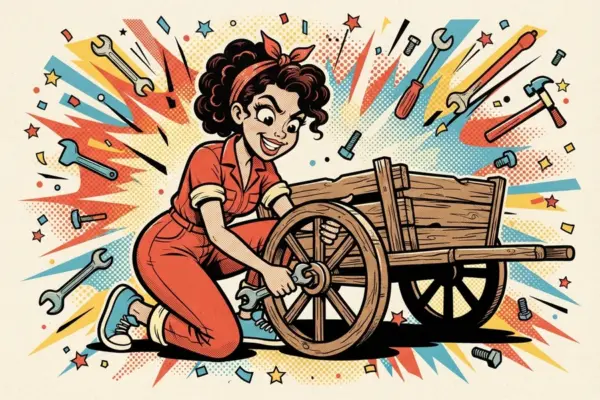
Hephaestus
«You fix what's actually broken. Not what's easy.»
The test is new — you are among the first hundred to take it.
You're already elbow-deep in the wobbly shelf before anyone's finished pointing it out, taking a whole machine apart just to watch how the pieces fit — pure Hephaestus — turning the problem into something you can actually hold in your hands.
You'd rather be halfway through fixing something than finish describing what's wrong with it. Nobody claps for the parts you quietly keep from falling apart, but they'd notice fast enough if you stopped.
Some things won't hold still long enough to be repaired, and those are the ones that leave you standing there with your hands empty, unsure what comes next. You keep pointing people toward the thing you made instead of toward yourself. Nobody's going to notice what you actually need while it keeps doing the talking for you.

Aphrodite
«You clock the room before it's said a word.»
The test is new — you are among the first hundred to take it.
You're the one who reads exactly what's really going on between two people before either of them says it out loud, who somehow ends up at the center of whichever group is having the most fun — pure Aphrodite — without ever trying to get there.
Underestimating you is a mistake people only make once. Whatever they clocked on the surface when they walked in, it was never the whole picture, and by the time they catch on, you're already three moves ahead.
It gets exhausting, constantly having to prove there's substance behind the first impression people hand you before you've said a word. The part of you doing the actual heavy lifting is the part almost nobody bothers to look for.

Dionysus
«For you, it should be fun regardless of how it ends.»
The test is new — you are among the first hundred to take it.
You're the one laughing off the moment everyone else is stressing over, the most delighted person in the room about not knowing what happens next — pure Dionysus — in purely because having something riding on it makes the night better.
Everyone else is calculating what tomorrow costs; you're the reason tonight is actually fun. That kind of energy is contagious specifically because you never once stop to check whether it's appropriate.
Restraint has never once been the plan, and that catches up with you exactly when the good time outlasts the reason for having it. Sticking around after the fun's already peaked is the easy part. What you're actually avoiding by never calling it a night early is the harder question, and you keep ordering another round instead of answering it.

Hades
«You don't need the room's approval to function.»
The test is new — you are among the first hundred to take it.
You're the one who slips away twenty minutes early and nobody notices you're gone, who stays out of arguments that genuinely aren't yours — pure Hades — fine on the edge, close enough to hear, far enough to skip it.
Rooms that would rattle most people barely register with you, because you were never waiting on anyone's approval to feel steady in the first place. There's nobody you're performing for, which is exactly why you never seem to need anybody.
Left alone long enough, though, that comfort hardens into something colder than you actually meant it to be — a gap that isn't serving you any better than it's serving anyone else. Somebody could get past the edge if you let them. You just haven't decided the quiet is worth losing yet.

Iris
«You're the one carrying the message between two people.»
The test is new — you are among the first hundred to take it.
You're the one constantly ping-ponging between the smaller huddles with fresh updates, hearing music down the hall and already walking straight toward it — pure Iris — turning a whole stuck-inside afternoon into something everyone somehow ends up singing along to.
Two groups that would otherwise never cross paths end up talking because you physically carried the update between them, and you made the whole thing look like nothing.
Relaying everyone else's news means your own rarely gets a turn — you're so used to passing along what other people feel that nobody's asked what you feel in a while, including you. Put the updates down for a minute. What's left to say is still sitting there, unopened.

Hypnos
«You notice what everyone else is too loud to catch.»
The test is new — you are among the first hundred to take it.
You're the one who's already half-asleep long before anyone else calls it a night, who sits with someone new without needing to fill the silence — pure Hypnos — finding the one quiet corner a noisy crowd never reaches.
That's quiet, interior, working with what's underneath the obvious surface instead of the loud layer everyone else reacts to. You're the still center a chaotic room doesn't know it needs.
What that costs, sometimes, is drifting from the waking, immediate moment while you're busy reading what's beneath it. Somewhere between the dream and the room is a version of you that's fully awake. It surfaces less often than it should.
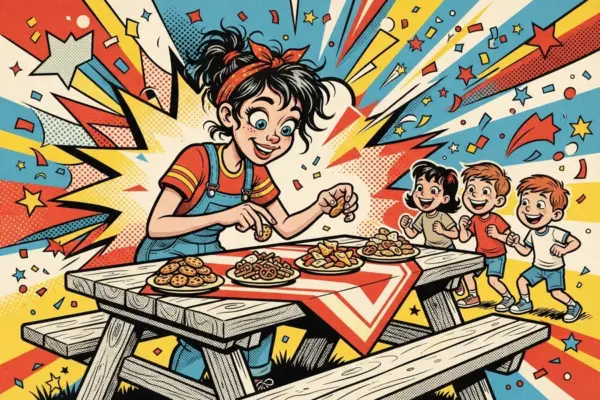
Nemesis
«You keep score because the score actually matters.»
The test is new — you are among the first hundred to take it.
You're the one who quietly notes exactly what happened the second the rules start bending, who wants confirmation everyone's playing by the same ones before caring what the game even is — pure Nemesis, ledger always open.
You remember exactly who owes what, not out of pettiness but because letting it slide once means letting it slide forever, and people trust you precisely because you never do.
That same refusal to let things slide doesn't know how to stop once the debt's actually been paid — the account stays open in your head well past the point where anyone else would call it settled. Closing the books on something isn't surrender. You just haven't caught up to that yet.

Nike
«Second place was never actually on your radar.»
The test is new — you are among the first hundred to take it.
You ask exactly how it'll be scored before you'll even agree to play, having aimed every choice up to now at exactly this one second — pure Nike — never entering anything just to place, only ever to win it outright.
You put in more than any given moment actually asks for, on principle, and the results keep landing anyway, like the world eventually gets tired of arguing with that much effort.
Take the scoreboard away completely, though, and you're not sure what's left standing under you — winning's been doing the job self-worth was supposed to do all along. Right now, nothing's actually being decided. That's exactly the moment you like yourself least.

Hebe
«You host. Even when nobody asked you to.»
The test is new — you are among the first hundred to take it.
You're the one making sure everyone nearby has a drink in hand, walking the new arrival through where everything is until they're not lost anymore — pure Hebe — doing a last headcount before you'll even let yourself wind down.
Nobody has to ask you to notice they're uncomfortable; you've already refilled their drink and pointed them toward the bathroom before they finished thinking about it. A room settles the second you're quietly running it.
All that outward-facing care rarely turns back around toward you — you'll make sure thirty people are fed before it occurs to anyone, including you, to ask if you've eaten yet. Somebody owes you a night off from hosting. You've earned it several times over by now.

Tyche
«You shrug, and it works out anyway.»
The test is new — you are among the first hundred to take it.
You're the one completely unbothered by an outcome nobody could've planned for, throwing money on the wildest pick purely because it feels right — pure Tyche — comfortable with uncertainty that would freeze almost anyone else solid.
That's being drawn to chance over control, reading the odds calmly and moving anyway instead of white-knuckling the outcome. Most people spend real energy fighting uncertainty; you just walk straight through it.
What that leaves under-built is the part luck can't reach — the skills and plans nobody develops when things keep breaking their way. The odds have been kind so far. What you'd do without them is still an open question.

Hecate
«You studied this. That's why it works.»
The test is new — you are among the first hundred to take it.
You're the one who's clearly done this exact task before and knows the sequence cold, who recognizes exactly what kind of problem this is before anyone else finishes describing it — pure Hecate — precision built from actual practice.
Ask you why it works and you'll actually have an answer, step by step, because you put in the hours before you ever needed the shortcut. People trust what you say precisely because you can back it up.
The one scenario that trips you up is the one nobody assigned you reading for — your own gut goes quiet right when you'd need to trust it, because you've spent years training yourself not to. Acting on nothing but instinct is still the one skill you haven't gotten around to practicing.
About this test
How this test works
This quiz works like a typology sort, not a single sliding scale: instead of scoring you high or low on one trait, it places your answers into the closest match among eighteen named types — in this case, the real cabins of Camp Half-Blood. Along the way it tracks four things: what kind of activity naturally pulls you in, how you tend to sit inside a group, what actually motivates you when something's genuinely on the line, and whether you lean on raw instinct or on skill you've actually built. Whichever cabin your answers point to most consistently becomes your result.
On the rare occasion two or more cabins end up level, the tie goes to a fixed order set before anyone ever took the quiz — Hermes first, since that's canonically where an unclaimed camper already lives — which is a mechanical rule, not a judgment call about which cabin deserves it more. Treat your result as a close, fun match, not a verified psychological measurement or a claim about real godly parentage: it leans on real trait-and-values psychology, mapped for fun onto a fictional world, and it sorts you into the nearest type rather than measuring anything with scientific precision.
For general background on how psychologists define typology and personality type, see these entries.
Frequently asked questions
How many Camp Half-Blood cabins are there?
Twenty cabins exist in the books, but two of them — Hera's and Artemis's — never have a demigod child bunking inside, since both goddesses stay childless by their own vow. That leaves eighteen cabins that can actually claim a camper, which is exactly the set this quiz sorts you into.
What determines your godly parent?
In the story itself, that's fixed the moment you're born — nobody picks it, and no quiz could reach across universes to check anyone's bloodline. What this one can do is compare your habits and values to the profile each cabin represents, then hand you the closest match. Think resemblance, not birth certificate.
Can you choose your own cabin?
Not in canon — a demigod's cabin is assigned by parentage, full stop, no requesting a transfer. This quiz works differently: it matches your personality to a cabin's profile, and it isn't claiming to know or decide which god is actually your parent.
What happens if you're never claimed?
An unclaimed demigod bunks in Hermes's cabin by default until a parent finally steps forward — it's the go-to home base for anyone not yet sorted, which is also exactly why this quiz gives Hermes the win first whenever two cabins land even.
Is this an official Percy Jackson cabin quiz?
No — there's no cabin-sorting quiz endorsed by Rick Riordan or Disney, official or otherwise. This one is fan-made, built around the book series' own canon, and it's upfront about that instead of pretending otherwise.
Sources
- Holland, J. L. (1959). A Theory of Vocational Choice. Journal of Counseling Psychology, 6(1), 35–45. doi:10.1037/h0040767.
- Schwartz, S. H. (1992). Universals in the Content and Structure of Values: Theoretical Advances and Empirical Tests in 20 Countries. Advances in Experimental Social Psychology, 25, 1–65. doi:10.1016/S0065–2601(08)60281–6.
- Peterson, C., & Seligman, M. E. P. (2004). Character Strengths and Virtues: A Handbook and Classification. Oxford University Press / American Psychological Association.
Three more tests on the same theme

Breakdown
There's a reason you answer the way you do
Most tests show you a slice of who you are. This one gets to the core: the classic 16-type personality test that goes back to Carl Jung, rebuilt from the ground up and way more accurate. It takes ten minutes, you only ever do it once — and you walk away with an answer most people never quite figure out: why you are the way you are. Why some people just get you, and why with others it's complicated. And that answer won't change: your type is yours for life.
Take the free testHow you compare
The test is new — you are among the first hundred to take it.
Three more tests on the same theme
About this test
How this test works
This quiz works like a typology sort, not a single sliding scale: instead of scoring you high or low on one trait, it places your answers into the closest match among eighteen named types — in this case, the real cabins of Camp Half-Blood. Along the way it tracks four things: what kind of activity naturally pulls you in, how you tend to sit inside a group, what actually motivates you when something's genuinely on the line, and whether you lean on raw instinct or on skill you've actually built. Whichever cabin your answers point to most consistently becomes your result.
On the rare occasion two or more cabins end up level, the tie goes to a fixed order set before anyone ever took the quiz — Hermes first, since that's canonically where an unclaimed camper already lives — which is a mechanical rule, not a judgment call about which cabin deserves it more. Treat your result as a close, fun match, not a verified psychological measurement or a claim about real godly parentage: it leans on real trait-and-values psychology, mapped for fun onto a fictional world, and it sorts you into the nearest type rather than measuring anything with scientific precision.
For general background on how psychologists define typology and personality type, see these entries.
Frequently asked questions
How many Camp Half-Blood cabins are there?
Twenty cabins exist in the books, but two of them — Hera's and Artemis's — never have a demigod child bunking inside, since both goddesses stay childless by their own vow. That leaves eighteen cabins that can actually claim a camper, which is exactly the set this quiz sorts you into.
What determines your godly parent?
In the story itself, that's fixed the moment you're born — nobody picks it, and no quiz could reach across universes to check anyone's bloodline. What this one can do is compare your habits and values to the profile each cabin represents, then hand you the closest match. Think resemblance, not birth certificate.
Can you choose your own cabin?
Not in canon — a demigod's cabin is assigned by parentage, full stop, no requesting a transfer. This quiz works differently: it matches your personality to a cabin's profile, and it isn't claiming to know or decide which god is actually your parent.
What happens if you're never claimed?
An unclaimed demigod bunks in Hermes's cabin by default until a parent finally steps forward — it's the go-to home base for anyone not yet sorted, which is also exactly why this quiz gives Hermes the win first whenever two cabins land even.
Is this an official Percy Jackson cabin quiz?
No — there's no cabin-sorting quiz endorsed by Rick Riordan or Disney, official or otherwise. This one is fan-made, built around the book series' own canon, and it's upfront about that instead of pretending otherwise.
Sources
- Holland, J. L. (1959). A Theory of Vocational Choice. Journal of Counseling Psychology, 6(1), 35–45. doi:10.1037/h0040767.
- Schwartz, S. H. (1992). Universals in the Content and Structure of Values: Theoretical Advances and Empirical Tests in 20 Countries. Advances in Experimental Social Psychology, 25, 1–65. doi:10.1016/S0065–2601(08)60281–6.
- Peterson, C., & Seligman, M. E. P. (2004). Character Strengths and Virtues: A Handbook and Classification. Oxford University Press / American Psychological Association.
