Physiognomy Test
You clocked something about the last stranger who walked into the room — before they’d said a full sentence. This test isn’t about your face; it’s about how much weight you hand that instant verdict when you’re the one doing the judging. You’ll get an image, not a score, in about four minutes. Nothing clinical here — just an honest look at a habit everyone has, whether they admit it or not.
No sign-up. Your result right away.
The Patient Juror
«You'd rather wait for proof than trust a hunch.»
The test is new — you are among the first hundred to take it.
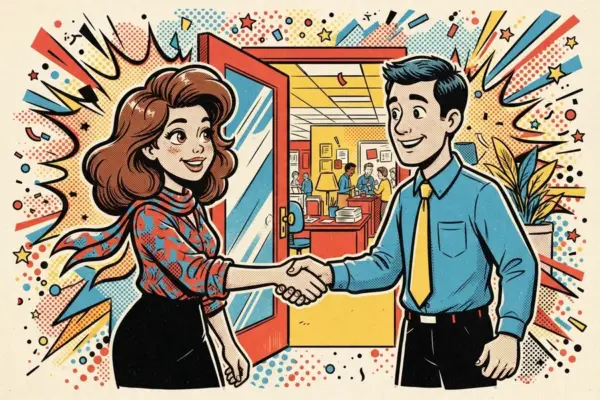
You meet someone at a party who talks too fast and laughs too loud, and you feel the snap judgment forming — then you set it down anyway, because you've caught it lying before. That's a light reliance on first impressions, and it shows in almost everything you decide.
That habit keeps people from being reduced to their first thirty seconds with you — since a hunch about a stranger rarely tells you much about who they are. You'd rather wait for a track record, and you get one.
The cost is real: a useful early flag and a wrong one get the same shrug from you, filed away until proof arrives. And here's the part everyone shares — your brain still throws together that instant read the moment a stranger walks in. You just refuse to hand it the wheel.
The Fair Hearing
«A first impression nudges you. It rarely runs the show.»
The test is new — you are among the first hundred to take it.
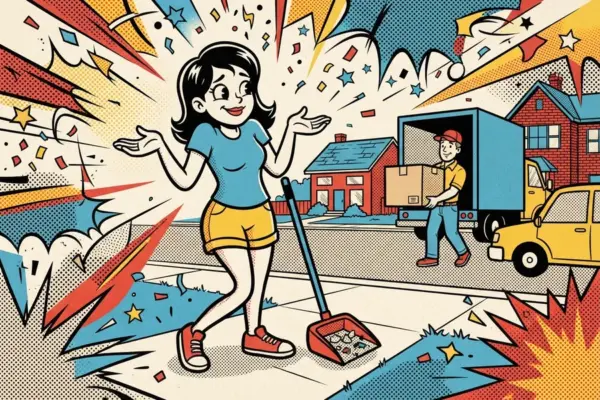
A coworker snaps at you once during a rough week, and for days you catch yourself bracing around them — right up until they apologize and explain, and the read resets. That's a moderate reliance on first impressions: enough pull to color a week, not enough to run your year.
That's the shape of it across most of what this test checks: you give a stranger's manner, a photo, a colleague's slow-building record a little sway (a read this fast rarely lines up with who someone actually is), never the final word.
Which of your five habits carries that sway shifts from one moment to the next, and you rarely notice which lever just moved. Either way, you keep both eyes open a beat longer than the room allows — and that beat is the whole test.

The Split Verdict
«Some people you read instantly. Others take forever.»
The test is new — you are among the first hundred to take it.
You size up a job candidate in the first ten seconds flat, but the same week you spend three visits still unsure what your new neighbor is like. That's an uneven reliance on first impressions — sharp on some fronts, slow on others, with no single pattern running the show.
With a stranger's photo, you're decided before they've said a word; with a colleague's slow-earned reputation, you keep revising for months. One gets no chance to prove itself, the other gets endless chances — and both live in the exact same person.
That's not indecision, whatever it looks like from outside. It just means nobody can tell you in advance which version of you shows up — the instant juror or the patient one — until the moment actually arrives.
The Quick Gavel
«You bring the gavel down before the evidence even arrives.»
The test is new — you are among the first hundred to take it.
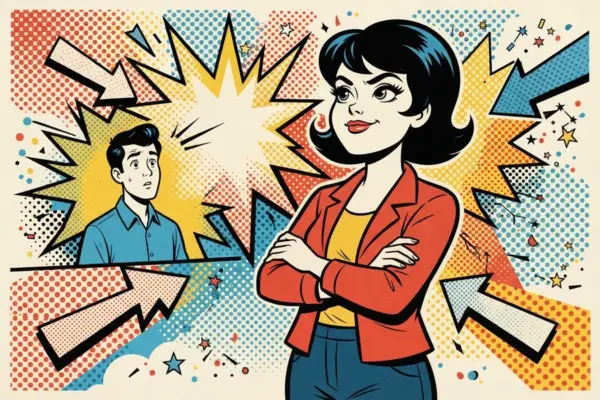
You walk into a meeting, clock the new hire's stiff handshake and darting eyes, and you've decided they're not up to the job before anyone else has spoken. That's a heavy reliance on first impressions, and it runs most of your calls.
It holds up, too: the cold read survives a kind gesture, the polished stranger keeps getting extra credit, and a slow-built track record has to fight uphill against a verdict you reached in the doorway. The trouble is that verdict connects only weakly to what someone's actually like, no matter how confident it felt walking in.
Which means the people who get trusted, hired, or picked in your life carry more weight from that doorway moment than the evidence has ever earned. You move fast, you move sure — and some of those moves rest on nothing at all.

The Closed Case
«The case closes the second you walk into the room.»
The test is new — you are among the first hundred to take it.
You spot someone across the room — sharp jacket, easy smile — and by the time they've crossed to shake your hand, you've already decided how smart, trustworthy, and capable they are, evidence pending forever. That's a near-total reliance on first impressions, running the table on nearly everything you judge.
You hold this through nearly everything: the doubtful driver, the plain-looking stranger next to someone shinier — your early verdict outruns them all. This is the end furthest from what the evidence backs; a read that fast barely connects to someone's real character at all.
None of that makes you unusual in forming the read — every brain throws one together just as fast the instant a stranger appears. What sets you apart is refusing to ever let a fact catch up and revise it.
About this test
How this test works
These questions and score bands were written from scratch, not lifted off any existing scale. It tracks one habit across five angles: how fast a verdict settles, how much surer repetition makes you, how stubborn it is against evidence, how much it weighs in a real decision, and whether polish tips the scale.
A snap verdict about a stranger's face forms almost instantly, and it's nearly universal. Whether it lines up with who someone actually is, though, is another matter — barely, if at all. The old notion that face shape alone gives away character was debunked long ago, once used to justify treating whole groups unfairly.
This is a one-time self-check, not a behavior log. It doesn't evaluate your own face, judge anyone's true character, or claim any first impression, yours or anyone else's, can be read with real accuracy. It measures only the judging habit itself.
Frequently asked questions
What is physiognomy?
It's an old belief that the shape of someone's face — their jaw, their brow, the set of their eyes — spells out their character. This test isn't that: it looks at how much you personally lean on a first impression, not at anyone's actual face.
How accurate is physiognomy?
Not very. Research on judging character from faces keeps finding the same thing: whatever confidence a face inspires, it barely lines up with who that person actually turns out to be.
Is physiognomy real?
Two different things get mixed up under that question. The idea that a face reveals character doesn't hold up under research. Jumping to a snap judgment about someone from their face anyway is a real, well-documented habit — and that's the part this test actually measures.
What does your face say about your personality?
Nothing you'll find here — this test never looks at your face, full stop. What it measures instead is how much weight you give a first impression when you're the one sizing someone else up.
Does a photo reveal someone's real character?
Not with any real reliability — matching a photo to someone's true nature barely works, according to the research. This result isn't about whether that's possible; it's about how much stock you personally put in a photo-based hunch.
Sources
- Willis, J., & Todorov, A. (2006). First impressions: Making up your mind after a 100-ms exposure to a face. Psychological Science, 17(7), 592–598. doi:10.1111/j.1467-9280.2006.01750.x
- Todorov, A., Olivola, C. Y., Dotsch, R., & Mende-Siedlecki, P. (2015). Social attributions from faces: Determinants, consequences, accuracy, and functional significance. Annual Review of Psychology, 66, 519–545. doi:10.1146/annurev-psych-113011-143831
- Berry, D. S. (1990). Taking people at face value: Evidence for the kernel of truth hypothesis. Social Cognition, 8(4), 343–361. doi:10.1521/soco.1990.8.4.343
- Foo, Y. Z., Sutherland, C. A. M., Burton, N. S., Nakagawa, S., & Rhodes, G. (2022). Accuracy in facial trustworthiness impressions: Kernel of truth or modern physiognomy? A meta-analysis. Personality and Social Psychology Bulletin, 48(11), 1580–1596. doi:10.1177/01461672211048110
Three more tests on the same theme

Breakdown
There's a reason you answer the way you do
Most tests show you a slice of who you are. This one gets to the core: the classic 16-type personality test that goes back to Carl Jung, rebuilt from the ground up and way more accurate. It takes ten minutes, you only ever do it once — and you walk away with an answer most people never quite figure out: why you are the way you are. Why some people just get you, and why with others it's complicated. And that answer won't change: your type is yours for life.
Take the free testHow you compare
The test is new — you are among the first hundred to take it.
Three more tests on the same theme
About this test
How this test works
These questions and score bands were written from scratch, not lifted off any existing scale. It tracks one habit across five angles: how fast a verdict settles, how much surer repetition makes you, how stubborn it is against evidence, how much it weighs in a real decision, and whether polish tips the scale.
A snap verdict about a stranger's face forms almost instantly, and it's nearly universal. Whether it lines up with who someone actually is, though, is another matter — barely, if at all. The old notion that face shape alone gives away character was debunked long ago, once used to justify treating whole groups unfairly.
This is a one-time self-check, not a behavior log. It doesn't evaluate your own face, judge anyone's true character, or claim any first impression, yours or anyone else's, can be read with real accuracy. It measures only the judging habit itself.
Frequently asked questions
What is physiognomy?
It's an old belief that the shape of someone's face — their jaw, their brow, the set of their eyes — spells out their character. This test isn't that: it looks at how much you personally lean on a first impression, not at anyone's actual face.
How accurate is physiognomy?
Not very. Research on judging character from faces keeps finding the same thing: whatever confidence a face inspires, it barely lines up with who that person actually turns out to be.
Is physiognomy real?
Two different things get mixed up under that question. The idea that a face reveals character doesn't hold up under research. Jumping to a snap judgment about someone from their face anyway is a real, well-documented habit — and that's the part this test actually measures.
What does your face say about your personality?
Nothing you'll find here — this test never looks at your face, full stop. What it measures instead is how much weight you give a first impression when you're the one sizing someone else up.
Does a photo reveal someone's real character?
Not with any real reliability — matching a photo to someone's true nature barely works, according to the research. This result isn't about whether that's possible; it's about how much stock you personally put in a photo-based hunch.
Sources
- Willis, J., & Todorov, A. (2006). First impressions: Making up your mind after a 100-ms exposure to a face. Psychological Science, 17(7), 592–598. doi:10.1111/j.1467-9280.2006.01750.x
- Todorov, A., Olivola, C. Y., Dotsch, R., & Mende-Siedlecki, P. (2015). Social attributions from faces: Determinants, consequences, accuracy, and functional significance. Annual Review of Psychology, 66, 519–545. doi:10.1146/annurev-psych-113011-143831
- Berry, D. S. (1990). Taking people at face value: Evidence for the kernel of truth hypothesis. Social Cognition, 8(4), 343–361. doi:10.1521/soco.1990.8.4.343
- Foo, Y. Z., Sutherland, C. A. M., Burton, N. S., Nakagawa, S., & Rhodes, G. (2022). Accuracy in facial trustworthiness impressions: Kernel of truth or modern physiognomy? A meta-analysis. Personality and Social Psychology Bulletin, 48(11), 1580–1596. doi:10.1177/01461672211048110
