PSQI Questionnaire
Think about the past few weeks: how well have your nights actually been going? This 5-minute self-check walks through seven everyday sides of sleep and hands you back a clear, honest picture, not a raw score. It’s a personal check-in, not a medical or diagnostic tool.
No sign-up. Your result right away.

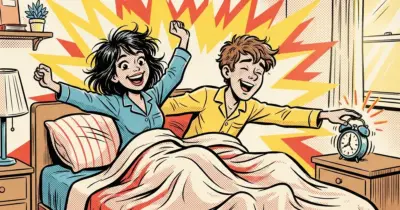
Easy Nights
«You sleep, and it just works, night after night.»
The test is new — you are among the first hundred to take it.
You fall asleep without negotiating with yourself, wake up without dragging your feet, and move through the day without once circling back to how you slept — sleep that holds together this well almost stops registering as something to think about.
The catch with a rhythm this steady is that you stop paying attention to it — which means a real shift could creep in for a while before you'd even clock it. This isn't a verdict on your exact hours or on what your brain gets up to once you're out cold; it's simply what the pattern looks like from where you're standing.
This is the kind of good you can afford to take for granted — for now.
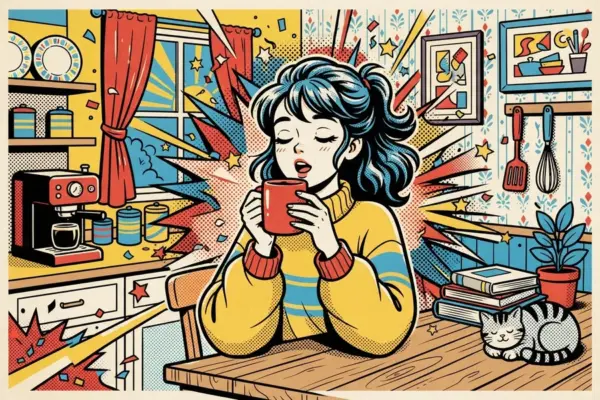
Loose Thread
«You've got this mostly figured out — except for one stubborn piece.»
The test is new — you are among the first hundred to take it.
Most nights you fall asleep, stay asleep, and get up without a second thought — but one particular piece keeps snagging, the same spot every single time, needing its own explanation before anyone believes the rest of the story.
The strength here is real — most of the seven pieces that make up a night's sleep are doing their job without you lifting a finger. The shadow is that the one weak link is loud enough to color how the whole week feels when it acts up. What this result doesn't tell you is which exact piece is loose, or what's happening in your head once the lights go out — only that the overall shape stays sound.
Picture that good stretch continuing for you, minus that one recurring snag — that's the version worth chasing.
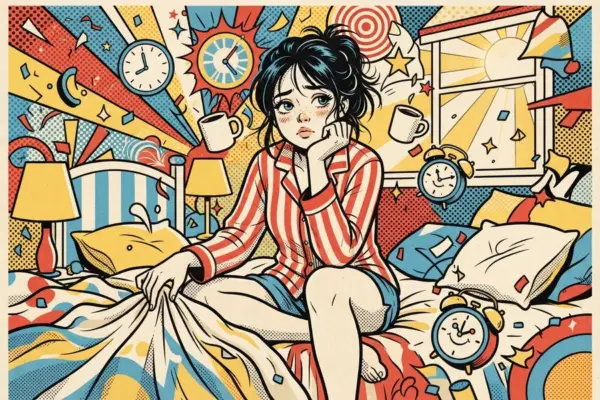
Split Signal
«Your sleep can't seem to pick a lane lately.»
The test is new — you are among the first hundred to take it.
You fall asleep fine most nights but still wake up ragged, or you get a full stretch of sleep and somehow still feel behind — pieces of the picture pulling in opposite directions instead of settling into one clear story.
That's not you dodging the question — it's an accurate read of a picture that genuinely doesn't point one way. Different parts of how you sleep are tugging against each other hard enough to cancel out into this exact, narrow zone instead of landing clearly on either side. One number can't tell you which specific part is pulling hardest; it only tells you that, right now, no single story fits.
Which half wins out for you this month? That's the more interesting question to sit with.

Worn Groove
«You keep hitting the same wall, night after night.»
The test is new — you are among the first hundred to take it.
You can't blame this one on a late movie or a rough week — the same shaky stretch keeps coming back, several parts of your sleep giving out together, and it's a pattern by now, not a one-off bad night.
What's still holding is real — you're not falling apart everywhere at once, and that matters. But the parts that aren't holding are numerous enough now to shape more than your nights: your energy, your focus, your mood during the day are all catching some of the spillover. This result names the shape of the pattern, not the hours behind it, and nothing about your body's side of the night.
You don't have to fix all of it at once — just stop letting it repeat unnoticed.

Running on Empty
«You're running on fumes, and it's showing everywhere.»
The test is new — you are among the first hundred to take it.
You wake up and you're already behind before your feet touch the floor, drag through the day on autopilot, and by the time night comes back around, the same rough stretch is waiting for you again — one facet after another giving out at once.
This is a direct answer, not a scare tactic: difficulty is turning up across nearly every part of your sleep at once, likely coloring your days as much as your nights. Talking to a doctor or a sleep specialist is a reasonable next step, not a verdict.
This result doesn't name what's actually wrong, predict how long it lasts, or reveal what's happening while you're unconscious — it only says the pattern is loud enough to deserve a proper look.
About this test
How this test works
This self-check leans on general research into everyday sleep, not on any single named instrument. Looking back over the last several weeks, it works through seven sides of sleep: satisfaction, how smoothly it holds together, whether its length matches what your body wants, how often something interrupts it, how much outside help you lean on to drop off, how your days hold up afterward, and how steady your schedule stays. Those seven pieces combine into one overall picture, built from how you remember your own nights.
Self-report only goes so far: pauses in breathing overnight, the structure of your sleep, and the exact hours you clocked aren't things anyone can track from inside their own head, so none of that gets measured here — only what you notice and recall. So this result describes how good your everyday sleep seems, never a stand-in for diagnosing insomnia, sleep apnoea itself, or anything else; that call belongs to a clinician's own evaluation, not a quiz.
This is an independent self-check built on that same everyday-sleep evidence, not the Pittsburgh Sleep Quality Index, known as the PSQI — a separate, copyrighted tool, free only for non-commercial research and teaching, licensed for a fee elsewhere, and not reproduced here. For more on how everyday sleep works, see MedlinePlus; for that other instrument specifically, see Wikipedia.
Treat this as a starting point for noticing your own patterns, not as a diagnosis, and not as a stand-in for talking to an actual clinician.
Frequently asked questions
Is this the same as the PSQI?
This test isn't that instrument. It's its own thing — an original self-check built around a shared everyday question: how good is your sleep, really? The specific tool this search usually points to, the Pittsburgh Sleep Quality Index, known as the PSQI, stays copyrighted and gets used, scored, and read only by trained specialists — none of it shows up on this page.
What does a high or low score actually mean?
There's no external pass-or-fail line involved. Each of the five outcomes gets its own plain description right on your results screen, so you already have the full picture without needing to compare it to anything else. A real diagnosis is a different matter entirely — that only comes from a clinician actually evaluating you, never from a quiz you take on your own.
How long does this take, and is it free?
It's 21 quick questions, takes about 5 minutes start to finish, and it's completely free to take, right here on this page.
Can I download this as a printable form?
This lives online as something you click through, not something you print out. Anyone who needs the real, copyrighted clinical questionnaire won't find it here — that one gets handed out and scored by a trained professional, not offered as a free web page.
Sources
- Buysse DJ (2014). Sleep health: can we define it? Does it matter? Sleep, 37(1), 9–17. doi:10.5665/sleep.3298.
- Manzar MD et al. (2018). Dimensionality of the Pittsburgh Sleep Quality Index: a systematic review. Health and Quality of Life Outcomes, 16(1), 89. doi:10.1186/s12955-018-0915-x.
- Buysse DJ, Reynolds CF, Monk TH, Berman SR, Kupfer DJ (1989). The Pittsburgh Sleep Quality Index: a new instrument for psychiatric practice and research. Psychiatry Research, 28(2), 193–213. doi:10.1016/0165-1781(89)90047-4.
- Pilcher JJ, Ginter DR, Sadowsky B (1997). Sleep quality versus sleep quantity: relationships between sleep and measures of health, well-being and sleepiness in college students. Journal of Psychosomatic Research, 42(6), 583–596. doi:10.1016/S0022-3999(97)00004-4.
Three more tests on the same theme



Breakdown
There's a reason you answer the way you do
Most tests show you a slice of who you are. This one gets to the core: the classic 16-type personality test that goes back to Carl Jung, rebuilt from the ground up and way more accurate. It takes ten minutes, you only ever do it once — and you walk away with an answer most people never quite figure out: why you are the way you are. Why some people just get you, and why with others it's complicated. And that answer won't change: your type is yours for life.
Take the free testHow you compare
The test is new — you are among the first hundred to take it.
Three more tests on the same theme
About this test
How this test works
This self-check leans on general research into everyday sleep, not on any single named instrument. Looking back over the last several weeks, it works through seven sides of sleep: satisfaction, how smoothly it holds together, whether its length matches what your body wants, how often something interrupts it, how much outside help you lean on to drop off, how your days hold up afterward, and how steady your schedule stays. Those seven pieces combine into one overall picture, built from how you remember your own nights.
Self-report only goes so far: pauses in breathing overnight, the structure of your sleep, and the exact hours you clocked aren't things anyone can track from inside their own head, so none of that gets measured here — only what you notice and recall. So this result describes how good your everyday sleep seems, never a stand-in for diagnosing insomnia, sleep apnoea itself, or anything else; that call belongs to a clinician's own evaluation, not a quiz.
This is an independent self-check built on that same everyday-sleep evidence, not the Pittsburgh Sleep Quality Index, known as the PSQI — a separate, copyrighted tool, free only for non-commercial research and teaching, licensed for a fee elsewhere, and not reproduced here. For more on how everyday sleep works, see MedlinePlus; for that other instrument specifically, see Wikipedia.
Treat this as a starting point for noticing your own patterns, not as a diagnosis, and not as a stand-in for talking to an actual clinician.
Frequently asked questions
Is this the same as the PSQI?
This test isn't that instrument. It's its own thing — an original self-check built around a shared everyday question: how good is your sleep, really? The specific tool this search usually points to, the Pittsburgh Sleep Quality Index, known as the PSQI, stays copyrighted and gets used, scored, and read only by trained specialists — none of it shows up on this page.
What does a high or low score actually mean?
There's no external pass-or-fail line involved. Each of the five outcomes gets its own plain description right on your results screen, so you already have the full picture without needing to compare it to anything else. A real diagnosis is a different matter entirely — that only comes from a clinician actually evaluating you, never from a quiz you take on your own.
How long does this take, and is it free?
It's 21 quick questions, takes about 5 minutes start to finish, and it's completely free to take, right here on this page.
Can I download this as a printable form?
This lives online as something you click through, not something you print out. Anyone who needs the real, copyrighted clinical questionnaire won't find it here — that one gets handed out and scored by a trained professional, not offered as a free web page.
Sources
- Buysse DJ (2014). Sleep health: can we define it? Does it matter? Sleep, 37(1), 9–17. doi:10.5665/sleep.3298.
- Manzar MD et al. (2018). Dimensionality of the Pittsburgh Sleep Quality Index: a systematic review. Health and Quality of Life Outcomes, 16(1), 89. doi:10.1186/s12955-018-0915-x.
- Buysse DJ, Reynolds CF, Monk TH, Berman SR, Kupfer DJ (1989). The Pittsburgh Sleep Quality Index: a new instrument for psychiatric practice and research. Psychiatry Research, 28(2), 193–213. doi:10.1016/0165-1781(89)90047-4.
- Pilcher JJ, Ginter DR, Sadowsky B (1997). Sleep quality versus sleep quantity: relationships between sleep and measures of health, well-being and sleepiness in college students. Journal of Psychosomatic Research, 42(6), 583–596. doi:10.1016/S0022-3999(97)00004-4.
