
Saboteur Assessment
Ever kept one small task on the list until it felt bigger than your whole week? Answer a run of everyday scenes and you’ll get an image with a name: the inner saboteur that speaks up loudest in you, plus your profile across all seven patterns. It takes about eight minutes. Treat it as a friendly self-portrait of your habits, not a diagnosis and not a verdict on your abilities.
No sign-up. Your result right away.

Tomorrow Drawer
«You'll start right after this one small thing.»
The test is new — you are among the first hundred to take it.
The form has been open in a tab since Tuesday. You've wiped the shelves and answered messages that could wait, while one dull task hums in the corner. The loudest inner saboteur in your answers is Procrastination & Avoidance.
Putting it off buys you instant relief from something unpleasant or doubtful, and the relief is real. Meanwhile the task grows in the dark and meets you later, bigger.
Self-Handicapping is the neighbour to watch; if it runs close behind, that's real signal too, especially when someone else will judge the finished thing. This is a repeatable pattern of behaviour, not a diagnosis, not a fixed identity, not a measure of ability, and nothing here promises it fades by any date. Tomorrow is a generous lender, and you're the one paying the interest.

Ninth Draft
«You'll show it as soon as it's actually ready.»
The test is new — you are among the first hundred to take it.
The blog post is on its ninth draft. Nothing is wrong with it except one comma you can't unsee, and publishing it now feels riskier than leaving it in the folder. The loudest inner saboteur in your answers is Perfectionistic Sabotage.
Holding back protects the standard, since a piece nobody sees can't fall short. The cost is that the standard never meets reality, so good things stay unfinished or unshared, sometimes over one small flaw. Harsh Inner Critic sits right next door, and a close-behind lean there is real signal too, especially in how you judge a miss afterwards.
This is a repeatable pattern of behaviour, not a diagnosis, not a fixed identity, not a measure of ability, and nothing here promises it fades by any date. Your ninth draft has earned a reader.

Warm Front
«You say yes first and count the cost later.»
The test is new — you are among the first hundred to take it.
Your phone buzzes with a favour that fits nowhere in your week. You picture the pause after a no, and your thumb is typing sure before your calendar can object. The loudest inner saboteur in your answers is People-Pleasing.
Agreeing keeps the room warm and disapproval at arm's length, a fair aim, though your own preferences and hours keep losing to a reaction that hasn't happened yet.
Over-Control is close to the opposite move but answers the same need for a predictable outcome, so a close-behind lean toward it is real signal too. This is a repeatable pattern of behaviour, not a diagnosis, not a fixed identity, not a measure of ability, and nothing here promises it fades by any date. Your yes is worth more once a no is allowed to sit beside it.
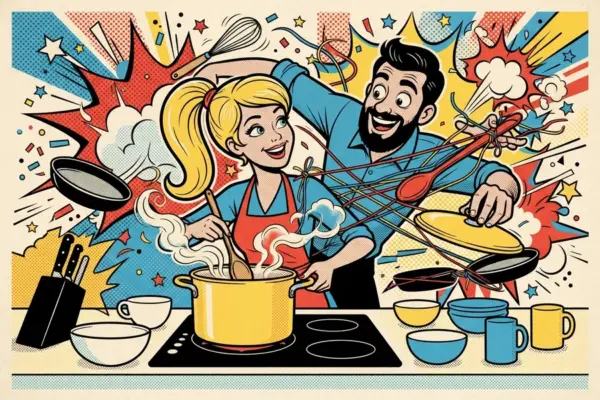
Control Tower
«You'd just do it yourself; it's quicker.»
The test is new — you are among the first hundred to take it.
Your friend has just loaded the dishwasher, and you're re-stacking the plates before the kettle boils. It wasn't bad, exactly; leaving it as it is just itches. The loudest inner saboteur in your answers is Over-Control.
Steering everything calms the discomfort of leaning on an untested helper or an uncertain outcome, and you pay in trust and patience for plans that change without warning. This is a repeatable pattern of behaviour, not a diagnosis, not a fixed identity, not a measure of ability, and nothing here promises it fades by any date.
People-Pleasing is the mirror image, chasing the same steady outcome by handing the wheel away, so a close-behind lean toward it is real signal too. Let one plate lie wrong tonight and see whether your evening holds.

Instant Replay
«You can still see the button you clicked.»
The test is new — you are among the first hundred to take it.
You booked the ticket for the wrong Saturday, and the tape starts: the confirmation screen and the exact moment you clicked. It plays on the bus and again at 2 a.m. The loudest inner saboteur in your answers is Harsh Inner Critic.
The replay exists to make sure that one fixable slip never happens twice, which is a sound aim. The catch is that the sternness drains your nerve, so the same task starts to look like something to dodge.
Perfectionistic Sabotage is the neighbour to watch, and a close-behind lean toward it is real signal too. This is a repeatable pattern of behaviour, not a diagnosis, not a fixed identity, not a measure of ability, and nothing here promises it fades by any date. Keep the lesson and hand your tape back.

Spare Umbrella
«You would've nailed it with one more night's sleep.»
The test is new — you are among the first hundred to take it.
The pub quiz is on Sunday, and by Thursday your friends know about the sore throat and the packed week. Nobody asked; the explanation just got there first. The loudest inner saboteur in your answers is Self-Handicapping.
A ready explanation keeps your sense of competence from being tested cleanly, and that shelter is understandable. Across many attempts, though, you pay in a lower typical result, whether the obstacle is real or merely announced.
Procrastination & Avoidance sits next door, and if it runs close behind, that's a real signal too. This is a repeatable pattern of behaviour, not a diagnosis, not a fixed identity, not a measure of ability, and nothing here promises it fades by any date. One clean attempt with the umbrella left in the hall would tell you more than ten well-armed ones.

Low Tide
«You'll pick it up again once things calm down.»
The test is new — you are among the first hundred to take it.
Your language-app streak breaks on a hectic Wednesday, and the app stays closed on Thursday. It was the week and the timing; your own moves barely come up. The loudest inner saboteur in your answers is Passive Withdrawal.
Easing off after a snag spares you the sting of pushing at something that feels out of reach, yet the goal stays unmet because the adjustment that might have reached it never got tried.
This describes a repeatable behaviour in the situation each question laid out, not a diagnosis, not a fixed identity, not a measure of ability, and nothing here promises it fades by any date. Any of the other six close behind is real signal too. A snag says something about your plan, and the plan can take the news.
About this test
How this test works
The test draws on published psychology research into everyday habits that get in your way: putting off unpleasant tasks, exacting standards, saying yes to keep the peace, the urge to steer every outcome, harsh replays of a slip, excuses prepared before being judged, and easing off when a snag appears.
Each pattern gets its own tally, so the result is a full profile rather than a single number. The write-up goes to the highest lean, but the runner-up is a real signal too, and scoring high on several at once is ordinary.
Self-criticism stays at one specific, fixable slip, and easing off effort is described as behaviour in a particular situation, never as a trait.
Self-handicapping comes in two forms, and both count: an obstacle really set up beforehand, and one simply announced aloud with nothing behind it. Background: APA dictionary entry and, on the set-up-versus-announced distinction, general overview.
The test is free and self-guided, written from the research literature. It does not copy, build on or endorse the report or score of any commercial saboteur assessment, and it promises no match. It records how you describe your habits today: a self-report, not an outside measurement.
One last point: this is a self-check for adults in ordinary life, not a medical instrument. It cannot diagnose anything, says nothing about intelligence or self-awareness, is unconnected to any paid assessment of this type, was never compared with one and does not replace one. Health questions belong with a licensed professional.
Frequently asked questions
Is this the original saboteur assessment, and how accurate is it?
No. This is a separate, free test built on openly published research into everyday self-defeating habits. It does not copy or extend any branded program, and it has not been checked against any, so your result here may or may not resemble one from elsewhere. What it does show is which of seven ordinary patterns your answers tilt toward, as an honest snapshot of how you describe yourself.
Does the saboteur assessment measure intelligence?
No. A few paid programs in this field borrow the word intelligence for branding, but it is a figure of speech, not an ability score. This test looks at habits only, so your result says nothing about your mind.
Is this a diagnostic test?
No. It is a questionnaire about routine habits, filled in by adults living ordinary lives, so the result describes habits, not conditions. Diagnosis belongs to licensed clinicians.
Do I get one main pattern or several?
Both. The write-up covers your leading pattern, and the result screen also lays out all seven as a profile. It is normal for a runner-up to score almost as high, and that runner-up tells you something real, so read the profile as a whole rather than as a single label.
Sources
- Caretti, V., Topino, E., Fontana, A., Di Cesare, G., Mucci, C., Schimmenti, A., & Gori, A. (2026). Operationalizing the construct of the internal saboteur: Development and psychometric validation of the Internal Saboteur Scale (ISS). European Journal of Investigation in Health, Psychology and Education, 16(6), 80. doi:10.3390/ejihpe16060080
- Berglas, S., & Jones, E. E. (1978). Drug choice as a self-handicapping strategy in response to noncontingent success. Journal of Personality and Social Psychology, 36(4), 405–417. doi:10.1037/0022-3514.36.4.405
- Baumeister, R. F., & Scher, S. J. (1988). Self-defeating behavior patterns among normal individuals: Review and analysis of common self-destructive tendencies. Psychological Bulletin, 104(1), 3–22. doi:10.1037/0033-2909.104.1.3
- Gilbert, P., Clarke, M., Hempel, S., Miles, J. N. V., & Irons, C. (2004). Criticizing and reassuring oneself: An exploration of forms, styles and reasons in female students. British Journal of Clinical Psychology, 43(1), 31–50. doi:10.1348/014466504772812959
Three more tests on the same theme


Breakdown
There's a reason you answer the way you do
Most tests show you a slice of who you are. This one gets to the core: the classic 16-type personality test that goes back to Carl Jung, rebuilt from the ground up and way more accurate. It takes ten minutes, you only ever do it once — and you walk away with an answer most people never quite figure out: why you are the way you are. Why some people just get you, and why with others it's complicated. And that answer won't change: your type is yours for life.
Take the free testHow you compare
The test is new — you are among the first hundred to take it.
Three more tests on the same theme
About this test
How this test works
The test draws on published psychology research into everyday habits that get in your way: putting off unpleasant tasks, exacting standards, saying yes to keep the peace, the urge to steer every outcome, harsh replays of a slip, excuses prepared before being judged, and easing off when a snag appears.
Each pattern gets its own tally, so the result is a full profile rather than a single number. The write-up goes to the highest lean, but the runner-up is a real signal too, and scoring high on several at once is ordinary.
Self-criticism stays at one specific, fixable slip, and easing off effort is described as behaviour in a particular situation, never as a trait.
Self-handicapping comes in two forms, and both count: an obstacle really set up beforehand, and one simply announced aloud with nothing behind it. Background: APA dictionary entry and, on the set-up-versus-announced distinction, general overview.
The test is free and self-guided, written from the research literature. It does not copy, build on or endorse the report or score of any commercial saboteur assessment, and it promises no match. It records how you describe your habits today: a self-report, not an outside measurement.
One last point: this is a self-check for adults in ordinary life, not a medical instrument. It cannot diagnose anything, says nothing about intelligence or self-awareness, is unconnected to any paid assessment of this type, was never compared with one and does not replace one. Health questions belong with a licensed professional.
Frequently asked questions
Is this the original saboteur assessment, and how accurate is it?
No. This is a separate, free test built on openly published research into everyday self-defeating habits. It does not copy or extend any branded program, and it has not been checked against any, so your result here may or may not resemble one from elsewhere. What it does show is which of seven ordinary patterns your answers tilt toward, as an honest snapshot of how you describe yourself.
Does the saboteur assessment measure intelligence?
No. A few paid programs in this field borrow the word intelligence for branding, but it is a figure of speech, not an ability score. This test looks at habits only, so your result says nothing about your mind.
Is this a diagnostic test?
No. It is a questionnaire about routine habits, filled in by adults living ordinary lives, so the result describes habits, not conditions. Diagnosis belongs to licensed clinicians.
Do I get one main pattern or several?
Both. The write-up covers your leading pattern, and the result screen also lays out all seven as a profile. It is normal for a runner-up to score almost as high, and that runner-up tells you something real, so read the profile as a whole rather than as a single label.
Sources
- Caretti, V., Topino, E., Fontana, A., Di Cesare, G., Mucci, C., Schimmenti, A., & Gori, A. (2026). Operationalizing the construct of the internal saboteur: Development and psychometric validation of the Internal Saboteur Scale (ISS). European Journal of Investigation in Health, Psychology and Education, 16(6), 80. doi:10.3390/ejihpe16060080
- Berglas, S., & Jones, E. E. (1978). Drug choice as a self-handicapping strategy in response to noncontingent success. Journal of Personality and Social Psychology, 36(4), 405–417. doi:10.1037/0022-3514.36.4.405
- Baumeister, R. F., & Scher, S. J. (1988). Self-defeating behavior patterns among normal individuals: Review and analysis of common self-destructive tendencies. Psychological Bulletin, 104(1), 3–22. doi:10.1037/0033-2909.104.1.3
- Gilbert, P., Clarke, M., Hempel, S., Miles, J. N. V., & Irons, C. (2004). Criticizing and reassuring oneself: An exploration of forms, styles and reasons in female students. British Journal of Clinical Psychology, 43(1), 31–50. doi:10.1348/014466504772812959
