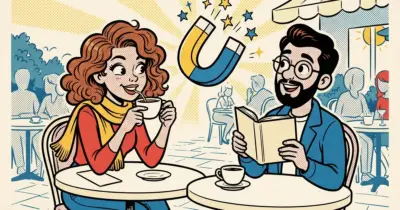
What Is My Type Quiz (Romantic Edition)
Ever notice who keeps catching your eye? This quiz turns that hunch into a picture: which side of attraction pulls you hardest, out of trust, spark, drive and the pattern itself. It takes about four minutes. Treat it as light fun with real thought behind it, an honest sketch of your taste.
No sign-up. Your result right away.
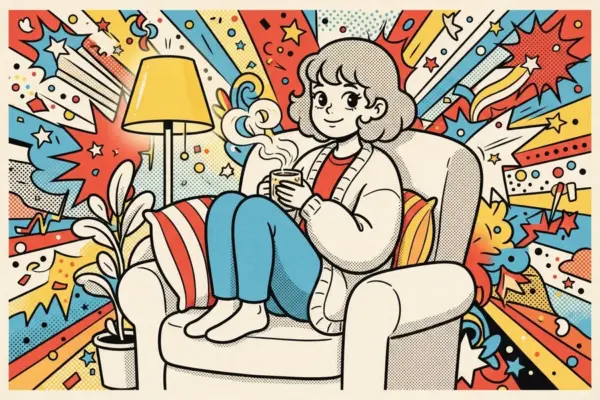
Porch Light
«You warm to the people who follow you without footnotes.»
The test is new — you are among the first hundred to take it.
You tell someone new about your worst week, and they say, so that's why you went quiet on Tuesday. Your shoulders drop. Being read without a briefing is your hook. Call this pull Porch Light: the strongest of your four, going by your own answers.
Flash gets a rough deal in your ledger. A dazzling person can lose ground to a calm one who answers messages, and a slow-growing bond may slip past for lacking a day-one spark. Also off your radar: the jolt of wanting a stranger.
Three more sides carry scores of their own on the scales beside this page, so a near tie is no broken result, just a continuous reading doing its job. Yours says trust comes ahead of spark, and that's a taste worth defending.

Sparkler
«You spot the lit-up corner of a room before the exits.»
The test is new — you are among the first hundred to take it.
A stranger at the bus stop acts out their entire morning, and you're laughing before you've decided to. For you, a first impression carries real weight, as a matter of degrees rather than any checklist. Call this pull Sparkler: the strongest of your four, going by your own answers.
Patience is where you pay: a quiet, steady person gets a slow start with you, and your own pull can fade once the first fizz settles, which you recognize in yourself. Out of frame stays the reward of a bond that shows its worth with time.
Scales for your other three sides sit beside this page too, and a close race among them is a normal reading. In your answers, spark gets the front seat, with steadiness and visible ambition riding behind.

Stair Builder
«You find a person going somewhere hard to resist.»
The test is new — you are among the first hundred to take it.
Someone at the next table sketches a five-year map on a napkin, and you find yourself reading it upside down. Direction and dependable follow-through pull at you; competence pulls even without charm. Call this pull Stair Builder: the strongest of your four, going by your own answers.
Spontaneity takes the hit. Someone whose plans are blank, or who opens with warmth or a wild idea rather than a roadmap, gets less credit from you than they've earned. The charm of a person with nothing planned yet stays out of frame.
The scales beside this page score your other three sides as well. Two running level with this one is no glitch; a continuous measure looks exactly like that. Verdict: you give long-haul builders your vote.
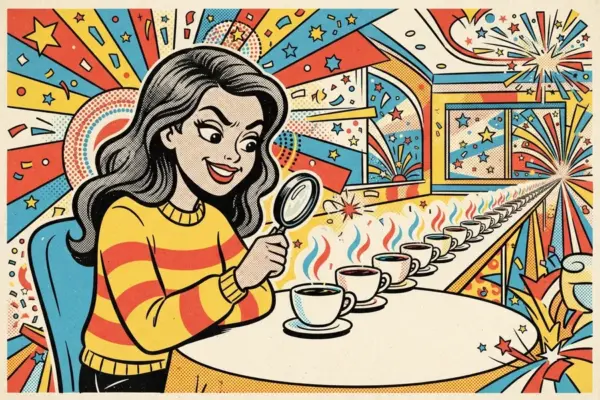
House Blend
«You notice the pattern before you have a name for it.»
The test is new — you are among the first hundred to take it.
You scroll back through old chats and notice the same wry tone in three different people, and a similar way of filling a doorway. Nobody planned it. Call this pull House Blend: the strongest of your four, going by your own answers.
Your quirk: the whole is easy to recognize and hard to pin on any one quality, so asking what exactly it is can leave you shrugging. Having a type is an ordinary part of how people date, and it sits comfortably beside warmth, spark or drive.
Your other three sides show on the scales beside this page, and any of them may run close to this one. Nothing is broken when that happens. The blend you spot on reflection is yours to notice and enjoy.
About this test
How this test works
The quiz gathers what people say about their own pull, and nothing else: no observers, no partners, no photos. That makes it a portrait of stated taste, and stated taste is a shaky forecaster of who catches someone once they meet in person, so no result here points at a future.
Answers are read along four continuous strands. Three ask what draws someone in: being understood and trusting, a lively first impression, and evident ambition with dependability. The fourth asks a different question, namely which resemblances recur among the people already liked. Each strand collects its own points from everyday scenes whose answers run from mild to marked. The strand with the most points is named, and the rest stay on display as scales, so two finishing close together is an ordinary result.
Some things are deliberately absent. The quiz gives no reason for a pattern, hands out no compatibility verdict for any particular individual, and reads the same for anyone, regardless of who is answering, whom they are drawn to, or whether they are partnered. Resemblance among earlier crushes is a familiar part of dating; the psychology dictionary entry on assortative mating describes people forming couples with those closer to them in traits than a random draw would give. The lively-first-impression strand deals in emphasis only, never a catalogue of bodily details.
Frequently asked questions
Do people really have a type?
Largely, yes, and in a measurable way. Line up couples, or one person's string of earlier relationships, and the pairings echo each other in temperament and in general bearing more than luck would predict. That makes it something you can point to, not just a hunch.
Why does the same sort of person keep catching my eye?
This quiz can tell you what your own answers keep circling back to. It stays silent on the reason. Whatever lies behind a pattern is a separate question, and no theory is offered here.
Is a repeating type a problem?
Nothing in this quiz treats it as one. Repeating a preference is a very ordinary way to date, and the result simply says what repeats, leaving any decision about changing it entirely with you.
Does attraction come down to looks or character?
Both play a part. One strand of the quiz asks how far a lively, visible first impression sways you; the remaining three concern trust, ambition and the repeating whole. No photos are shown and no feature is scored.
Sources
- Fletcher, G. J. O., Simpson, J. A., Thomas, G., & Giles, L. (1999). Ideals in intimate relationships. Journal of Personality and Social Psychology, 76(1), 72–89. doi:10.1037/0022-3514.76.1.72
- Eastwick, P. W., & Finkel, E. J. (2008). Sex differences in mate preferences revisited: Do people know what they initially desire in a romantic partner? Journal of Personality and Social Psychology, 94(2), 245–264. doi:10.1037/0022-3514.94.2.245
- Park, Y., & MacDonald, G. (2019). Consistency between individuals' past and current romantic partners' own reports of their personalities. Proceedings of the National Academy of Sciences, 116(26), 12793–12797. doi:10.1073/pnas.1902937116
- Hinsz, V. B. (1989). Facial resemblance in engaged and married couples. Journal of Social and Personal Relationships, 6(2), 223–229. doi:10.1177/026540758900600205
Three more tests on the same theme
Breakdown
There's a reason you answer the way you do
Most tests show you a slice of who you are. This one gets to the core: the classic 16-type personality test that goes back to Carl Jung, rebuilt from the ground up and way more accurate. It takes ten minutes, you only ever do it once — and you walk away with an answer most people never quite figure out: why you are the way you are. Why some people just get you, and why with others it's complicated. And that answer won't change: your type is yours for life.
Take the free testHow you compare
The test is new — you are among the first hundred to take it.
Three more tests on the same theme
About this test
How this test works
The quiz gathers what people say about their own pull, and nothing else: no observers, no partners, no photos. That makes it a portrait of stated taste, and stated taste is a shaky forecaster of who catches someone once they meet in person, so no result here points at a future.
Answers are read along four continuous strands. Three ask what draws someone in: being understood and trusting, a lively first impression, and evident ambition with dependability. The fourth asks a different question, namely which resemblances recur among the people already liked. Each strand collects its own points from everyday scenes whose answers run from mild to marked. The strand with the most points is named, and the rest stay on display as scales, so two finishing close together is an ordinary result.
Some things are deliberately absent. The quiz gives no reason for a pattern, hands out no compatibility verdict for any particular individual, and reads the same for anyone, regardless of who is answering, whom they are drawn to, or whether they are partnered. Resemblance among earlier crushes is a familiar part of dating; the psychology dictionary entry on assortative mating describes people forming couples with those closer to them in traits than a random draw would give. The lively-first-impression strand deals in emphasis only, never a catalogue of bodily details.
Frequently asked questions
Do people really have a type?
Largely, yes, and in a measurable way. Line up couples, or one person's string of earlier relationships, and the pairings echo each other in temperament and in general bearing more than luck would predict. That makes it something you can point to, not just a hunch.
Why does the same sort of person keep catching my eye?
This quiz can tell you what your own answers keep circling back to. It stays silent on the reason. Whatever lies behind a pattern is a separate question, and no theory is offered here.
Is a repeating type a problem?
Nothing in this quiz treats it as one. Repeating a preference is a very ordinary way to date, and the result simply says what repeats, leaving any decision about changing it entirely with you.
Does attraction come down to looks or character?
Both play a part. One strand of the quiz asks how far a lively, visible first impression sways you; the remaining three concern trust, ambition and the repeating whole. No photos are shown and no feature is scored.
Sources
- Fletcher, G. J. O., Simpson, J. A., Thomas, G., & Giles, L. (1999). Ideals in intimate relationships. Journal of Personality and Social Psychology, 76(1), 72–89. doi:10.1037/0022-3514.76.1.72
- Eastwick, P. W., & Finkel, E. J. (2008). Sex differences in mate preferences revisited: Do people know what they initially desire in a romantic partner? Journal of Personality and Social Psychology, 94(2), 245–264. doi:10.1037/0022-3514.94.2.245
- Park, Y., & MacDonald, G. (2019). Consistency between individuals' past and current romantic partners' own reports of their personalities. Proceedings of the National Academy of Sciences, 116(26), 12793–12797. doi:10.1073/pnas.1902937116
- Hinsz, V. B. (1989). Facial resemblance in engaged and married couples. Journal of Social and Personal Relationships, 6(2), 223–229. doi:10.1177/026540758900600205
