
Attack on Titan Quiz
Ever wonder which Attack on Titan character your actual instincts match, not the one you’d pick for clout? Fifteen quick everyday scenes decide it, and you’ll land on one of eight — Eren, Mikasa, Levi, Armin, Hange, Jean, Reiner, or Sasha. Takes about 5 minutes. It’s a fandom character match, not a verified psychology test.
No sign-up. Your result right away.

Eren Unbound
«Once you decide something matters, there's no version of you that quits.»
The test is new — you are among the first hundred to take it.
It's 1 a.m. and you're still refusing to leave the group chat argument, typing out one more reason why this actually still matters, long after everyone else has muted the thread and gone to sleep.
Picture someone who loves you asking you to ease up, just this once — it lands like betrayal, not concern, because the goal already stopped being negotiable. That same refusal to bend is exactly what carries you through the stretch everyone else quits on.
You were never built for the calm option, and honestly, nobody who's met you would want you to be.
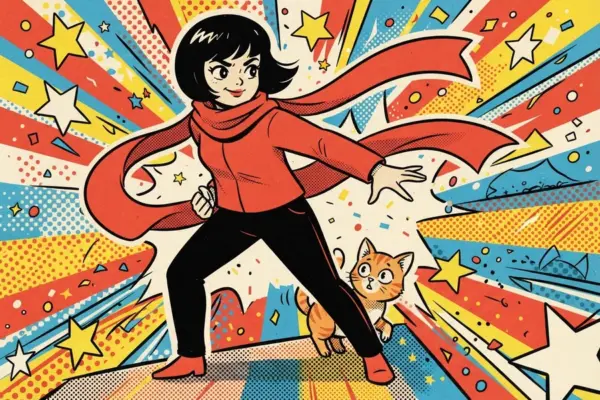
Steadfast Mikasa
«When it actually matters, you're already moving before anyone asks.»
The test is new — you are among the first hundred to take it.
A friend suddenly goes quiet in a group photo, and without a word to anyone else, you're already walking them home, coat over their shoulders, an hour before anybody thinks to ask if they're okay.
Almost nobody around you knows what staying that composed is costing you in the moment — you don't let it show. What they do see is someone who reads a crisis fast and never once panics when it counts.
People lean on you precisely because you never let them see you sway — and that's exactly the point.
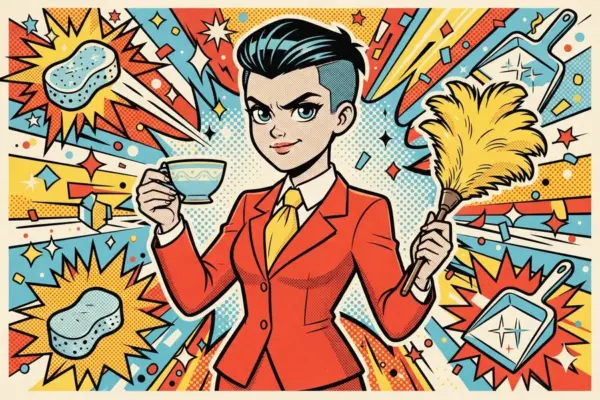
Immaculate Levi
«Standards aren't optional for you, not even on your worst day.»
The test is new — you are among the first hundred to take it.
At midnight, you're the one reorganizing the shared kitchen because the mess has quietly been bothering you for three days straight, and somehow it's done, spotless, before anyone else even notices it needed fixing at all.
"Hard to read, but I always know where I stand with you" — that's the usual verdict, and it's not wrong. The same exacting standard that makes people trust your work under real pressure is the one that keeps warmth looking like distance until someone sticks around long enough to see past it.
You were never going to be the warm one first — you're the one still standing when it counts.

Armin the Planner
«You'd already mapped three ways this goes before anyone else starts talking.»
The test is new — you are among the first hundred to take it.
The night before a big group presentation, you're quietly rewriting everyone else's weakest slide, not because anyone actually asked, but because you noticed the gap three whole days ago and it's been sitting there since.
Here's the trade built into how your mind works: give it time to gather information and it produces the plan nobody else saw coming. Skip that runway entirely — an unplanned spotlight, zero prep — and the calm that usually carries you disappears fast, replaced by a visible freeze.
Give you time and you're unstoppable — corner you without it, and even you're surprised by what shows up instead.

Curious Hange
«If nobody's tried it yet, that's exactly why you try it first.»
The test is new — you are among the first hundred to take it.
The broken appliance ends up in pieces on the kitchen table because you just have to see how it actually works, and three hours later you're still there, delighted, with parts spread everywhere and zero plan for putting it back.
You'll chase an unanswered question well past the point most people would call it quits, risk included, and only tally what it cost afterward. That same appetite for the unknown is exactly what turns up things nobody else even thought to look for.
The mess and the risk are the price of actually finding things out, and honestly, you'd pay it again.

Jean the Realist
«You'll say the unpopular true thing before you'll say the comfortable one.»
The test is new — you are among the first hundred to take it.
You tell the group, flatly, that the plan everyone's excited about actually isn't going to work, watch the room go quiet and a little annoyed, and then spend the next hour helping fix it anyway.
People clock the bluntness first and assume you're cold before they ever see the loyalty sitting right underneath it. Give it a little time, though, and what they find instead is someone who tells the truth about limits — yours and everyone else's — and still shows up anyway.
You didn't ask to be the responsible one, but somewhere along the way you clearly decided you'd rather be that than comfortable.

Steady Reiner
«People build plans around you because you've never let the team down.»
The test is new — you are among the first hundred to take it.
At 6 a.m., you're already there helping a friend move even after a rough week of your own, hauling boxes down three flights without a single complaint, because you said you would and that settles it.
"You can always count on them" is the line people reach for about you, and for a long stretch, it holds completely true. What it doesn't account for is what happens after loyalty gets pulled in two directions for too long — the steady front you run on eventually gives, and it shows.
Everyone assumes you're fine because you've trained them to assume that — you're allowed to not be, too.

Hungry Sasha
«Your gut decides first, and your gut has earned that trust.»
The test is new — you are among the first hundred to take it.
The last slice is still sitting right there on the table, and you're already reaching for it mid-sentence, with no flicker of hesitation, while everyone else is still politely pretending they don't actually want it.
Here's the deal your instincts cut for you: say yes immediately, sort out whether it was smart later. That immediacy is exactly why you're the easiest person in the room to be around — and exactly why the trouble it gets you into always arrives a beat after the fun does.
You bounce back fast enough that people forget how much that actually cost you, and honestly, you'd rather they didn't ask.
About this test
How this test works
Fifteen scenes stand in for five behavioral threads that show up throughout the source material: how loyalty splits between an inner circle and everyone outside it, what happens when a rule or an order rubs the wrong way, how a decision genuinely gets made, what surfaces the instant pressure hits, and what a character is willing to sacrifice to keep chasing a goal. The scenes draw on findings from moral-foundations psychology and from research on personality and decision-making, cross-checked against how each of the eight characters is consistently portrayed across the story.
Each answer you give gets weighed against all eight characters' known patterns at once, and whichever one your choices line up with most closely becomes your result.
Worth knowing: this runs on self-report, so it captures how you'd describe your own instincts rather than a lab-tested measurement of them. It exists for fandom fun first, not clinical use, and it hasn't gone through the kind of validation a real research tool would require; nothing here reads anything into your life beyond this one match. The ideas underneath it are explained further at moral foundations theory and grit as a personality trait.
Frequently asked questions
Which Attack on Titan character am I?
This quiz weighs your answers to fifteen everyday scenes against how each of eight characters — Eren, Mikasa, Levi, Armin, Hange, Jean, Reiner, and Sasha — is known to act, then hands you whichever one your instincts line up with most. Every one of the eight is a real, fully earned result, not a runner-up.
Is this a trivia quiz about how well I know Attack on Titan?
No — this one is about how you behave, not what you remember from the show. None of the fifteen questions touch plot points or lore; they're all about your own everyday reactions, and if you want your show knowledge tested, that calls for a different quiz built for exactly that.
Does this sort me into a military branch instead of naming a character?
No — the result you land on is always one specific person, never a branch or unit. Sorting readers into a group like that belongs to a different kind of test; this one stays about you as an individual, not whichever unit you'd fall into.
Does this tell me which titan shifter I am?
No — this test looks at how you act day to day, not at any transformation or special ability. That's a different question dressed up in similar clothing; here, the match comes purely from ordinary character traits, nothing else.
Are there right or wrong answers?
No — every option here is just a normal way people handle a normal situation, so nothing gets marked wrong. The result simply reflects which character's usual behavior your choices resemble most.
Sources
- Graham, J., Haidt, J., & Nosek, B. A. (2009). Liberals and conservatives rely on different sets of moral foundations. Journal of Personality and Social Psychology, 96(5), 1029–1046. doi:10.1037/a0015141.
- Scott, S. G., & Bruce, R. A. (1995). Decision-making style: The development and assessment of a new measure. Educational and Psychological Measurement, 55(5), 818–831. doi:10.1177/0013164495055005017.
- Lazarus, R. S., & Folkman, S. (1984). Stress, Appraisal, and Coping. New York: Springer.
- Duckworth, A. L., Peterson, C., Matthews, M. D., & Kelly, D. R. (2007). Grit: Perseverance and passion for long-term goals. Journal of Personality and Social Psychology, 92(6), 1087–1101. doi:10.1037/0022-3514.92.6.1087.
Three more tests on the same theme



Breakdown
There's a reason you answer the way you do
Most tests show you a slice of who you are. This one gets to the core: the classic 16-type personality test that goes back to Carl Jung, rebuilt from the ground up and way more accurate. It takes ten minutes, you only ever do it once — and you walk away with an answer most people never quite figure out: why you are the way you are. Why some people just get you, and why with others it's complicated. And that answer won't change: your type is yours for life.
Take the free testHow you compare
The test is new — you are among the first hundred to take it.
Three more tests on the same theme
About this test
How this test works
Fifteen scenes stand in for five behavioral threads that show up throughout the source material: how loyalty splits between an inner circle and everyone outside it, what happens when a rule or an order rubs the wrong way, how a decision genuinely gets made, what surfaces the instant pressure hits, and what a character is willing to sacrifice to keep chasing a goal. The scenes draw on findings from moral-foundations psychology and from research on personality and decision-making, cross-checked against how each of the eight characters is consistently portrayed across the story.
Each answer you give gets weighed against all eight characters' known patterns at once, and whichever one your choices line up with most closely becomes your result.
Worth knowing: this runs on self-report, so it captures how you'd describe your own instincts rather than a lab-tested measurement of them. It exists for fandom fun first, not clinical use, and it hasn't gone through the kind of validation a real research tool would require; nothing here reads anything into your life beyond this one match. The ideas underneath it are explained further at moral foundations theory and grit as a personality trait.
Frequently asked questions
Which Attack on Titan character am I?
This quiz weighs your answers to fifteen everyday scenes against how each of eight characters — Eren, Mikasa, Levi, Armin, Hange, Jean, Reiner, and Sasha — is known to act, then hands you whichever one your instincts line up with most. Every one of the eight is a real, fully earned result, not a runner-up.
Is this a trivia quiz about how well I know Attack on Titan?
No — this one is about how you behave, not what you remember from the show. None of the fifteen questions touch plot points or lore; they're all about your own everyday reactions, and if you want your show knowledge tested, that calls for a different quiz built for exactly that.
Does this sort me into a military branch instead of naming a character?
No — the result you land on is always one specific person, never a branch or unit. Sorting readers into a group like that belongs to a different kind of test; this one stays about you as an individual, not whichever unit you'd fall into.
Does this tell me which titan shifter I am?
No — this test looks at how you act day to day, not at any transformation or special ability. That's a different question dressed up in similar clothing; here, the match comes purely from ordinary character traits, nothing else.
Are there right or wrong answers?
No — every option here is just a normal way people handle a normal situation, so nothing gets marked wrong. The result simply reflects which character's usual behavior your choices resemble most.
Sources
- Graham, J., Haidt, J., & Nosek, B. A. (2009). Liberals and conservatives rely on different sets of moral foundations. Journal of Personality and Social Psychology, 96(5), 1029–1046. doi:10.1037/a0015141.
- Scott, S. G., & Bruce, R. A. (1995). Decision-making style: The development and assessment of a new measure. Educational and Psychological Measurement, 55(5), 818–831. doi:10.1177/0013164495055005017.
- Lazarus, R. S., & Folkman, S. (1984). Stress, Appraisal, and Coping. New York: Springer.
- Duckworth, A. L., Peterson, C., Matthews, M. D., & Kelly, D. R. (2007). Grit: Perseverance and passion for long-term goals. Journal of Personality and Social Psychology, 92(6), 1087–1101. doi:10.1037/0022-3514.92.6.1087.
