
Dirty Minded Test
You read a completely ordinary sentence, and something else flashes into your head half a step behind it — or half a step ahead, depending on how your mind works. This test hands you a named reading style instead of a score, and takes about 5 minutes. It’s playful start to finish; nothing here is measuring anything serious about you.
No sign-up. Your result right away.
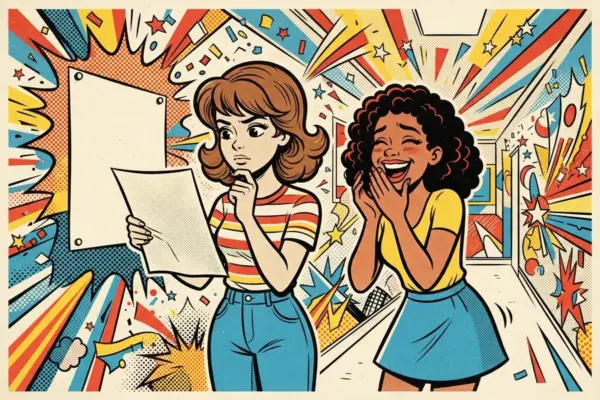
Plain Sailing
«Your mind stays right where the sentence puts it.»
The test is new — you are among the first hundred to take it.
A coworker's text about the new couch barely fitting through the door gets a straightforward reply from you — glad it worked out — while three replies below it are already trading winks you don't notice happening at all.
This is a genuinely comfortable way to move through the day — nothing said out loud earns a raised eyebrow it didn't mean to earn. The cost shows up later: a joke built on this register slides straight past you until somebody circles back to explain the punchline.
None of this says anything about your sense of humor overall, or what runs through your head otherwise — it's one narrow reading habit, low-friction at that. Simple beats overworked.
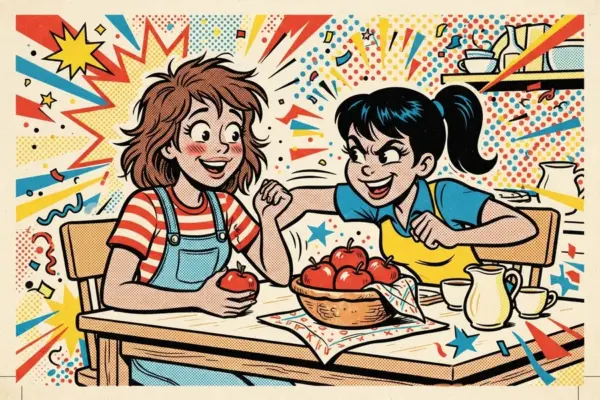
Slow Fuse
«You need a little help before the second meaning wakes up.»
The test is new — you are among the first hundred to take it.
Someone in the group chat cracks a joke, gets nothing, then cracks a second one with an extra wink built right in — and that's the version that actually lands for you, a full beat after everyone else was already laughing.
You read a room well. The second something turns playful, you're right there with it, catching exactly what changed. What that costs you is timing: because the trigger has to come from outside, you can land the joke a half-step behind a faster-moving conversation, arriving right as the next topic starts.
This isn't slowness in general, and it says nothing about how sharp you are anywhere else — you just need a spark for this one register, and once it catches, it's yours completely.
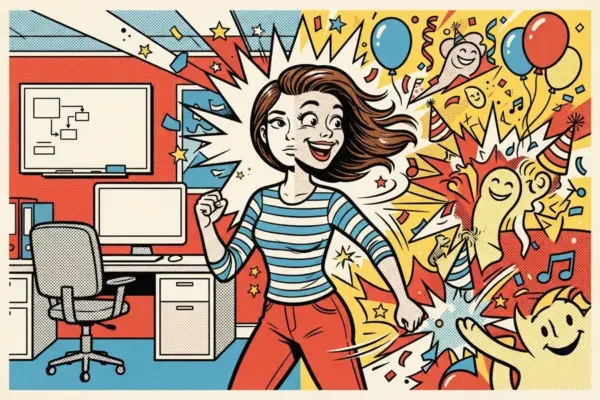
Coin Flip
«Whichever reading wins depends on who's talking, not on you.»
The test is new — you are among the first hundred to take it.
The exact same line lands twice in one afternoon — flat and forgettable from your uncle at the barbecue, then unmistakably loaded from your roommate five minutes later — and both readings feel equally obvious to you at the time.
You're unusually tuned to the room. The same sentence can turn on its speaker, its setting, its timing, and you catch every shift. That sensitivity cuts two ways, though: you can be caught off guard by a laugh where nothing was meant, or miss the one joke that was sitting there in plain sight the whole time.
This isn't indecision, and it isn't a character trait — it's one reading pattern, tied to how hard a given scene leans one way or the other. The room decides which reading wins, and you're built to catch it either way.

Quick Draw
«Your second read never lags far behind the first one.»
The test is new — you are among the first hundred to take it.
A coworker describes how far the new standing desk extends once you crank the lever, and you're already smirking before she finishes the sentence, while the rest of the break room is still catching up a beat behind you.
In banter you're fast — nobody has to explain the joke to you twice, and half the time you're the one who gets there first. The price of noticing quickly is noticing often: a completely innocent sentence sometimes gets read for more than anyone meant, the exact self-consciousness that sends people looking up a test like this one in the first place.
Reading fast isn't the same thing as reading people badly — this is about phrases and scenes, never about your read on anyone's actual intentions. Quick still beats slow, and that instinct is yours to keep.
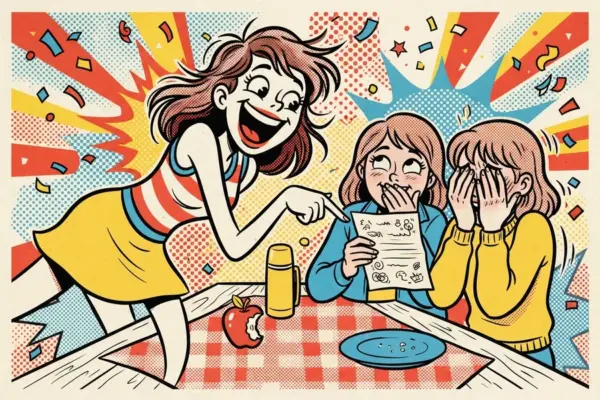
Live Wire
«Your second read shows up before the obvious one has a chance.»
The test is new — you are among the first hundred to take it.
Your neighbor recounts, laughing, how the new snowblower finally punched all the way through the driveway drift in one pass, and you're grinning before he finishes the sentence — the plain picture of clearing snow barely gets a look-in.
This is the fastest, fullest version of this reading habit there is. It's a genuine source of delight rather than mere detection. You don't just catch it — you enjoy catching it. Even you, though, sometimes catch this exact register landing wrong in the wrong room, at the wrong moment.
None of this is about your actual thoughts, history, or character — only how fast this one narrow reading shows up, and how much you enjoy it, right up until the room goes quiet a second too long.
About this test
How this test works
This test is narrowly about one thing: how fast, and how happily, you notice a second, playful reading tucked into an everyday scene. That angle borrows from research into how people land on one meaning of a double-edged sentence over another, and into why a surprise second reading more often earns a grin than a wince.
Every result here rests on self-report — you tell it which reading struck you first, and how quickly, and that's the whole basis for what you get. That said, it draws no conclusion about your character or intelligence, and it has nothing to say about your private thoughts, who you're drawn to, who you are, or your past — this is not a diagnostic tool of any kind, and no claim about reading anyone else's signals can be built on an answer like this.
For the mechanism behind noticing and enjoying a joke like this, see the incongruity theory of humor; for how a setting tilts the odds toward one reading over another, see priming.
Frequently asked questions
Is having a dirty mind normal?
Yes. Catching a sly second read in a plain sentence is common, and it doesn't say anything unflattering about who you are. Some people run into it constantly, some almost never do, and both experiences are completely ordinary.
Why do I notice this stuff so easily?
For some people, this kind of wink lives closer to the surface of a sentence, so it jumps out sooner and turns up more often than it does for someone else. It isn't a choice you're making, and it isn't a glitch in how you think.
How do I stop noticing the second meaning?
You probably can't, and there's no real reason to try. Picking up on wordplay like this is just a normal quirk of how language works, and this test isn't here to fix it — only to clock how fast it shows up for you.
Is this test actually scientific?
It's a lighthearted quiz built around genuine work on wordplay and comic timing, not a certified psychological tool, and it doesn't pretend otherwise — the point is an entertaining read on a real habit, never a clinical verdict.
How many questions does the dirty minded test have?
Eighteen questions, each built around a different everyday scene, so the result adds up several small reads into one bigger picture instead of relying on just a couple of items.
Sources
- Simpson, G. B. (1981). Meaning dominance and semantic context in the processing of lexical ambiguity. Journal of Verbal Learning & Verbal Behavior, 20(1), 120–136.
- Suls, J. M. (1972). A two-stage model for the appreciation of jokes and cartoons: An information-processing analysis. In J. H. Goldstein & P. E. McGhee (Eds.), The Psychology of Humor: Theoretical Perspectives and Empirical Issues (pp. 81–100). Academic Press.
- McGraw, A. P., & Warren, C. (2010). Benign violations: Making immoral behavior funny. Psychological Science, 21(8), 1141–1149.
- Ruch, W., & Hehl, F.-J. (1998). A two-mode model of humor appreciation: Its relation to aesthetic appreciation and simplicity-complexity of personality. In W. Ruch (Ed.), The Sense of Humor: Explorations of a Personality Characteristic (pp. 109–142). Mouton de Gruyter.
Three more tests on the same theme



Breakdown
There's a reason you answer the way you do
Most tests show you a slice of who you are. This one gets to the core: the classic 16-type personality test that goes back to Carl Jung, rebuilt from the ground up and way more accurate. It takes ten minutes, you only ever do it once — and you walk away with an answer most people never quite figure out: why you are the way you are. Why some people just get you, and why with others it's complicated. And that answer won't change: your type is yours for life.
Take the free testHow you compare
The test is new — you are among the first hundred to take it.
Three more tests on the same theme
About this test
How this test works
This test is narrowly about one thing: how fast, and how happily, you notice a second, playful reading tucked into an everyday scene. That angle borrows from research into how people land on one meaning of a double-edged sentence over another, and into why a surprise second reading more often earns a grin than a wince.
Every result here rests on self-report — you tell it which reading struck you first, and how quickly, and that's the whole basis for what you get. That said, it draws no conclusion about your character or intelligence, and it has nothing to say about your private thoughts, who you're drawn to, who you are, or your past — this is not a diagnostic tool of any kind, and no claim about reading anyone else's signals can be built on an answer like this.
For the mechanism behind noticing and enjoying a joke like this, see the incongruity theory of humor; for how a setting tilts the odds toward one reading over another, see priming.
Frequently asked questions
Is having a dirty mind normal?
Yes. Catching a sly second read in a plain sentence is common, and it doesn't say anything unflattering about who you are. Some people run into it constantly, some almost never do, and both experiences are completely ordinary.
Why do I notice this stuff so easily?
For some people, this kind of wink lives closer to the surface of a sentence, so it jumps out sooner and turns up more often than it does for someone else. It isn't a choice you're making, and it isn't a glitch in how you think.
How do I stop noticing the second meaning?
You probably can't, and there's no real reason to try. Picking up on wordplay like this is just a normal quirk of how language works, and this test isn't here to fix it — only to clock how fast it shows up for you.
Is this test actually scientific?
It's a lighthearted quiz built around genuine work on wordplay and comic timing, not a certified psychological tool, and it doesn't pretend otherwise — the point is an entertaining read on a real habit, never a clinical verdict.
How many questions does the dirty minded test have?
Eighteen questions, each built around a different everyday scene, so the result adds up several small reads into one bigger picture instead of relying on just a couple of items.
Sources
- Simpson, G. B. (1981). Meaning dominance and semantic context in the processing of lexical ambiguity. Journal of Verbal Learning & Verbal Behavior, 20(1), 120–136.
- Suls, J. M. (1972). A two-stage model for the appreciation of jokes and cartoons: An information-processing analysis. In J. H. Goldstein & P. E. McGhee (Eds.), The Psychology of Humor: Theoretical Perspectives and Empirical Issues (pp. 81–100). Academic Press.
- McGraw, A. P., & Warren, C. (2010). Benign violations: Making immoral behavior funny. Psychological Science, 21(8), 1141–1149.
- Ruch, W., & Hehl, F.-J. (1998). A two-mode model of humor appreciation: Its relation to aesthetic appreciation and simplicity-complexity of personality. In W. Ruch (Ed.), The Sense of Humor: Explorations of a Personality Characteristic (pp. 109–142). Mouton de Gruyter.
