
Facial Expression Test
Does your face announce things before you’ve decided to? Answer a few short everyday scenes, about four minutes in all, and you get a named result showing how much your face gives away and how it copes when you try to keep a feeling in. It’s a light, honest look at your own habits, meant to be fun and worth a second thought.
No sign-up. Your result right away.

Still Water
«Your face stays level even when something in you is loud.»
The test is new — you are among the first hundred to take it.
A friend announces something wild over dinner and you nod, fork mid-air, eyebrows exactly where they were. Your face keeps that calm without any effort from you: the feeling is there, it just doesn't turn into a show.
That's the upside of a calm default: your inner weather doesn't get broadcast to the whole room, and holding steady takes no work. Big feelings reach the people around you when you decide to tell them.
What stays off-screen is how much you feel, which this doesn't measure. The one catch is that people close to you may have to ask outright, since your face won't volunteer the answer. A quiet face is a private one, and you run it well. Your face has excellent manners.

Dimmer Switch
«Your face turns up for the people and moments that deserve it.»
The test is new — you are among the first hundred to take it.
You're steady through small talk with a neighbor and the line at the pharmacy. Then your oldest friend walks in and your whole face gives way to a grin, or your sister says one kind sentence and your eyes go glassy. Whoever and whatever matters gets all of it.
The strength is placement. What you show lands where it counts, rather than getting spread thin across every stranger and errand. Whoever sees it, sees a lot.
Off-screen: with a stranger on a random Tuesday, the dial sits low, and that says nothing about what you're capable of showing. Nothing in that moment has asked for more. You decide when the room gets brighter.

Open Book
«What you feel turns up on your face, live, all day.»
The test is new — you are among the first hundred to take it.
Your roommate says the word tacos and your whole face lights up before the sentence ends. A stranger in the elevator sighs 'Mondays' and your expression sighs right along. Then someone asks if you're okay, and you haven't even started to answer.
There's a lot to enjoy in that: you give a running update without saying a word, and conversations with you come with built-in subtitles.
Little of what you feel gets held back at this level, so private reactions turn up in plain view on ordinary days. It also makes a room feel easy.
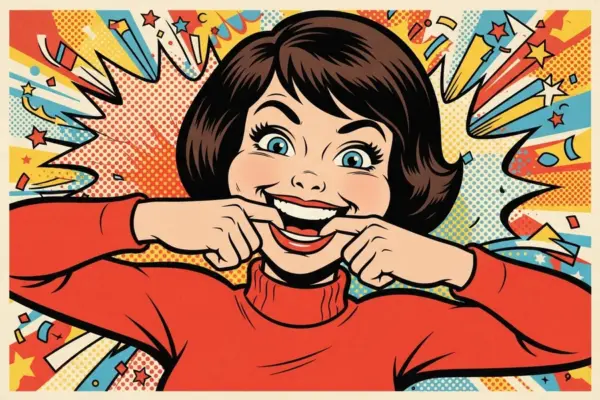
Wobbly Composure
«You try hard to stay composed; your face has other plans.»
The test is new — you are among the first hundred to take it.
A friend's wedding toast gets to you. You clamp down, stare at the napkin, and mentally alphabetize the buffet. Still your chin wobbles and your eyes go bright. The attempt was honest, and the feeling came through anyway, right when you wanted the calmest face in the room.
This is its own pattern, not a louder version of an open face. You can be relaxed day to day; it's the moments you guard hardest where it slips. What slips reads as sincere, since you never chose to show it.
The cost is timing: these are the very moments you'd most like privacy, and holding on takes real, felt effort. The attempt is genuine, and so is what comes through.
About this test
How this test works
This is a snapshot of habits drawn from your own answers: how your face behaves and what people around you say about it. Nothing is filmed, timed or scored, and a face is an imperfect guide to feeling in either direction.
Three things are covered: whether your sense of being easy to read matches what people tell you, how steady you keep your face when you try (including when sincere effort slips), and how quickly it moves before you choose a reaction.
The name may suggest a match-faces-to-feelings quiz. This is something else: a look at your own face, with nothing to get right. Reading others is not tested.
No level ranks above another; composed and open faces each have upsides and costs. Nothing here diagnoses or spots deception; autism and other conditions belong with a specialist. See the APA dictionary entry and the APA Monitor article on smiling.
Frequently asked questions
Is this the test where you match photos to emotions?
No. You won't see any pictures or clips, there's no clock, and no answer is marked correct. The questions are about your own face: how fast it changes, how much effort you put into keeping it steady, and how you think it looks to the people around you. Recognizing emotions in other faces isn't what this checks.
Why can't I keep my feelings off my face?
Faces differ in how quickly they move when something is felt, and people differ in how well they can keep them still on purpose. Some faces change before their owner has decided anything, while others stay level whatever is happening inside. Neither is a defect. Other people also misjudge faces: a calm one can look upset and a busy one can look fine, so being obviously readable is never a given.
Is it possible to control what my face shows?
To a degree. Keeping a face steady on purpose varies from person to person and is a separate matter from how much your face moves by itself. Some people manage it easily, some pay for it in effort, and for some it slips despite honest trying. The test looks at that separately from your default expressiveness, and it doesn't teach a technique.
What does resting face mean, and does it really exist?
It's the idea that a completely neutral face can look like it carries a feeling you don't have, such as irritation or boredom. The pattern is real and has been documented. It lives in the gap between what you feel and what others say they see, and that gap is one of the three things the test asks about.
Can this test show if I'm autistic?
No. Autism is assessed by trained specialists through a full evaluation, and a short set of scenes like this cannot stand in for one. The test makes no attempt, and your result carries no signal either way.
Sources
- Kring, A. M., Smith, D. A., & Neale, J. M. (1994). Individual differences in dispositional expressiveness: Development and validation of the Emotional Expressivity Scale. Journal of Personality and Social Psychology, 66(5), 934–949. doi:10.1037//0022-3514.66.5.934
- Gross, J. J., & John, O. P. (2003). Individual differences in two emotion regulation processes: Implications for affect, relationships, and well-being. Journal of Personality and Social Psychology, 85(2), 348–362. doi:10.1037/0022-3514.85.2.348
- Ekman, P., & Friesen, W. V. (1969). Nonverbal leakage and clues to deception. Psychiatry, 32(1), 88–106. doi:10.1080/00332747.1969.11023575
- Kavanagh, E., Whitehouse, J., & Waller, B. M. (2024). Being facially expressive is socially advantageous. Scientific Reports, 14, 12798. doi:10.1038/s41598-024-62902-6
Three more tests on the same theme

Breakdown
There's a reason you answer the way you do
Most tests show you a slice of who you are. This one gets to the core: the classic 16-type personality test that goes back to Carl Jung, rebuilt from the ground up and way more accurate. It takes ten minutes, you only ever do it once — and you walk away with an answer most people never quite figure out: why you are the way you are. Why some people just get you, and why with others it's complicated. And that answer won't change: your type is yours for life.
Take the free testHow you compare
The test is new — you are among the first hundred to take it.
Three more tests on the same theme
About this test
How this test works
This is a snapshot of habits drawn from your own answers: how your face behaves and what people around you say about it. Nothing is filmed, timed or scored, and a face is an imperfect guide to feeling in either direction.
Three things are covered: whether your sense of being easy to read matches what people tell you, how steady you keep your face when you try (including when sincere effort slips), and how quickly it moves before you choose a reaction.
The name may suggest a match-faces-to-feelings quiz. This is something else: a look at your own face, with nothing to get right. Reading others is not tested.
No level ranks above another; composed and open faces each have upsides and costs. Nothing here diagnoses or spots deception; autism and other conditions belong with a specialist. See the APA dictionary entry and the APA Monitor article on smiling.
Frequently asked questions
Is this the test where you match photos to emotions?
No. You won't see any pictures or clips, there's no clock, and no answer is marked correct. The questions are about your own face: how fast it changes, how much effort you put into keeping it steady, and how you think it looks to the people around you. Recognizing emotions in other faces isn't what this checks.
Why can't I keep my feelings off my face?
Faces differ in how quickly they move when something is felt, and people differ in how well they can keep them still on purpose. Some faces change before their owner has decided anything, while others stay level whatever is happening inside. Neither is a defect. Other people also misjudge faces: a calm one can look upset and a busy one can look fine, so being obviously readable is never a given.
Is it possible to control what my face shows?
To a degree. Keeping a face steady on purpose varies from person to person and is a separate matter from how much your face moves by itself. Some people manage it easily, some pay for it in effort, and for some it slips despite honest trying. The test looks at that separately from your default expressiveness, and it doesn't teach a technique.
What does resting face mean, and does it really exist?
It's the idea that a completely neutral face can look like it carries a feeling you don't have, such as irritation or boredom. The pattern is real and has been documented. It lives in the gap between what you feel and what others say they see, and that gap is one of the three things the test asks about.
Can this test show if I'm autistic?
No. Autism is assessed by trained specialists through a full evaluation, and a short set of scenes like this cannot stand in for one. The test makes no attempt, and your result carries no signal either way.
Sources
- Kring, A. M., Smith, D. A., & Neale, J. M. (1994). Individual differences in dispositional expressiveness: Development and validation of the Emotional Expressivity Scale. Journal of Personality and Social Psychology, 66(5), 934–949. doi:10.1037//0022-3514.66.5.934
- Gross, J. J., & John, O. P. (2003). Individual differences in two emotion regulation processes: Implications for affect, relationships, and well-being. Journal of Personality and Social Psychology, 85(2), 348–362. doi:10.1037/0022-3514.85.2.348
- Ekman, P., & Friesen, W. V. (1969). Nonverbal leakage and clues to deception. Psychiatry, 32(1), 88–106. doi:10.1080/00332747.1969.11023575
- Kavanagh, E., Whitehouse, J., & Waller, B. M. (2024). Being facially expressive is socially advantageous. Scientific Reports, 14, 12798. doi:10.1038/s41598-024-62902-6
