Hetalia Quiz
Which one of Hetalia’s eight actually matches how you handle a crisis, a quiet morning, or a really rough goodbye? Answer for yourself, not for who you wish you were, and you’ll land on one of eight very different personalities — an image, not a score. Takes about 5 minutes, and it’s built for fun first, not a psychology exam.
No sign-up. Your result right away.

Italy
«You'd rather keep everyone smiling than win the argument.»
The test is new — you are among the first hundred to take it.
You slide between the two people about to blow up at each other, without even thinking about it, already halfway to a joke that'll get both sides breathing again. Italy is right there in it — keeping score underneath the laugh, reading exactly what the room actually needs.
People relax the second you walk in — nobody names it, but the room just feels safer with you there, because you genuinely don't want anyone nearby to get hurt. The cost sits quietly underneath: the same peace-keeping means your own frustration gets swallowed until it's been sitting there a while.
Here's the fact everyone misses: the competence was always there, just never advertised, and it shows up exactly when it's actually needed. You're not the pushover the room assumes. You're the one holding it together on purpose.

Germany
«When everything falls apart, you're already the one rebuilding it.»
The test is new — you are among the first hundred to take it.
The second a shared plan collapses, you're already redrawing it on the back of a napkin, three steps ahead while everyone else is still processing what happened — that's Germany, uneasy until the structure exists again and everyone has somewhere solid to stand.
People actually lean on you when things fall apart, and it's earned — built from genuinely caring whether the structure holds for everyone else. The flip side costs you: care comes out as fixing things, not words, and that reads to others as distance you never meant.
Once you've actually locked the plan down, the stiffness drops fast — the warmth was there the whole time, waiting for the structure to stop needing defending. That steadiness is worth more than it looks like, even on the days it feels like distance.

Japan
«You notice everything and still say almost nothing about it.»
The test is new — you are among the first hundred to take it.
You drift to the far side of the room without anyone clocking the moment you left, close enough to watch everything, far enough that none of it actually touches you. Recognize that pull? That's Japan — and it isn't shyness, it's a choice you keep making.
Distance is exactly why you catch what everyone else misses — not tangled in the noise, the details reach you clean. The cost is real too: the same reserve that protects you keeps closeness a full arm's length away, and it isn't something you can just talk yourself out of.
If you ever actually let someone close, it lands harder precisely because it happens so rarely. That's the version of you nobody else gets to see, and it's worth exactly what it costs you.
America
«You walked in loud, and somehow the room actually needed it.»
The test is new — you are among the first hundred to take it.
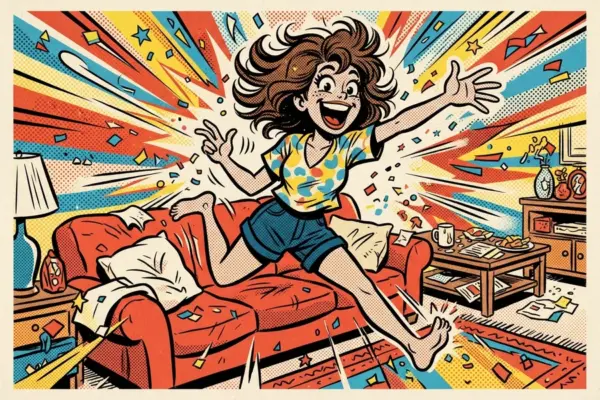
You're the one who jumps in first, announcing the plan out loud before anyone's actually asked for one, already halfway to fixing it while the rest of the room is still figuring out what happened — that's America in you, and it's not just noise.
It isn't performance. Underneath the volume is a sincere want to be the one who actually helps. The cost is that your own certainty can crowd out quieter people before they get a word in, and the loudness reads as showing off instead of what it really is.
Truth is, once the crowd's gone, what's under your hero persona is quieter and more uncertain than anyone watching would ever guess. So who else was going to walk in first?
England
«You'll never just say it. You'll bring tea instead.»
The test is new — you are among the first hundred to take it.
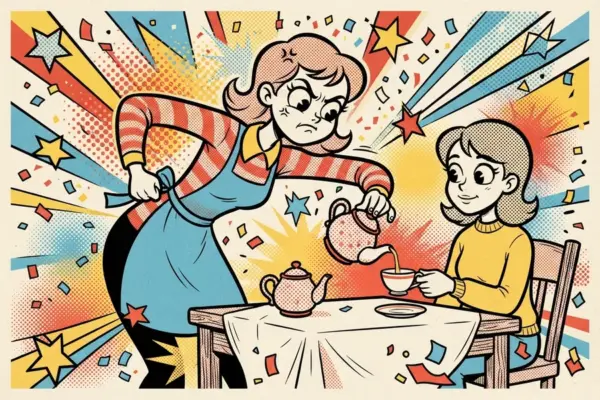
You go sharp and short-tempered over something small, muttering about how nobody rinses a mug properly anymore. 'It's fine,' you snap, in the tone that means it very much isn't — that's England, insults doing the work feelings won't.
Don't mistake the sharp edges for the whole story — underneath is a loyalty that runs genuinely deep, the kind that shows up for people long after it would've been easier to walk away. The cost is that pride keeps real insecurity locked down tight, and the people you care about most are the ones least likely to hear it plainly.
Picture it without the audience: you'd say plainly what you actually mean, no insult required. Nobody's going to thank you for the tea. You'll bring it anyway.

France
«You'd rather laugh about the disaster than admit it stung.»
The test is new — you are among the first hundred to take it.
Something goes visibly wrong — the dish falls, the plan flops, the whole thing's a mess — and you're already turning it into a story before the wreckage even settles. Not damage control. Just France, laughing loud enough that nobody thinks to ask if it actually hurt.
Is it denial? Hardly — you don't let one bad night define you, and the charm is doing actual work keeping your sense of self intact. The cost is that turning it into a joke can also be a way of never actually sitting with what went wrong, or fixing it.
The plate's still a mess, and somehow you're the one still smiling by the end — the punchline is protecting something real, and you know exactly what it is, even if you never say it out loud.

Russia
«You barely do anything, and the whole room goes quiet.»
The test is new — you are among the first hundred to take it.
You're just standing there, smiling, saying almost nothing, and somehow the loudest people in the room have gone quiet without you doing a single thing to make that happen. Notice that? That's Russia — a calm so total it unsettles people who never meant to be unsettled.
Someone tries to rattle you, and it just slides off — the calm is real, and underneath it there's an actual warmth most people never get far enough to see. The cost sits right next to the strength: that same presence unsettles people without you ever meaning it to, and neither part cancels the other out.
If that unpredictable edge ever actually settles, even you don't seem to know what it'll take. Maybe the room stops going quiet around you one day. Today isn't that day.

China
«You take care of everyone, and forget to count yourself.»
The test is new — you are among the first hundred to take it.
You're doing a lap of the table, checking who's eaten, refilling a cup nobody asked for, calling it no big deal even though you've tracked everyone's needs all night. China's already running the whole thing quietly, older-sibling instincts on autopilot.
Caretaking isn't obligation here — you genuinely nurture the people around you, and you measure setbacks against a timeline long enough that any one bad day stops mattering as much. The cost is that caretaking becomes the whole identity, so your own needs are the ones that go unnoticed, including by you.
Someone finally asks, 'who takes care of you?' — and you don't have a fast answer, because what you actually want is someone doing for you what you do for everyone else. Let someone take care of you for once. You've earned it.
About this test
How this test works
Frequently asked questions
Does this quiz tell me what nationality I am?
No. This quiz matches your everyday behavior to one character from the show, based only on how that character behaves in the story. It has nothing to do with your actual background, and it never treats a real country or its people as a trait to measure.
How many characters can I actually get as a result?
Eight — the classic lineup that shows up in nearly every version of this quiz online. Stretching the cast to include more characters might sound appealing, but without lengthening the quiz itself, that only waters the results down instead of making each match feel more accurate, so the roster stays tight on purpose.
Is this a trivia quiz about the show?
Not at all. Nothing here checks how much of the plot you remember. It's a personality match built on everyday scenarios, so you can take it with zero background on the series and still get a real result.
Will this tell me which character I'd date?
No, and that's on purpose. This isn't a shipping or soulmate quiz — whichever character you land on reflects your own everyday behavior, not who you'd end up with, so there's no boyfriend or partner angle here at all.
Why only 15 questions instead of a longer version?
Because pairing more questions with the same eight results actually makes the match land better, while a longer quiz that piles on extra characters tends to spread answers thin and blur the lines between them. Fifteen focused scenes turned out to be the sweet spot for telling these eight apart.
Sources
- McCrae, R. R., & John, O. P. (1992). An introduction to the five-factor model and its applications. Journal of Personality, 60(2), 175–215. doi:10.1111/j.1467-6494.1992.tb00970.x.
- Hoffner, C. (1996). Children's wishful identification and parasocial interaction with favorite television characters. Journal of Broadcasting & Electronic Media, 40(3), 389–402. doi:10.1080/08838159609364360.
- Hoffner, C., & Buchanan, M. (2005). Young adults' wishful identification with television characters: The role of perceived similarity and character attributes. Media Psychology, 7(4), 325–351. doi:10.1207/S1532785XMEP0704_2.
Three more tests on the same theme



Breakdown
There's a reason you answer the way you do
Most tests show you a slice of who you are. This one gets to the core: the classic 16-type personality test that goes back to Carl Jung, rebuilt from the ground up and way more accurate. It takes ten minutes, you only ever do it once — and you walk away with an answer most people never quite figure out: why you are the way you are. Why some people just get you, and why with others it's complicated. And that answer won't change: your type is yours for life.
Take the free testHow you compare
The test is new — you are among the first hundred to take it.
Three more tests on the same theme
About this test
How this test works
Every question here maps to documented behavior from Hetalia's eight-character main cast, scored against a framework long used in trait psychology to describe how people differ day to day. Your answers get read across five everyday patterns: how they handle setbacks, how open they are socially, how they show emotion, how they respond to conflict, and how they treat rules — whichever character's pattern lines up closest with yours is your result. It's a fan-made, entertainment-first match, not a scientifically calibrated psychology test, and every trait here comes strictly from how these eight act in their own story — nothing about any real country or its people factors in anywhere. Ties go to whichever category sits first on a fixed, pre-set list; that's a mechanical tiebreaker, not a ranking of who fits better. Background reading: the Five Factor Model and Big Five personality traits.Frequently asked questions
Does this quiz tell me what nationality I am?
No. This quiz matches your everyday behavior to one character from the show, based only on how that character behaves in the story. It has nothing to do with your actual background, and it never treats a real country or its people as a trait to measure.
How many characters can I actually get as a result?
Eight — the classic lineup that shows up in nearly every version of this quiz online. Stretching the cast to include more characters might sound appealing, but without lengthening the quiz itself, that only waters the results down instead of making each match feel more accurate, so the roster stays tight on purpose.
Is this a trivia quiz about the show?
Not at all. Nothing here checks how much of the plot you remember. It's a personality match built on everyday scenarios, so you can take it with zero background on the series and still get a real result.
Will this tell me which character I'd date?
No, and that's on purpose. This isn't a shipping or soulmate quiz — whichever character you land on reflects your own everyday behavior, not who you'd end up with, so there's no boyfriend or partner angle here at all.
Why only 15 questions instead of a longer version?
Because pairing more questions with the same eight results actually makes the match land better, while a longer quiz that piles on extra characters tends to spread answers thin and blur the lines between them. Fifteen focused scenes turned out to be the sweet spot for telling these eight apart.
Sources
- McCrae, R. R., & John, O. P. (1992). An introduction to the five-factor model and its applications. Journal of Personality, 60(2), 175–215. doi:10.1111/j.1467-6494.1992.tb00970.x.
- Hoffner, C. (1996). Children's wishful identification and parasocial interaction with favorite television characters. Journal of Broadcasting & Electronic Media, 40(3), 389–402. doi:10.1080/08838159609364360.
- Hoffner, C., & Buchanan, M. (2005). Young adults' wishful identification with television characters: The role of perceived similarity and character attributes. Media Psychology, 7(4), 325–351. doi:10.1207/S1532785XMEP0704_2.
