Sister Narcissist Quiz
Is your sister a narcissist, or is it something more ordinary? This takes about five minutes: you answer only with scenes you’ve actually watched, and you end up with a picture of what they add up to, not a score. It describes what you’ve seen, not who she is, and it isn’t a diagnosis.
No sign-up. Your result right away.
Kitchen Table
«You notice the loud moments because you care about her.»
The test is new — you are among the first hundred to take it.
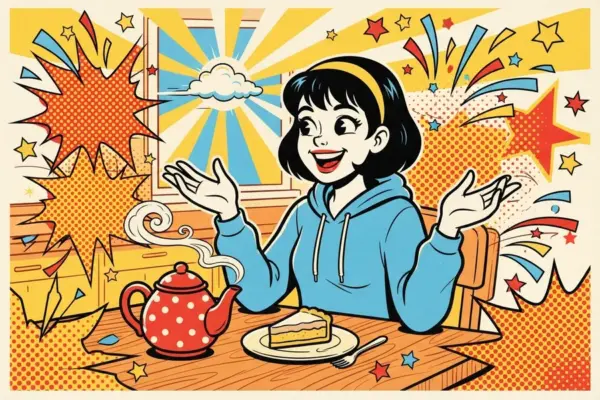
You watch her claim the bigger slice of cake, laugh at herself, and ten minutes later you're arguing about a film. Another evening she talks over your story, then texts to ask how it ended. What you're describing reads as everyday self-focus, not narcissism.
Plenty of people already stretch the word narcissist to behavior that isn't close to the clinical picture, so a label here would read more into normal life than it holds. Naming the exact friction does more for you.
Reading it lightly has a price: a real annoyance can go unsaid under just how she is. Whether a recent falling-out is tinting these moments for you, this can't show. Say the small thing and skip the big label.
Family Album
«The old seats fill up and you both know your lines.»
The test is new — you are among the first hundred to take it.
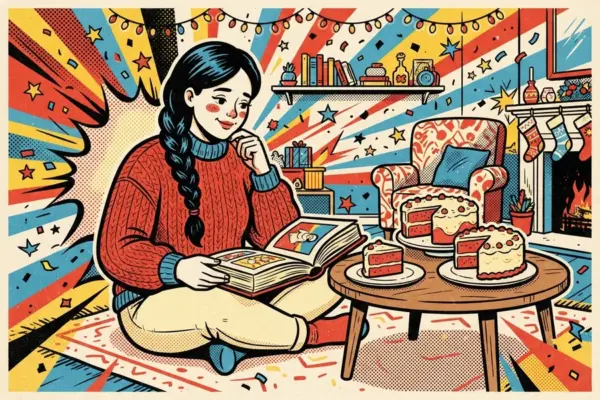
A parent praises your cooking and she goes quiet; by dessert, who got the bigger room is back on the table. In that house the old roles arrive with you. What you're describing lines up with common sibling and family dynamics, not with narcissism.
What you feel around her may fit this: feeling preferred, or second, is a documented predictor of coldness between siblings, separate from personality. That doesn't mean she has no hard traits; one study found the two side by side. A photo or a holiday can drag an old role over a fresh moment for you both.
Your view counts, it just isn't the whole album, and a parent's version sits somewhere you can't see.

Red Thread
«You notice it across places that have nothing in common.»
The test is new — you are among the first hundred to take it.
You hear it at a party, in a group chat, on a call: her news grows louder when yours arrives. What you're describing shows a pattern broad and consistent enough to be worth discussing with a professional.
If this is heavy for you to carry, a therapist or counselor can be your own footing, at whatever pace suits you. What you're describing is an account of what you've seen, not a clinical picture, which only a specialist could assess.
Seeing this clearly can be tiring in its own right. What you see deserves to be taken seriously, and it stays your account, since how she would tell it is out of reach.
About this test
How this test works
Research on personality and on siblings keeps three explanations for a hard sibling relationship apart: everyday self-absorption, the pull of family roles, and a wide, steady habit of behavior. Your answers about moments with your sister and about home are sorted among them.
For this behavior, a view from the side tells you more than the person's own description, since it is easier to see in others than in oneself. The versions often diverge, so your account speaks to moments you saw, not to who she is.
The quiz cannot see how a parent would retell the family history, what she feels or intends, or whether a personality disorder is present.
To see how such a diagnosis is reached, this overview of personality disorders describes a specialist using a defined assessment, with relatives as sources of information, covering personality disorders broadly, not sisters. This piece on sibling bonds follows them across a lifetime, including how adult conflict and perceived favoritism relate to low mood and loneliness. It is mostly practical and aimed at parents, yet about siblings.
This test is not a diagnostic tool and cannot say if your sister has a personality disorder. A qualified specialist decides that, usually with her taking part; relatives give background, not diagnoses. Your result describes your experience rather than her and is no stand-in for her own evaluation. No result, even the highest, is a warning about her, and none is on its own a reason to cut ties or pull away.
Frequently asked questions
Can an online quiz diagnose my sister with narcissistic personality disorder?
No. A trained specialist makes that call after meeting the person, usually with her taking part, and relatives are asked for background instead of a verdict. A quiz like this one only organizes your own account of what you have watched. It speaks to your observations and says nothing about her inner life or any condition.
How do I tell narcissism from everyday self-centeredness?
Often it is the second. In everyday talk the word narcissist stretches much further than it does in a clinic, and plenty of irritating behavior is the self-centeredness most people show at times. A family pattern or a rough patch between the two of you can produce the same friction. The quiz helps you see which of these fits what you have watched.
Why does my sister act the way she does?
Nobody can give a reliable answer from the outside, but family history is a sensible place to look first. How parents treat two siblings, and how each child feels about their own standing, can leave patterns that look like a difference in character for decades. Temperament, stress and life events add their own layers.
Could family history explain how she acts?
Possibly. Research on adult siblings links feeling like the less favored child, or simply ranking lower, to distance, rivalry and resentment later on, whatever either person is like. It says nothing about blame. If your answers point that way, the quiz will say so.
If a quiz points to a broad pattern, does that mean she has a disorder?
No. It means the moments you described turned up across many unrelated settings in what you watched, which deserves attention. It is still your report and not a read on her, and only a specialist can say anything about a disorder. If untangling it weighs on you, talking it through with a counselor of your own is a reasonable step.
Sources
- Hengartner, M. P., Eymir, A., & Haslam, N. (2026). Expanded definitions of psychopathology: Exploring concept creep in narcissistic personality disorder. Acta Psychologica, 264, 106604.
- Pincus, A. L., & Lukowitsky, M. R. (2010). Pathological Narcissism and Narcissistic Personality Disorder. Annual Review of Clinical Psychology, 6, 421–446. doi:10.1146/annurev.clinpsy.121208.131215.
- Ackerman, R. A., Witt, E. A., Donnellan, M. B., Trzesniewski, K. H., Robins, R. W., & Kashy, D. A. (2011). What does the Narcissistic Personality Inventory really measure? Assessment, 18(1), 67–87. doi:10.1177/1073191110382845.
- Finzi-Dottan, R., & Cohen, O. (2010). Young Adult Sibling Relations: The Effects of Perceived Parental Favoritism and Narcissism. The Journal of Psychology, 145(1), 1–22. doi:10.1080/00223980.2010.528073.
Three more tests on the same theme
Breakdown
There's a reason you answer the way you do
Most tests show you a slice of who you are. This one gets to the core: the classic 16-type personality test that goes back to Carl Jung, rebuilt from the ground up and way more accurate. It takes ten minutes, you only ever do it once — and you walk away with an answer most people never quite figure out: why you are the way you are. Why some people just get you, and why with others it's complicated. And that answer won't change: your type is yours for life.
Take the free testHow you compare
The test is new — you are among the first hundred to take it.
Three more tests on the same theme
About this test
How this test works
Research on personality and on siblings keeps three explanations for a hard sibling relationship apart: everyday self-absorption, the pull of family roles, and a wide, steady habit of behavior. Your answers about moments with your sister and about home are sorted among them.
For this behavior, a view from the side tells you more than the person's own description, since it is easier to see in others than in oneself. The versions often diverge, so your account speaks to moments you saw, not to who she is.
The quiz cannot see how a parent would retell the family history, what she feels or intends, or whether a personality disorder is present.
To see how such a diagnosis is reached, this overview of personality disorders describes a specialist using a defined assessment, with relatives as sources of information, covering personality disorders broadly, not sisters. This piece on sibling bonds follows them across a lifetime, including how adult conflict and perceived favoritism relate to low mood and loneliness. It is mostly practical and aimed at parents, yet about siblings.
This test is not a diagnostic tool and cannot say if your sister has a personality disorder. A qualified specialist decides that, usually with her taking part; relatives give background, not diagnoses. Your result describes your experience rather than her and is no stand-in for her own evaluation. No result, even the highest, is a warning about her, and none is on its own a reason to cut ties or pull away.
Frequently asked questions
Can an online quiz diagnose my sister with narcissistic personality disorder?
No. A trained specialist makes that call after meeting the person, usually with her taking part, and relatives are asked for background instead of a verdict. A quiz like this one only organizes your own account of what you have watched. It speaks to your observations and says nothing about her inner life or any condition.
How do I tell narcissism from everyday self-centeredness?
Often it is the second. In everyday talk the word narcissist stretches much further than it does in a clinic, and plenty of irritating behavior is the self-centeredness most people show at times. A family pattern or a rough patch between the two of you can produce the same friction. The quiz helps you see which of these fits what you have watched.
Why does my sister act the way she does?
Nobody can give a reliable answer from the outside, but family history is a sensible place to look first. How parents treat two siblings, and how each child feels about their own standing, can leave patterns that look like a difference in character for decades. Temperament, stress and life events add their own layers.
Could family history explain how she acts?
Possibly. Research on adult siblings links feeling like the less favored child, or simply ranking lower, to distance, rivalry and resentment later on, whatever either person is like. It says nothing about blame. If your answers point that way, the quiz will say so.
If a quiz points to a broad pattern, does that mean she has a disorder?
No. It means the moments you described turned up across many unrelated settings in what you watched, which deserves attention. It is still your report and not a read on her, and only a specialist can say anything about a disorder. If untangling it weighs on you, talking it through with a counselor of your own is a reasonable step.
Sources
- Hengartner, M. P., Eymir, A., & Haslam, N. (2026). Expanded definitions of psychopathology: Exploring concept creep in narcissistic personality disorder. Acta Psychologica, 264, 106604.
- Pincus, A. L., & Lukowitsky, M. R. (2010). Pathological Narcissism and Narcissistic Personality Disorder. Annual Review of Clinical Psychology, 6, 421–446. doi:10.1146/annurev.clinpsy.121208.131215.
- Ackerman, R. A., Witt, E. A., Donnellan, M. B., Trzesniewski, K. H., Robins, R. W., & Kashy, D. A. (2011). What does the Narcissistic Personality Inventory really measure? Assessment, 18(1), 67–87. doi:10.1177/1073191110382845.
- Finzi-Dottan, R., & Cohen, O. (2010). Young Adult Sibling Relations: The Effects of Perceived Parental Favoritism and Narcissism. The Journal of Psychology, 145(1), 1–22. doi:10.1080/00223980.2010.528073.
