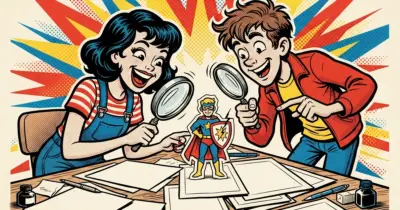
Mary Sue Test
Every character has a spot the story hasn’t tested yet — this finds yours. Answer for the page as it actually is, not how you hope it reads, and you’ll get the name of the one gap worth fixing first, not a score. Takes about 4 minutes. It’s a craft check on the character, never a verdict on you.
No sign-up. Your result right away.
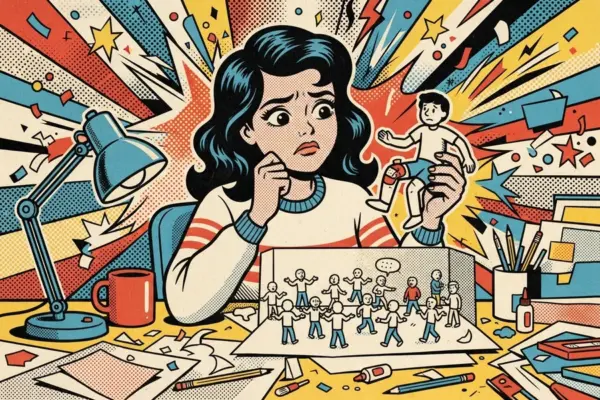
Weightless Flaws
«Your character's flaws never once cost them anything.»
The test is new — you are among the first hundred to take it.
You've handed the character a real flaw — a temper, a broken promise, a habit that keeps resurfacing — and then let the story roll right past it, like nobody was ever going to send a bill. That's the weak spot in this draft: flaws with no weight.
The fix is small: give that flaw an on-page price — lost trust, or a reaction from someone who notices — and you loosen this pattern fast.
Power With No Price, No One Pushes Back, Breaks Story Didn't Earn, and Backstory Outgrown Its Role all stand on their own, fully counted in your results. This test has nothing against a character you love writing. It has something to say about a flaw that never costs them anything. Give it a price tag once, and this scale quiets down.
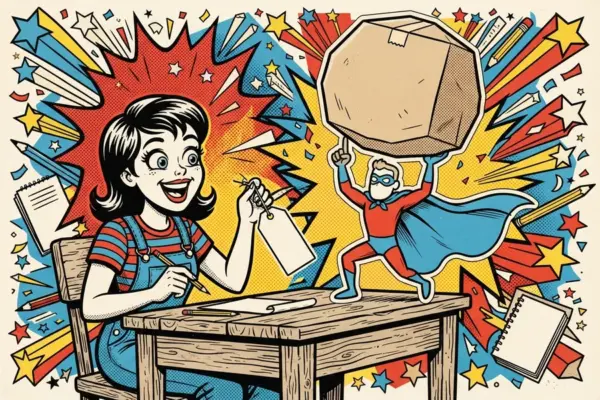
Free Power
«This power you gave them has never once failed.»
The test is new — you are among the first hundred to take it.
You built a power that shows up whenever the story needs it — no training scene, no price tag, no moment where it sputters or fails — and the reader feels the safety net long before the climax arrives. Power with no price is what this draft is missing.
Pick one small cost — an origin you finally show on the page, a price paid each time it's used, or one scene where the power actually falls short.
Flaws With No Weight, No One Pushes Back, Breaks Story Didn't Earn, and Backstory Outgrown Its Role are just as real, just as measured, in your results. Is a talented character a problem? Not remotely — the gap is a talent nobody ever works for or risks anything to use. Once it costs them something, the net stops feeling so safe.

No Pushback
«Nobody in your story is allowed to disagree with them.»
The test is new — you are among the first hundred to take it.
You've filled this story with people who warm to this character fast, and even the skeptical ones end up nodding along by the final chapter — nobody stays unconvinced, and nobody but them ever gets the last word. Right there is this draft's weak spot: no one pushes back.
Give one credible voice — someone the story already trusts, or the antagonist — a disagreement that never gets smoothed over, and you close this gap in a single scene.
Flaws With No Weight, Power With No Price, Breaks Story Didn't Earn, and Backstory Outgrown Its Role sit right alongside this result, equally real, equally scored. Being easy to root for was always allowed — the story hasn't let anyone stand their ground against them yet. One disagreement that sticks is enough to stop the room from nodding in unison.
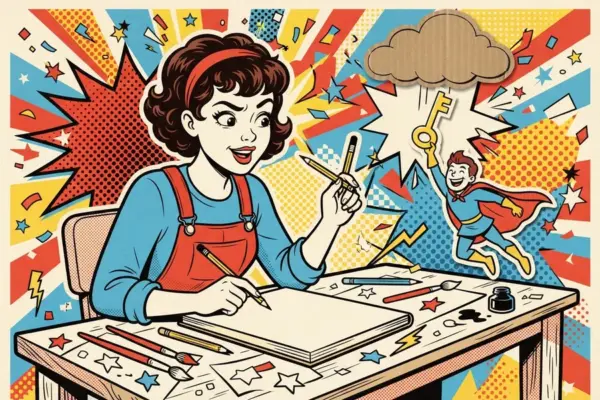
Unearned Breaks
«Good things keep happening to them, and your story never says why.»
The test is new — you are among the first hundred to take it.
You let the rescue arrive, the resource appear, the danger pass, and you never once ask your own story's logic to explain why it happened to them and not to anyone else standing just as close — and that's this draft's soft spot: breaks the story didn't earn.
Pick one lucky break already sitting in the story and give it a real cause, or make one broken promise actually cost them something — either move closes most of the gap.
Flaws With No Weight, Power With No Price, No One Pushes Back, and Backstory Outgrown Its Role are just as active here. How lucky a character is doesn't factor in — what does is whether the story explains the luck. Earn one break on the page — the double standard follows it out the door.
Oversized Origin
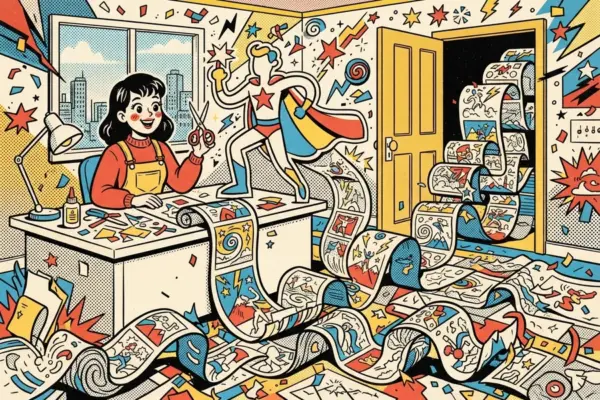
«Your character's past takes up more room than the present plot does.»
The test is new — you are among the first hundred to take it.
You keep circling back to the exceptional origin — the chosen role, the secret history, the dramatic start — while the plot happening right now barely gets a scene of its own to breathe in. Backstory outgrown its role is exactly the pattern crowding out the present-day plot.
Pick one thread of that backstory and let it actually shape a choice on the page today, or simply trim how much space the origin takes up next to what it's doing now.
Flaws With No Weight, Power With No Price, No One Pushes Back, and Breaks Story Didn't Earn matter just as much. A big, dramatic history is not what's being measured. What's measured is how much of today's story that history is doing. Give the origin one present-day task. Watch the balance tip back on its own.
About this test
How this test works
This test runs on one idea from craft feedback: some traits just sit on a character, others the story makes them earn. Instead of one added-up score, it tracks five specific gaps, then names whichever one comes through loudest.
The five checks: does a flaw cost the character anything real; does their defining power come with a price; is anyone in the story allowed to seriously disagree with them; are good outcomes earned by the story's own logic rather than handed over; and does an exceptional origin do current work in the plot or just take up space.
This isn't a read on you: not your skill, age, gender, or worth. A character who's more capable, luckier, or easier to root for than you are is completely ordinary and isn't flagged here — only these five specific habits are. It isn't meant for judging somebody else's finished, public character; it's built for your own draft or plan, including one still only in notes.
Answer for what's actually on the page, or decided so far if the character is still being planned. None of this diagnoses the character or you: it's a snapshot of a single version at a specific point in the process, and every gap it names closes with a targeted fix, not a rewrite.
Background: how the phrase started and the arguments people still have over it (Mary Sue), plus why writers put themselves into their own fiction in the first place (self-insertion).
Frequently asked questions
How do you know if your character is a Mary Sue?
There's no single tell — it's five separate signals: a flaw that costs nothing, a power that never runs dry, nobody willing to push back, a stroke of luck nobody explains, and a backstory that takes up more room than it earns. One of these standing out on its own is a nudge toward revision, not a verdict on the whole manuscript.
What makes a character a Mary Sue?
The word gets thrown around loosely, but what it's actually naming is much narrower — a character can be gifted, fortunate, and adored by everyone in the story and still not fit the pattern. What matters is whether the story ever makes those qualities cost something or lets someone challenge them, not the qualities on their own.
How do I fix a Mary Sue character?
The changes tend to be small, not structural. A flaw that finally lands a consequence, an ability that starts asking for something in return, a secondary character allowed to hold a grudge, a stroke of luck traced back to an actual cause — pick whichever pattern stood out most in your answers and work from that one.
Is there a male version of Mary Sue?
No — none of this runs on gender. The same five axes apply to the manuscript regardless of who wrote it or who the character is; there's no separate label or scoring track hiding underneath for one gender or another.
Is it bad to write a Mary Sue?
Not inherently. Writing a character you'd want to be, or one closely modeled on yourself, is common and often does real work for a story. This test doesn't chase that impulse — it looks at five very different, narrow habits in how the manuscript treats the character once they're on the page.
Sources
- Forster, E. M. (1927). Aspects of the Novel.
- Bacon-Smith, C. (1992). Enterprising Women.
- Chander, A., & Sunder, M. (2007). Everyone's a Superhero: A Cultural Theory of "Mary Sue" Fan Fiction as Fair Use. California Law Review, 95(2), 597–626.
Three more tests on the same theme
Breakdown
There's a reason you answer the way you do
Most tests show you a slice of who you are. This one gets to the core: the classic 16-type personality test that goes back to Carl Jung, rebuilt from the ground up and way more accurate. It takes ten minutes, you only ever do it once — and you walk away with an answer most people never quite figure out: why you are the way you are. Why some people just get you, and why with others it's complicated. And that answer won't change: your type is yours for life.
Take the free testHow you compare
The test is new — you are among the first hundred to take it.
Three more tests on the same theme
About this test
How this test works
This test runs on one idea from craft feedback: some traits just sit on a character, others the story makes them earn. Instead of one added-up score, it tracks five specific gaps, then names whichever one comes through loudest.
The five checks: does a flaw cost the character anything real; does their defining power come with a price; is anyone in the story allowed to seriously disagree with them; are good outcomes earned by the story's own logic rather than handed over; and does an exceptional origin do current work in the plot or just take up space.
This isn't a read on you: not your skill, age, gender, or worth. A character who's more capable, luckier, or easier to root for than you are is completely ordinary and isn't flagged here — only these five specific habits are. It isn't meant for judging somebody else's finished, public character; it's built for your own draft or plan, including one still only in notes.
Answer for what's actually on the page, or decided so far if the character is still being planned. None of this diagnoses the character or you: it's a snapshot of a single version at a specific point in the process, and every gap it names closes with a targeted fix, not a rewrite.
Background: how the phrase started and the arguments people still have over it (Mary Sue), plus why writers put themselves into their own fiction in the first place (self-insertion).
Frequently asked questions
How do you know if your character is a Mary Sue?
There's no single tell — it's five separate signals: a flaw that costs nothing, a power that never runs dry, nobody willing to push back, a stroke of luck nobody explains, and a backstory that takes up more room than it earns. One of these standing out on its own is a nudge toward revision, not a verdict on the whole manuscript.
What makes a character a Mary Sue?
The word gets thrown around loosely, but what it's actually naming is much narrower — a character can be gifted, fortunate, and adored by everyone in the story and still not fit the pattern. What matters is whether the story ever makes those qualities cost something or lets someone challenge them, not the qualities on their own.
How do I fix a Mary Sue character?
The changes tend to be small, not structural. A flaw that finally lands a consequence, an ability that starts asking for something in return, a secondary character allowed to hold a grudge, a stroke of luck traced back to an actual cause — pick whichever pattern stood out most in your answers and work from that one.
Is there a male version of Mary Sue?
No — none of this runs on gender. The same five axes apply to the manuscript regardless of who wrote it or who the character is; there's no separate label or scoring track hiding underneath for one gender or another.
Is it bad to write a Mary Sue?
Not inherently. Writing a character you'd want to be, or one closely modeled on yourself, is common and often does real work for a story. This test doesn't chase that impulse — it looks at five very different, narrow habits in how the manuscript treats the character once they're on the page.
Sources
- Forster, E. M. (1927). Aspects of the Novel.
- Bacon-Smith, C. (1992). Enterprising Women.
- Chander, A., & Sunder, M. (2007). Everyone's a Superhero: A Cultural Theory of "Mary Sue" Fan Fiction as Fair Use. California Law Review, 95(2), 597–626.
