
The Amazing Digital Circus Test
Which member of the Digital Circus do your everyday reactions actually match? Work through a set of ordinary moments — no trivia, no plot knowledge needed — and land on one of the eight regulars: Pomni, Jax, Ragatha, Caine, Gangle, Kinger, Zooble, or Bubble. Takes about 6 minutes, purely for fun, not a psychology exam.
No sign-up. Your result right away.

Pomni the Brave
«You feel the fear and go anyway, every time.»
The test is new — you are among the first hundred to take it.
The room falls quiet the second something goes wrong that nobody planned for, and for one visible beat you look like you might bolt. Then something clicks, and you're already moving faster than anyone else, chin up, straight toward the mess instead of away from it.
Nobody in the room misses that flash of panic before you move — it's written all over your face every single time. That's the trade: the same openness that makes people trust you on sight also means you'll never win a game of poker in your life.
Given the choice, you'd still take the courage and let the rest show.
Jax the Wildcard
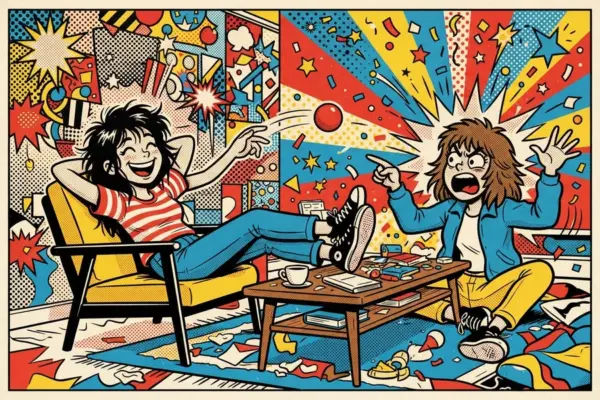
«You'd rather crack a joke than admit anything hurts.»
The test is new — you are among the first hundred to take it.
Someone brings up something that actually stings, right in the middle of a normal conversation, and you're already firing back a joke before the sentence even finishes. The room laughs. The subject changes. Nobody, including you, circles back to what was actually said.
It works — you're the one nobody can rattle, the one who turns bad nights into good stories for everyone else. The cost is quieter: the same jokes that protect you also keep people from ever getting close enough to notice when you're actually rattled.
You wouldn't trade the wit for it, though.

Ragatha the Steady
«You show up for everyone before anyone asks you to.»
The test is new — you are among the first hundred to take it.
Someone's clearly having the worst day in the group, and you're already there before they've finished the sentence — a warm drink in hand, the right joke ready, steady in a way that makes the whole room exhale. Nobody ever has to ask you twice.
That steadiness looks effortless from the outside, which is exactly the problem — you've gotten so good at holding it up that almost nobody thinks to ask how you're actually doing underneath it.
You'll keep showing up anyway, because that's just what you do.

Caine the Showstopper
«You can turn absolutely any moment into a whole production.»
The test is new — you are among the first hundred to take it.
The plan falls apart five minutes before it's supposed to start, and instead of panicking you grab everyone's attention and announce a completely new, bigger idea like it was always the plan — and somehow, impossibly, the room believes you.
Your energy gets a stalled room moving again like nothing else can, but you talk over quieter voices before you even notice they had something to say.
You'd still rather run the show than sit quietly through one.
Gangle the Composed
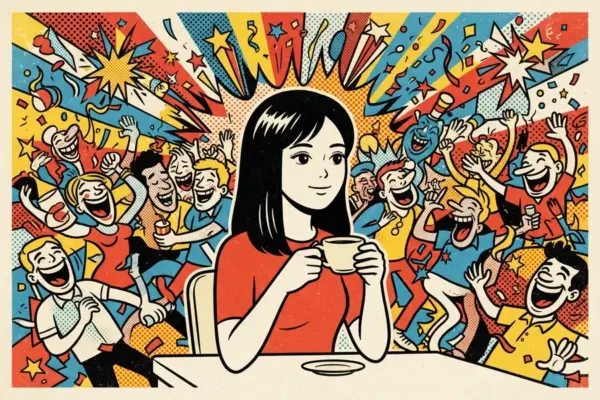
«Nothing on your face ever quite gives you away.»
The test is new — you are among the first hundred to take it.
Something rattles you badly enough to knock anyone else sideways, and your expression barely moves — same calm face, same even voice, while everything underneath is doing something completely different from what the room can actually see.
People lean on that steadiness without ever really clocking how much it costs you to keep it that even, day after day, in front of all of them.
Nobody close to you has actually seen the unguarded version yet, and you're not in a hurry to change that.

Kinger the Careful
«You check things twice because someone in the group has to.»
The test is new — you are among the first hundred to take it.
Everyone else has already moved on to the next thing, and you're still quietly going back over the details nobody else thought to check — the door, the numbers, the plan — because the one time you skip it is exactly when something goes wrong.
That habit catches problems before anyone else even notices them coming, and the group runs smoother for it more often than anyone gives you credit for out loud.
The trade is that switching off takes real, specific quiet — you rarely get to fully rest on command.
Zooble the Unbothered
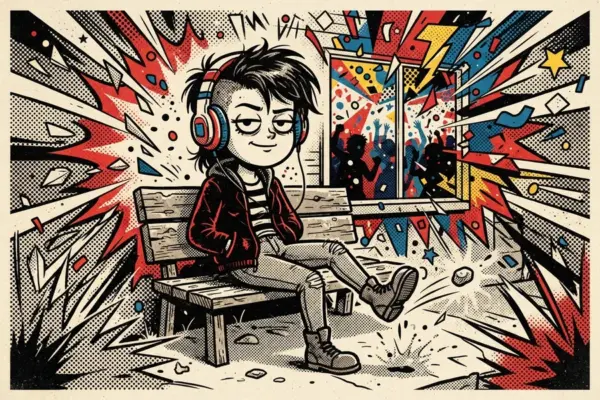
«You'd rather be honest than comfortable, every single time.»
The test is new — you are among the first hundred to take it.
Someone tries to smooth over a bad situation with a nice lie, and you shut it down flatly before it goes any further — no cushioning, no false comfort, just the actual truth, delivered exactly once and never softened for anyone's benefit.
That bluntness cuts through nonsense faster than anything else in the room, though it also reads colder than what's actually underneath it to anyone who doesn't already know you.
The handful of people you let in close know better; everyone else just gets the flat version, and that's fine by you.

Bubble the Livewire
«You're already talking before you've finished walking into the room.»
The test is new — you are among the first hundred to take it.
The party's been quiet for exactly ten seconds when you burst in with snacks, three stories, and enough energy to restart the whole thing from scratch — and somehow, within a minute, everyone else is loud again too, whether they meant to be or not.
That energy is contagious in the best way, the kind that actually lifts a flat room back to life within a minute of you walking in.
It also means quieter signals get lost in the noise, and what people see is a simpler read than what's actually going on underneath — but you wouldn't trade the volume for it.
About this test
How this test works
This quiz borrows ideas from long-running personality-trait research, from classic work on how people cope with stress and manage their emotions, and from Carl Jung's old idea of the persona — a mask-like front someone presents while something different plays out behind it. Those ideas get lined up against how the eight regular circus members are shown behaving on screen.
It works out how you handle a stretch of stress once it actually lands, whether directness or warmth tends to come out first with the people around you, how much slips through when nobody's watching, how ready you are to jump into a group with nothing organized yet, and how you respond when something sudden interrupts an ordinary moment — then lines your pattern up against whichever cast member's on-screen habits sit closest to it.
Limits: this is a just-for-fun self-report quiz inside the fandom — it hasn't been tested or validated as a real psychological tool. Every trait here comes strictly from behavior the show itself has already put on screen, so a match says nothing about your life beyond that one resemblance.
For more on the trait ideas this kind of character-match quiz borrows from, see the APA Dictionary of Psychology entry on personality traits and the overview of the Big Five personality traits.
Frequently asked questions
Which Amazing Digital Circus character am I?
This quiz reads how you react in a set of ordinary situations and matches you to whichever of the eight regular circus members you land closest to. There's nothing to win or lose here — each of the eight is a complete personality in its own right, and wherever you land is exactly right for you.
Is this actually a personality test or just for fun?
Mostly for fun, with a bit of self-recognition mixed in. It leans on well-known personality concepts as a loose framework rather than a clinical measuring stick, so take the result as a playful mirror, not a professional read.
What does my Digital Circus Kin Assignment actually mean?
It's shorthand fans use for whichever circus member your answers landed closest to — a lighthearted match for right now, not a fixed identity you carry forward.
Does this quiz need updating for newer episodes?
No — the roster here is the eight who were there from start to finish, so there's no cast list to update as more episodes air.
Who are the main characters in the Amazing Digital Circus?
Eight regulars carry this quiz: Pomni, Jax, Ragatha, Caine, Gangle, Kinger, Zooble, and Bubble. A handful of side characters pop up in the show too, but there wasn't enough to say about them here to build a fair match, so they're left out.
Sources
- McCrae, R. R., & Costa, P. T. (1987). Validation of the five-factor model of personality across instruments and observers. Journal of Personality and Social Psychology, 52(1), 81–90. doi:10.1037/0022-3514.52.1.81.
- Lazarus, R. S., & Folkman, S. (1984). Stress, Appraisal, and Coping. Springer.
- Gross, J. J. (1998). The emerging field of emotion regulation: An integrative review. Review of General Psychology, 2(3), 271–299. doi:10.1037/1089-2680.2.3.271.
- Jung, C. G. (1921). Psychological Types (Collected Works, Vol. 6), on the Persona, pp. 463–470.
Three more tests on the same theme



Breakdown
There's a reason you answer the way you do
Most tests show you a slice of who you are. This one gets to the core: the classic 16-type personality test that goes back to Carl Jung, rebuilt from the ground up and way more accurate. It takes ten minutes, you only ever do it once — and you walk away with an answer most people never quite figure out: why you are the way you are. Why some people just get you, and why with others it's complicated. And that answer won't change: your type is yours for life.
Take the free testHow you compare
The test is new — you are among the first hundred to take it.
Three more tests on the same theme
About this test
How this test works
This quiz borrows ideas from long-running personality-trait research, from classic work on how people cope with stress and manage their emotions, and from Carl Jung's old idea of the persona — a mask-like front someone presents while something different plays out behind it. Those ideas get lined up against how the eight regular circus members are shown behaving on screen.
It works out how you handle a stretch of stress once it actually lands, whether directness or warmth tends to come out first with the people around you, how much slips through when nobody's watching, how ready you are to jump into a group with nothing organized yet, and how you respond when something sudden interrupts an ordinary moment — then lines your pattern up against whichever cast member's on-screen habits sit closest to it.
Limits: this is a just-for-fun self-report quiz inside the fandom — it hasn't been tested or validated as a real psychological tool. Every trait here comes strictly from behavior the show itself has already put on screen, so a match says nothing about your life beyond that one resemblance.
For more on the trait ideas this kind of character-match quiz borrows from, see the APA Dictionary of Psychology entry on personality traits and the overview of the Big Five personality traits.
Frequently asked questions
Which Amazing Digital Circus character am I?
This quiz reads how you react in a set of ordinary situations and matches you to whichever of the eight regular circus members you land closest to. There's nothing to win or lose here — each of the eight is a complete personality in its own right, and wherever you land is exactly right for you.
Is this actually a personality test or just for fun?
Mostly for fun, with a bit of self-recognition mixed in. It leans on well-known personality concepts as a loose framework rather than a clinical measuring stick, so take the result as a playful mirror, not a professional read.
What does my Digital Circus Kin Assignment actually mean?
It's shorthand fans use for whichever circus member your answers landed closest to — a lighthearted match for right now, not a fixed identity you carry forward.
Does this quiz need updating for newer episodes?
No — the roster here is the eight who were there from start to finish, so there's no cast list to update as more episodes air.
Who are the main characters in the Amazing Digital Circus?
Eight regulars carry this quiz: Pomni, Jax, Ragatha, Caine, Gangle, Kinger, Zooble, and Bubble. A handful of side characters pop up in the show too, but there wasn't enough to say about them here to build a fair match, so they're left out.
Sources
- McCrae, R. R., & Costa, P. T. (1987). Validation of the five-factor model of personality across instruments and observers. Journal of Personality and Social Psychology, 52(1), 81–90. doi:10.1037/0022-3514.52.1.81.
- Lazarus, R. S., & Folkman, S. (1984). Stress, Appraisal, and Coping. Springer.
- Gross, J. J. (1998). The emerging field of emotion regulation: An integrative review. Review of General Psychology, 2(3), 271–299. doi:10.1037/1089-2680.2.3.271.
- Jung, C. G. (1921). Psychological Types (Collected Works, Vol. 6), on the Persona, pp. 463–470.
