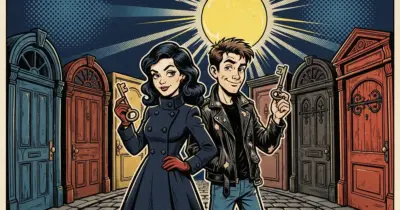
Vampire: The Masquerade Clan Quiz
Every Camarilla clan claims a different kind of power, and one of them already matches how you actually move through an ordinary day. Answer a set of quick everyday scenes and get matched to one of the seven original clans — about 5 minutes, no lore knowledge required, just for fun.
No sign-up. Your result right away.

Ventrue Command
«You don't wait for permission to be the plan.»
The test is new — you are among the first hundred to take it.
Somebody has to pick the restaurant, set the itinerary, tell the group where to be at seven, and you've already done it before the group chat even finishes arguing — not because you were asked, just because nobody else had.
People start looking to you before a decision even gets made, and you've stopped clocking how much of that habit you built yourself — the tone you set, the pace you keep, the standard nobody else in the room signed up to meet.
You rarely notice how much work the calm takes — the tone held just right, the pace kept steady — until the day it slips. Someone else's judgment waits longer than it should for a turn at the wheel. Even so, this room's rarely sorry you're the one steering it.
Toreador Radiance
«You feel first and explain later, if at all.»
The test is new — you are among the first hundred to take it.
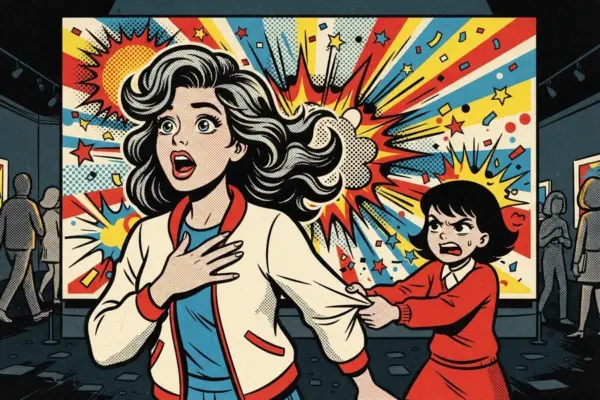
You round a corner into a gallery you weren't planning to enter, and forty minutes vanish somewhere between one painting and the next, your phone buzzing itself quiet while you don't even notice it happening.
You remember exactly who complimented the playlist you built and who didn't, and it matters more than it probably should — not the attention itself, but proof that someone else actually felt what you felt.
If a room doesn't hand the feeling back, you're left standing in it alone, exposed, with nowhere to put what you just felt. Beauty keeps cutting ahead of whatever the moment actually needed from you. Still, feeling this much this openly rarely turns out to be a waste.

Malkavian Insight
«The connection was obvious to you minutes ago.»
The test is new — you are among the first hundred to take it.
The whiteboard's covered in disconnected notes and everyone's stalled, and you're the one who suddenly says the two ideas in opposite corners are actually the same idea, out loud, before you've even finished thinking it through yourself.
You've learned to read the room before saying the odd thing out loud, but you say it anyway, because sitting on an idea that sharp feels like a bigger waste than the risk of saying it.
Someone laughs a beat too late at what you just blurted out, already three ideas past caring whether it landed right. Getting there first sometimes lands as too much before anyone else has caught up. Wait a day, though — the thing you noticed tends to be the one people remember.

Nosferatu Discretion
«You did the real work and nobody wrote it down.»
The test is new — you are among the first hundred to take it.
Everyone's thanking the person who presented the project, and you're the one who actually solved the part that made the whole thing work, already halfway out the door before anyone thinks to ask who did what.
The two or three people who actually know what you carry for them would vouch for you without a second thought, and that's the whole point — you never built this for the room that doesn't already know.
Nobody nominates you for anything. You never once put your own name forward. The joke that breaks the tension also lets you dodge asking for what you're actually due. Doesn't matter — the two people who know exactly what you're worth already do.

Tremere Mastery
«By the time you speak, you've already solved it twice.»
The test is new — you are among the first hundred to take it.
You've read through the entire manual twice, mapped out every failure point in the process, and built a three-step contingency for each one — and you haven't said a single word about it in the group chat yet.
People come to lean on the plan long before they know how much work went into having one ready, and you've never once corrected the story that it just came together easily.
Ever wonder why you hand over a plan one piece at a time instead of all at once? People waiting on the rest sometimes read that pacing as you sitting on something they needed sooner. The standard you hold yourself to turns out to be a tough one for whoever's working beside you. No one who's leaned on one of your plans has ever come away regretting it.

Gangrel Instinct
«You already left before the meeting even started.»
The test is new — you are among the first hundred to take it.
You're three switchbacks up the trail before the rest of the group has even finished arguing about which trailhead to use, already trusting your own read of the weather over anyone's printed map, boots already wet from a stream nobody warned you about.
You've turned down more invitations than anyone realizes, not because the people weren't worth it, but because a locked-in plan on someone else's calendar feels like a cage before it's even started.
Skip enough group plans and eventually people stop circling back with an invite, even ones who would've shown up for you. What reads as independence is often just caution about depending on a room that hasn't earned it yet. That gut call — three switchbacks up before anyone else has even picked a trailhead — is usually the right one anyway.
Brujah Defiance
«You're already arguing before you've decided to get involved.»
The test is new — you are among the first hundred to take it.
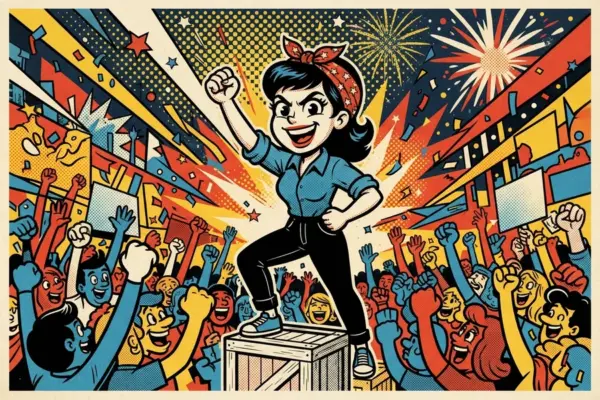
The cashier three people ahead of you in line is getting blamed for a price that isn't theirs, and you're already at the counter backing them up before you've even decided this is any of your business.
Days later, you're still turning the exchange over, replaying what you should've said, long after the person you defended has moved on with their afternoon entirely, the whole thing still running laps in your head.
That fire doesn't switch off once the moment's over — you're still hunting for the line you should've used. A small dust-up can turn into a bigger one under that kind of attention. Whether it was for the person you backed or the unfairness itself gets hard to untangle. Most rooms come out ahead when someone's willing to say the quiet part out loud.
About this test
How this test works
Picking your way through this quiz sorts you into whichever of the seven original clans your day-to-day patterns and priorities line up with most consistently.
The categories come from research on how people differ in values and everyday temperament, plus how directly someone manages the impression they give off; each clan here stands in for a distinct archetype among the tabletop's seven original clans.
Treat the result as where you land today, not a permanent label — this kind of self-report shifts as habits and preferences do, built for recognition rather than clinical accuracy, and it makes no claim about how the game itself plays or how any single clan stacks up in it.
Coverage stays fixed at the seven clan names carried, spelled the same way, clear back to the tabletop's 1991 debut — later supplements added further options this quiz simply doesn't touch. Scoring never strays past ordinary temperament and declared values for any of the seven, the unconventional-thinker category included: nothing about violence, hunger, or the setting's fictional madness factors into a result.
On the rare tie, a fixed clan order set ahead of time settles it, rather than leaving the outcome to chance.
For a plain-language look at how psychologists actually build and score personality questionnaires, see the Canadian Psychological Association's fact sheet; for the broader idea that people really do split along distinct, sometimes competing values, see the Theory of Basic Human Values.
Frequently asked questions
Which Vampire: The Masquerade clan am I?
This quiz sorts you into one of the seven founding Camarilla clans by matching your everyday temperament and values, not by testing what you know about the game's lore or rules. No clan here is the right answer — all seven are equally valid outcomes.
How do I find my clan before starting a game?
Answer questions about ordinary situations, not game mechanics, and the pattern in your choices maps to one of the seven clans' documented values and temperament. It's a quick personality read to use before you name a character — it doesn't replace whatever process this game itself uses to actually build one.
How many clans are there in Vampire: The Masquerade?
The total you'll see cited depends on which edition or sourcebook you're reading, since the count kept climbing with each new tabletop supplement over the years. This quiz sticks to the seven names present all the way back to the original 1991 core rules, skipping the wider lineup that individual later editions folded in.
Which is the best Vampire: The Masquerade clan?
There isn't one — clan quizzes like this one aren't built to crown a winner. Every result here comes with its own upside and its own downside in equal measure, so no clan reads as objectively stronger or weaker than another.
Sources
- Schwartz, S. H. (1992). Universals in the Content and Structure of Values: Theoretical Advances and Empirical Tests in 20 Countries. Advances in Experimental Social Psychology, 25, 1–65.
- Paulhus, D. L., & Williams, K. M. (2002). The Dark Triad of Personality: Narcissism, Machiavellianism, and Psychopathy. Journal of Research in Personality, 36, 556–563.
- Ashton, M. C., & Lee, K. (2007). Empirical, Theoretical, and Practical Advantages of the HEXACO Model of Personality Structure. Personality and Social Psychology Review, 11(2), 150–166.
- Snyder, M. (1974). Self-Monitoring of Expressive Behavior. Journal of Personality and Social Psychology, 30(4), 526–537.
Three more tests on the same theme



Breakdown
There's a reason you answer the way you do
Most tests show you a slice of who you are. This one gets to the core: the classic 16-type personality test that goes back to Carl Jung, rebuilt from the ground up and way more accurate. It takes ten minutes, you only ever do it once — and you walk away with an answer most people never quite figure out: why you are the way you are. Why some people just get you, and why with others it's complicated. And that answer won't change: your type is yours for life.
Take the free testHow you compare
The test is new — you are among the first hundred to take it.
Three more tests on the same theme
About this test
How this test works
Picking your way through this quiz sorts you into whichever of the seven original clans your day-to-day patterns and priorities line up with most consistently.
The categories come from research on how people differ in values and everyday temperament, plus how directly someone manages the impression they give off; each clan here stands in for a distinct archetype among the tabletop's seven original clans.
Treat the result as where you land today, not a permanent label — this kind of self-report shifts as habits and preferences do, built for recognition rather than clinical accuracy, and it makes no claim about how the game itself plays or how any single clan stacks up in it.
Coverage stays fixed at the seven clan names carried, spelled the same way, clear back to the tabletop's 1991 debut — later supplements added further options this quiz simply doesn't touch. Scoring never strays past ordinary temperament and declared values for any of the seven, the unconventional-thinker category included: nothing about violence, hunger, or the setting's fictional madness factors into a result.
On the rare tie, a fixed clan order set ahead of time settles it, rather than leaving the outcome to chance.
For a plain-language look at how psychologists actually build and score personality questionnaires, see the Canadian Psychological Association's fact sheet; for the broader idea that people really do split along distinct, sometimes competing values, see the Theory of Basic Human Values.
Frequently asked questions
Which Vampire: The Masquerade clan am I?
This quiz sorts you into one of the seven founding Camarilla clans by matching your everyday temperament and values, not by testing what you know about the game's lore or rules. No clan here is the right answer — all seven are equally valid outcomes.
How do I find my clan before starting a game?
Answer questions about ordinary situations, not game mechanics, and the pattern in your choices maps to one of the seven clans' documented values and temperament. It's a quick personality read to use before you name a character — it doesn't replace whatever process this game itself uses to actually build one.
How many clans are there in Vampire: The Masquerade?
The total you'll see cited depends on which edition or sourcebook you're reading, since the count kept climbing with each new tabletop supplement over the years. This quiz sticks to the seven names present all the way back to the original 1991 core rules, skipping the wider lineup that individual later editions folded in.
Which is the best Vampire: The Masquerade clan?
There isn't one — clan quizzes like this one aren't built to crown a winner. Every result here comes with its own upside and its own downside in equal measure, so no clan reads as objectively stronger or weaker than another.
Sources
- Schwartz, S. H. (1992). Universals in the Content and Structure of Values: Theoretical Advances and Empirical Tests in 20 Countries. Advances in Experimental Social Psychology, 25, 1–65.
- Paulhus, D. L., & Williams, K. M. (2002). The Dark Triad of Personality: Narcissism, Machiavellianism, and Psychopathy. Journal of Research in Personality, 36, 556–563.
- Ashton, M. C., & Lee, K. (2007). Empirical, Theoretical, and Practical Advantages of the HEXACO Model of Personality Structure. Personality and Social Psychology Review, 11(2), 150–166.
- Snyder, M. (1974). Self-Monitoring of Expressive Behavior. Journal of Personality and Social Psychology, 30(4), 526–537.
