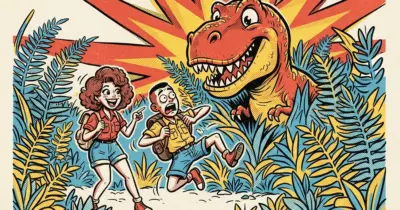
What Dinosaur Am I Quiz
Ever wonder which prehistoric survival strategy actually matches how you operate? Answer a few quick everyday scenarios and get matched to one of eight dinosaurs, complete with its real strength and its real catch. Takes about 4 minutes, and it’s built for fun first, insight second.
No sign-up. Your result right away.

Calculating Troodon
«You don't need muscle when the plan can just change.»
The test is new — you are among the first hundred to take it.
The whole approach falls apart three minutes before it matters, and you're already talking through the backup before anyone else has finished panicking. You didn't rehearse this version. You're building it out loud, in real time, and somehow it works better than the original.
Fossil evidence backs this up literally: pound for pound, nothing else from that era is credited with a bigger brain relative to its body. Nobody hands you credit for it, though, since calm barely looks like effort from the outside, and all that thinking comes with zero backup: no armor, no muscle, no group standing behind you if the read ever turns out wrong.
That's a lot of weight to put on one skull. It's also exactly why you're still standing with a plan when everyone else is stuck reacting.
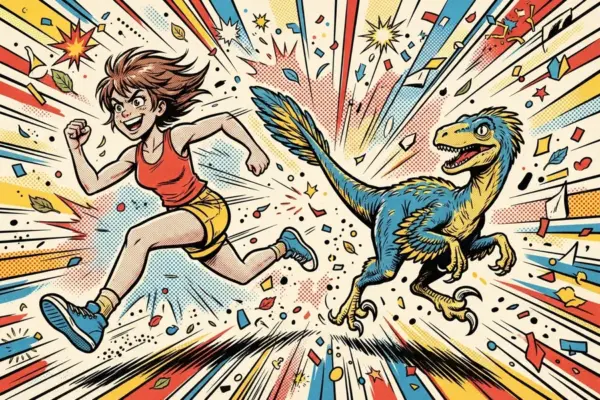
Opportunist Deinonychus
«You don't wait for permission, you just move first.»
The test is new — you are among the first hundred to take it.
The opening lasts about four seconds, a seat, a gap in the line, a deal about to close, and you're already through it before anyone else finishes deciding whether it's real. Nobody watched you plan this. There wasn't a plan. There was just the gap, and you, moving.
You'll hear people describe your kind as a tight, loyal crew working one target together. What actually shows up when you look closer is a crowd of independent operators chasing the same opportunity side by side, tolerating each other for exactly as long as there's enough to go around.
You're not secretly a team player. You're just fast, and fast doesn't need company. That costs you the comfort of backup if this goes wrong, but you were never counting on that anyway.
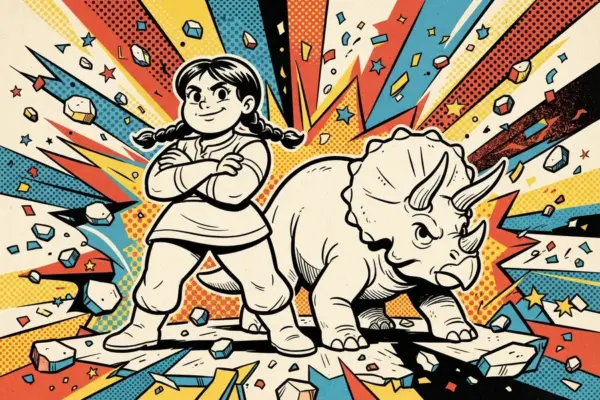
Steadfast Triceratops
«Push, and you push back, every single time.»
The test is new — you are among the first hundred to take it.
Someone tests you directly, right in front of everyone, clearly expecting you to back down or go find support first. You don't do either. You plant your feet exactly where you're standing and meet it head-on, alone, because that's simply how you handle things, and it works.
Here's the part people don't expect: you're almost always doing this solo. Nearly every account of your kind on record is a single individual, not a group. The rare case where several turn up together is exactly that, rare, not how it usually goes.
That's a lonely way to meet every fight. It also means you never have to wonder whether the win was really yours.
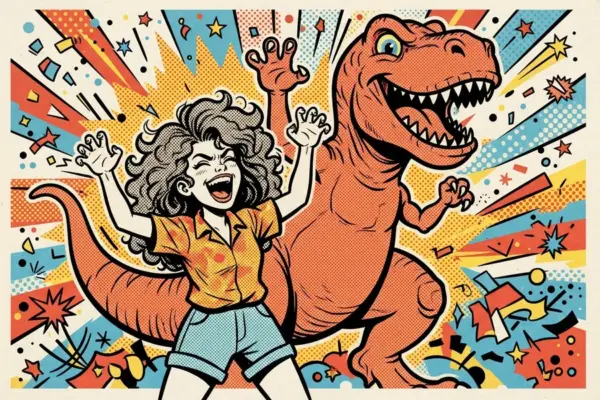
Bold Tyrannosaurus Rex
«You go straight at it, and you don't slow down.»
The test is new — you are among the first hundred to take it.
Whatever's in front of you, you walk straight at it, no circling, no waiting for a better angle, and then you keep going, well past the point where anyone expected you to still be standing. Confrontation doesn't drain you. It's just the opening move.
The blockbuster reputation, the quickest thing on the field, doesn't survive contact with basic biomechanics: that build was never made for the sprint speeds pop culture keeps handing it. Whether you actually ran with company or kept to yourself is a detail nobody in the field has managed to pin down yet.
Turns out being the boldest thing in the room was never really about speed. You don't win every exchange by being the quickest. You win it by still being there when the other side runs out of steam.
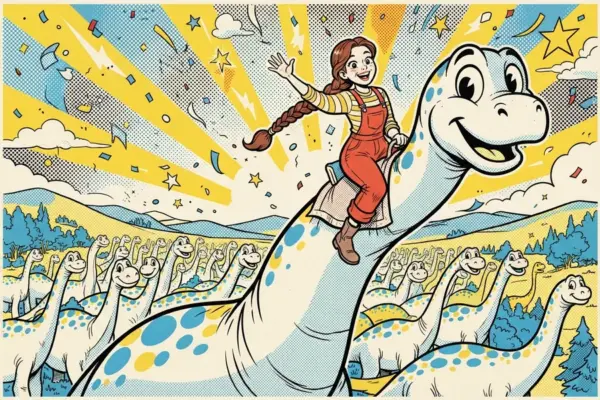
Towering Sauropod
«Alone, you're a target. With your people, you're a wall.»
The test is new — you are among the first hundred to take it.
You've never once had to face the worst day completely on your own. There's always been a crowd around you, built specifically to absorb whatever comes, and it's absorbed things no single one of you ever could have taken alone. Strength, for you, was never a solo project.
You feel the tradeoff early: your group splits into its own age brackets almost from the start, so you end up managing without close, individual attention sooner than you might in a smaller crowd.
Scale buys you real safety. It just doesn't buy every single member the same amount of closeness. Most days, it's still the better trade.
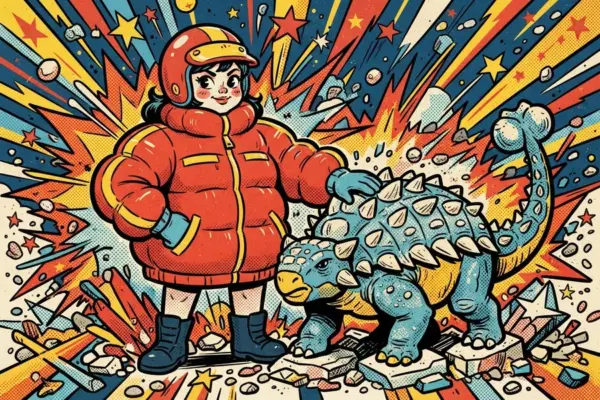
Armored Ankylosaurus
«Nothing gets through you. You're also never in a hurry.»
The test is new — you are among the first hundred to take it.
Something comes at you fast, ready for an easy win, and just stops. There's nothing to get past, and the one part of you built to hit back can reportedly crack bone on contact. You didn't flinch. You didn't need to.
All that protection comes at a real cost, though: it's heavy, and heavy caps how fast you move. Outrunning trouble was never an option for you, and neither is chasing down an opportunity before it closes.
You get to where you're going eventually. Just never first. Slow is a strange trade for nearly invincible, and most days, you'd still take it.
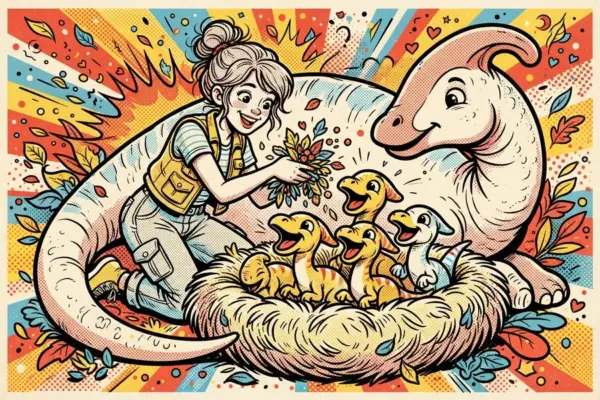
Devoted Maiasaura
«You show up for the ones you're responsible for. Every time.»
The test is new — you are among the first hundred to take it.
It's past nine and everyone else has logged off for the night, but you're still at the kitchen table, running the checklist one more time to make sure nothing got missed. You already know you'll set an alarm for one more check before you finally turn in.
Here's what it costs: that base doesn't move. The same setup that lets you care this closely also plants you in one spot, trading away the freedom to just pack up and go somewhere else on a whim.
That's not the flashiest strategy on this list. It's the one the fossil record backs up hardest: real care, consistently shown up for.
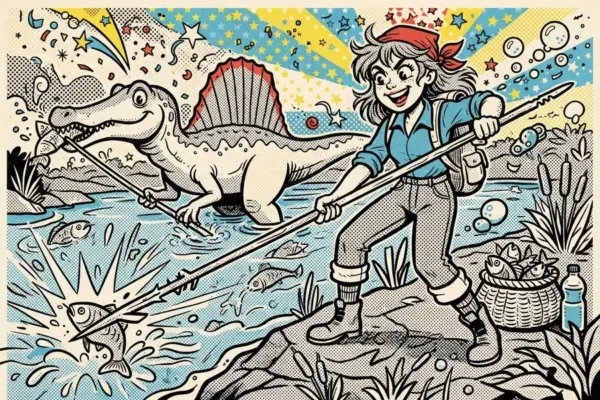
Solitary Spinosaurus
«You found the one lane nobody else even noticed.»
The test is new — you are among the first hundred to take it.
You've turned a corner of the market that everyone else avoids into your entire stall, stacked with the odd, bruised fruit nobody bothered to source. Every other vendor is packing up empty crates by noon; yours is still the only line that hasn't stopped moving.
The niche that makes you unique is also the thing that keeps you alone in it. There's no crowd doing what you do, which means there's no crowd to fall back on either if it ever stops working.
You didn't get here by competing harder. You got here by finding the one spot nobody else was even fighting over.
About this test
How this test works
Field biologists have spent decades cataloguing how individual animals differ in caution, social preference, tempo, curiosity, and the way they handle a clash. This quiz leans on that body of work and sorts you into one of eight archetypes using those same categories, with no made-up point system doing the sorting.
Concretely, it tracks six everyday habits: your instinct in an active disagreement, whether you gravitate toward solitude or a crowd, your stamina across a long stretch of effort, your appetite for real-world risk, how deep you go when something or someone depends on you, and your reaction to the unfamiliar. Each answer nudges you toward the genus whose habits line up closest with yours.
A couple of honest caveats: you're reporting on your own habits here, not being observed by a researcher, so read the result as self-perception rather than a lab measurement. It's built for entertainment, not as a clinical or diagnostic tool. The dinosaur half comes from genuine fossil research, though a fair amount of it, especially how the big predators actually behaved in groups, is still genuinely argued over by the researchers digging it up.
Curious to read more: trait theory and personality in animals.
Frequently asked questions
Did velociraptors really hunt in packs?
Not the way movies show it. Isotope readings from fossil teeth line up with a bunch of individuals crowding around the same kill and competing for scraps, not a coordinated team working together. That loyal-pack image is a Hollywood invention, not something the fossils actually back up.
How fast could a T. rex really run?
Slower than the chase scenes suggest. Once researchers modeled the leg mechanics and body weight, the numbers topped out well under sprinting pace: this was an animal built for a strong, steady push, not a burst of speed.
Would your dinosaur beat the others in a fight?
That question isn't really what this quiz is answering. Each of these eight profiles stands for an actual documented way of surviving, a real strength paired with a real drawback, and no profile here was built to outshine the rest.
Is this basically just carnivores versus herbivores?
Not quite. Diet alone doesn't explain the gap between these animals. What actually separates them shows up in things like whether they lived solo or in a crowd, how much risk they were willing to take, and how closely they looked after whatever depended on them, and that's the split this quiz is built around.
Sources
- Réale, D., Reader, S. M., Sol, D., McDougall, P. T., & Dingemanse, N. J. (2007). Integrating animal temperament within ecology and evolution. Biological Reviews, 82(2), 291–318. doi:10.1111/j.1469-185X.2007.00010.x
- Gosling, S. D. (2001). From mice to men: What can we learn about personality from animal research? Psychological Bulletin, 127(1), 45–86. doi:10.1037/0033-2909.127.1.45
- Thomas, K. W., & Kilmann, R. H. (1974). Thomas-Kilmann Conflict Mode Instrument.
Three more tests on the same theme



Breakdown
There's a reason you answer the way you do
Most tests show you a slice of who you are. This one gets to the core: the classic 16-type personality test that goes back to Carl Jung, rebuilt from the ground up and way more accurate. It takes ten minutes, you only ever do it once — and you walk away with an answer most people never quite figure out: why you are the way you are. Why some people just get you, and why with others it's complicated. And that answer won't change: your type is yours for life.
Take the free testHow you compare
The test is new — you are among the first hundred to take it.
Three more tests on the same theme
About this test
How this test works
Field biologists have spent decades cataloguing how individual animals differ in caution, social preference, tempo, curiosity, and the way they handle a clash. This quiz leans on that body of work and sorts you into one of eight archetypes using those same categories, with no made-up point system doing the sorting.
Concretely, it tracks six everyday habits: your instinct in an active disagreement, whether you gravitate toward solitude or a crowd, your stamina across a long stretch of effort, your appetite for real-world risk, how deep you go when something or someone depends on you, and your reaction to the unfamiliar. Each answer nudges you toward the genus whose habits line up closest with yours.
A couple of honest caveats: you're reporting on your own habits here, not being observed by a researcher, so read the result as self-perception rather than a lab measurement. It's built for entertainment, not as a clinical or diagnostic tool. The dinosaur half comes from genuine fossil research, though a fair amount of it, especially how the big predators actually behaved in groups, is still genuinely argued over by the researchers digging it up.
Curious to read more: trait theory and personality in animals.
Frequently asked questions
Did velociraptors really hunt in packs?
Not the way movies show it. Isotope readings from fossil teeth line up with a bunch of individuals crowding around the same kill and competing for scraps, not a coordinated team working together. That loyal-pack image is a Hollywood invention, not something the fossils actually back up.
How fast could a T. rex really run?
Slower than the chase scenes suggest. Once researchers modeled the leg mechanics and body weight, the numbers topped out well under sprinting pace: this was an animal built for a strong, steady push, not a burst of speed.
Would your dinosaur beat the others in a fight?
That question isn't really what this quiz is answering. Each of these eight profiles stands for an actual documented way of surviving, a real strength paired with a real drawback, and no profile here was built to outshine the rest.
Is this basically just carnivores versus herbivores?
Not quite. Diet alone doesn't explain the gap between these animals. What actually separates them shows up in things like whether they lived solo or in a crowd, how much risk they were willing to take, and how closely they looked after whatever depended on them, and that's the split this quiz is built around.
Sources
- Réale, D., Reader, S. M., Sol, D., McDougall, P. T., & Dingemanse, N. J. (2007). Integrating animal temperament within ecology and evolution. Biological Reviews, 82(2), 291–318. doi:10.1111/j.1469-185X.2007.00010.x
- Gosling, S. D. (2001). From mice to men: What can we learn about personality from animal research? Psychological Bulletin, 127(1), 45–86. doi:10.1037/0033-2909.127.1.45
- Thomas, K. W., & Kilmann, R. H. (1974). Thomas-Kilmann Conflict Mode Instrument.
