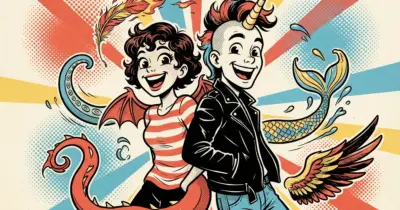
What Monster Am I Quiz
Ever wonder which mythical creature your gut reactions actually match? Answer a handful of quick scenes about strangers, pressure, and who gets close, and you’ll land on one of six creatures — dragon, mermaid, kraken, griffin, unicorn, or phoenix — that fits your instincts best. Takes about three minutes. It’s a game built on old folklore, not a diagnosis of anything.
No sign-up. Your result right away.
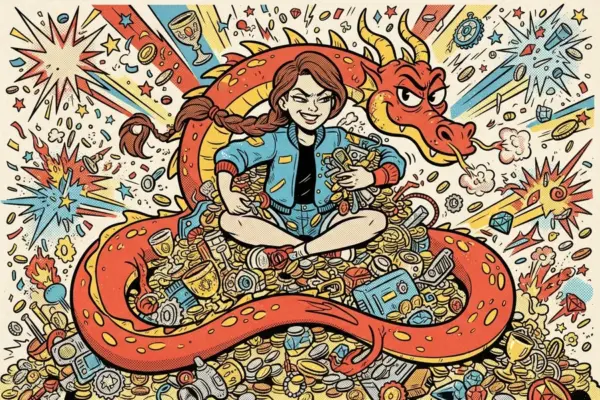
Dragon
«Loyalty earns everything with you. Trust unlocks the vault.»
The test is new — you are among the first hundred to take it.
You clock every stranger circling what you've built before they've even opened their mouth, already cataloguing what they might be after. Then someone you actually trust needs backup, and you hand over resources, time, effort — no hesitation, no conditions, no ledger kept anywhere in your head.
Cross that same line, though, and the shift is instant. The warmth doesn't dim — it just flips off completely, and you become the wall standing between someone and everything they wanted.
That's the trade: nobody guards a hoard like you do, and nobody turns into a wall this fast once they've earned it. You'd sign up for that deal again.
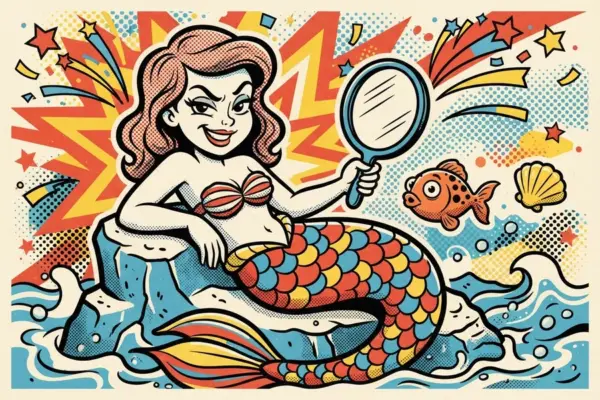
Mermaid
«You give back exactly what you're given. Nothing more.»
The test is new — you are among the first hundred to take it.
You read a room before you even sit down — who's warm, who's guarded, who's about to say something they'll regret — and you match it back so precisely that people swear you can read minds, when really you're just paying real attention.
When someone actually crosses you, though, you don't blow up on the spot. You go quiet, let the moment pass, and settle the score days later — so cleanly the other person walks away with no idea what just happened.
That's the cost of being this fair: the scales even out eventually, quietly, well out of anyone's sight. You'd rather be right than loud.
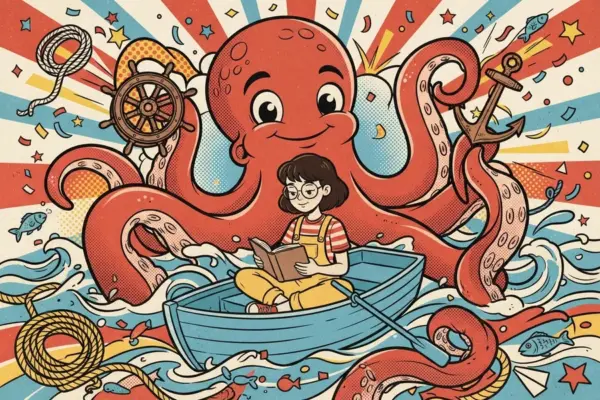
Kraken
«You take up more space than anyone ever notices.»
The test is new — you are among the first hundred to take it.
You let entire rooms run themselves without a flicker of interference, content to stay invisible while everything around you quietly benefits from the fact that you're there at all. Then someone crosses a real line, and the response that comes back is nothing anyone saw coming.
Here's what people always get wrong about you: because so little ever shows on the surface, they assume there's nothing underneath — right up until you prove exactly how wrong that guess was.
You'd rather be underestimated than watched. When the moment actually calls for it, being underestimated turns out to be the better position anyway.
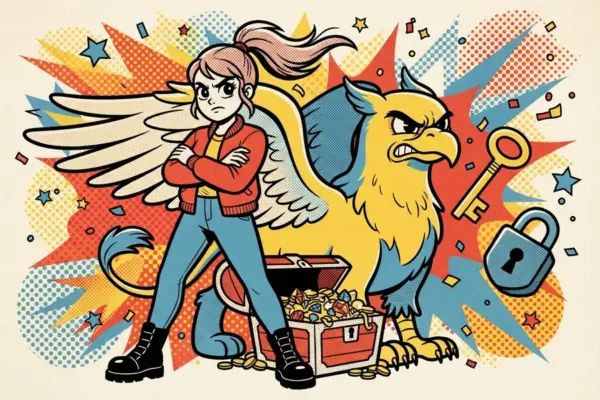
Griffin
«You notice the threat before anyone else even sees it.»
The test is new — you are among the first hundred to take it.
New person walks into a room you're responsible for, and before they've said a word, you've already clocked where they're standing, who they're watching, and whether their hands are anywhere near what actually matters here.
That instinct of yours rarely gets a night off, and you can read someone perfectly harmless as a risk before they've proven anything either way.
But that watchfulness was never about people in general — it's about how much you actually value what's behind you. Whoever earns your trust gets the whole of your loyalty, permanently.
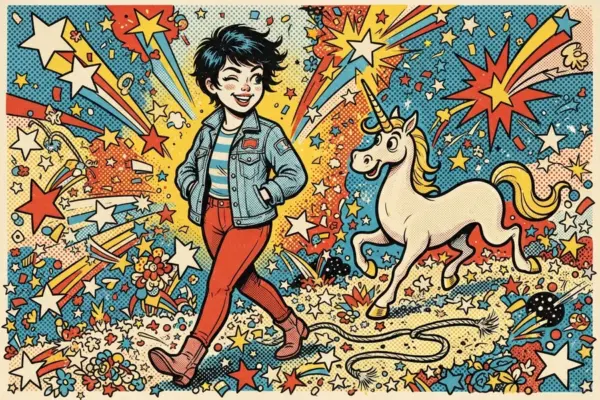
Unicorn
«You can't be bought, rushed, or talked into anything.»
The test is new — you are among the first hundred to take it.
People get exactly one polite, closed-off version of you, no matter how hard they push, how long they try, or what they offer instead — and then, without warning, one person says the right thing and the whole gate swings open.
To almost everyone standing outside that gate, you read as plain coldness, distance for its own sake — which is almost funny, since you're actually the opposite of indifferent. That's not stubbornness on your part — it's you protecting something real, held back from people who haven't earned access yet. Your waiting is the whole point.
You'd rather be alone and free than close to someone who hasn't proven they deserve you. When they finally do, you're the most loyal thing they'll ever find.
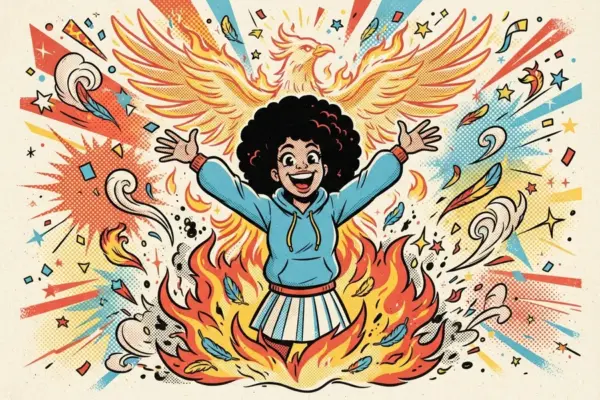
Phoenix
«You don't defend the wreckage. You just build again.»
The test is new — you are among the first hundred to take it.
Something falls apart completely — a job, a plan, a whole version of your life — and instead of picking through the pieces trying to figure out what went wrong, you're already three steps into building the next version, cleaner and better than the one you just walked away from.
From the outside, that speed can look cold, like you never actually cared about what just ended. Really, you just don't see the point in staying somewhere that's already over.
You'd rather rebuild ten times than sit inside something broken, waiting for it to fix itself. Every ending is just the start of the next thing.
About this test
How this test works
Six creatures, four everyday habits — that's the whole engine behind this quiz. Every scene you pick tags one of the six, and once all your answers are in, whichever creature collected the most tags becomes your result. What actually gets tracked is how you treat someone new, what you protect when it counts, how you act once you're pushed, and whether you recharge solo or with people around you.
None of this comes out of a psychology lab. The behavior tied to each creature — dragon, mermaid, kraken, griffin, unicorn, phoenix — comes from centuries-old legends about how these beings act in traditional stories, not from any clinical model of character. Think of it as borrowing a cast whose habits are already well documented, then asking which one your own habits line up with.
If your picks end up split evenly between two or more creatures, nothing gets decided at random: the six sit in a set ranking behind the scenes, and whichever comes first on that list takes the win. That ranking was set in advance and never bends for any individual quiz-taker.
Take the result as a fun label, not a verdict on who you actually are. You're describing your own reactions, nobody's grading them against anything, and none of this functions as a personality test or a diagnosis of any kind — it's mythology, put to work for an afternoon.
Frequently asked questions
What kind of monster am I, really?
This quiz doesn't test knowledge of horror movies or trivia about specific creatures. It works from six folklore and mythology archetypes — dragon, mermaid, kraken, griffin, unicorn, and phoenix — and matches you based on how you actually respond in everyday situations, not on facts you know about monsters.
What monster am I most like?
Your result is the creature that shares the most in common with how you actually reacted over the course of the quiz — it isn't a statement that you literally are a dragon or a mermaid. Twelve scenes, six creatures, and whichever one keeps showing up in your choices around meeting strangers, guarding what's yours, or handling a group comes out on top.
How are mythical creature quizzes like this one scored?
Every choice you make throughout the quiz counts as a point for one of the six creatures, and once the questions run out, whichever one has piled up the biggest score wins your result. On the rare chance two creatures finish dead even, the tie isn't left to luck — a preset hierarchy among the archetypes settles which one takes it. There is no lab and no clinical checklist behind it; it's folklore repurposed as a simple point system.
What type of monster am I based on?
This roster comes straight out of myth and folk tradition, not a lineup of slasher-flick villains — kraken, unicorn, phoenix, mermaid, griffin, and dragon are the six creatures in play. Search for "monster" or search for "mythical creature" and you land on the exact same test underneath the two different words.
Sources
- Hassig, Debra. Medieval Bestiaries: Text, Image, Ideology. RES Monographs on Anthropology and Aesthetics. Cambridge University Press, 1995.
- Thompson, Stith. Motif-Index of Folk-Literature. Rev. and enlarged ed., 6 vols. Indiana University Press, 1955–58.
- Simpson, Jacqueline. British Dragons. Wordsworth Editions, 2001 (orig. pub. as Dragons in British Folklore, B.T. Batsford, 1980).
- Scribner, Vaughn. Merpeople: A Human History. Reaktion Books, 2020.
Three more tests on the same theme

Breakdown
There's a reason you answer the way you do
Most tests show you a slice of who you are. This one gets to the core: the classic 16-type personality test that goes back to Carl Jung, rebuilt from the ground up and way more accurate. It takes ten minutes, you only ever do it once — and you walk away with an answer most people never quite figure out: why you are the way you are. Why some people just get you, and why with others it's complicated. And that answer won't change: your type is yours for life.
Take the free testHow you compare
The test is new — you are among the first hundred to take it.
Three more tests on the same theme
About this test
How this test works
Six creatures, four everyday habits — that's the whole engine behind this quiz. Every scene you pick tags one of the six, and once all your answers are in, whichever creature collected the most tags becomes your result. What actually gets tracked is how you treat someone new, what you protect when it counts, how you act once you're pushed, and whether you recharge solo or with people around you.
None of this comes out of a psychology lab. The behavior tied to each creature — dragon, mermaid, kraken, griffin, unicorn, phoenix — comes from centuries-old legends about how these beings act in traditional stories, not from any clinical model of character. Think of it as borrowing a cast whose habits are already well documented, then asking which one your own habits line up with.
If your picks end up split evenly between two or more creatures, nothing gets decided at random: the six sit in a set ranking behind the scenes, and whichever comes first on that list takes the win. That ranking was set in advance and never bends for any individual quiz-taker.
Take the result as a fun label, not a verdict on who you actually are. You're describing your own reactions, nobody's grading them against anything, and none of this functions as a personality test or a diagnosis of any kind — it's mythology, put to work for an afternoon.
Frequently asked questions
What kind of monster am I, really?
This quiz doesn't test knowledge of horror movies or trivia about specific creatures. It works from six folklore and mythology archetypes — dragon, mermaid, kraken, griffin, unicorn, and phoenix — and matches you based on how you actually respond in everyday situations, not on facts you know about monsters.
What monster am I most like?
Your result is the creature that shares the most in common with how you actually reacted over the course of the quiz — it isn't a statement that you literally are a dragon or a mermaid. Twelve scenes, six creatures, and whichever one keeps showing up in your choices around meeting strangers, guarding what's yours, or handling a group comes out on top.
How are mythical creature quizzes like this one scored?
Every choice you make throughout the quiz counts as a point for one of the six creatures, and once the questions run out, whichever one has piled up the biggest score wins your result. On the rare chance two creatures finish dead even, the tie isn't left to luck — a preset hierarchy among the archetypes settles which one takes it. There is no lab and no clinical checklist behind it; it's folklore repurposed as a simple point system.
What type of monster am I based on?
This roster comes straight out of myth and folk tradition, not a lineup of slasher-flick villains — kraken, unicorn, phoenix, mermaid, griffin, and dragon are the six creatures in play. Search for "monster" or search for "mythical creature" and you land on the exact same test underneath the two different words.
Sources
- Hassig, Debra. Medieval Bestiaries: Text, Image, Ideology. RES Monographs on Anthropology and Aesthetics. Cambridge University Press, 1995.
- Thompson, Stith. Motif-Index of Folk-Literature. Rev. and enlarged ed., 6 vols. Indiana University Press, 1955–58.
- Simpson, Jacqueline. British Dragons. Wordsworth Editions, 2001 (orig. pub. as Dragons in British Folklore, B.T. Batsford, 1980).
- Scribner, Vaughn. Merpeople: A Human History. Reaktion Books, 2020.
