Abbey Yung Method Quiz
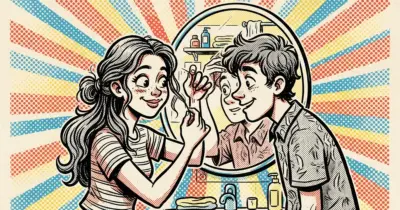
Pinch one strand between two fingers, then check how much scalp shows in the mirror — that tells you more than you’d think. In about 5 minutes you’ll land on one of eight physical profiles built from three plain either/or reads: how a strand feels, how much scalp shows, and how your scalp behaves between washes. Nothing here diagnoses anything — it just names what’s already true, plainly.
No sign-up. Your result right away.
Quiet Static
«You barely feel it, and it still tightens up fast.»
The test is new — you are among the first hundred to take it.
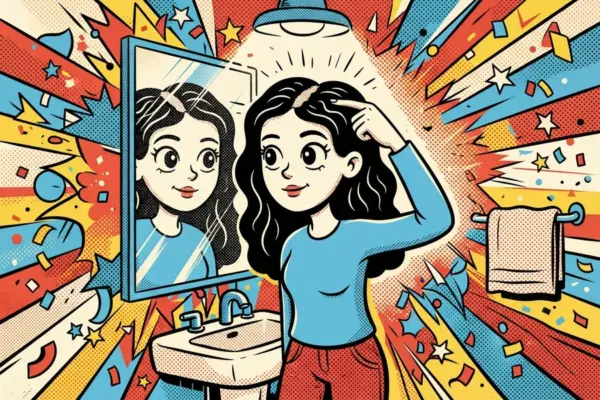
You gather it into one hand before bed and the whole ponytail barely fills your palm — thin, soft, gone before you can really grip it. Fine strands, sparse coverage, a scalp already pulling tight before the mirror even fogs.
Nothing about you here weighs much: a strand that barely registers, a part that opens the second you touch it, skin that tightens before the water's off. Line up eight versions of this test, and yours takes its place quietly, nothing standout about it.
Whatever color or heat treatment your hair has seen never factors in here — a separate story this test doesn't touch. The tight, dry read is a tendency, not a diagnosis. Anything built for bulk gives up fast on a scalp this open — small stays small, early.

Glass Spark
«You're still damp, and the shine already beat you to it.»
The test is new — you are among the first hundred to take it.
You towel off, and by the time you've found a comb, one section near your part is already catching light it shouldn't yet. The rest of your ponytail barely fills your hand. Fine strands, sparse coverage, and a scalp already finding its shine between washes.
The strand itself barely registers against your skin, the part opens under the mildest light, and the shine turns up sooner than you'd expect. You're not the exception here — seven other people are reading a result just as ordinary as yours right now.
Curious where your porosity or an old dye job fits into all this? Nowhere — this test never got near them. The shine is a tendency, not a diagnosis. The trade-off is a wash day that circles back faster than you'd like, in hair barely there to begin with.
Soft Cover
«You've got plenty of hair, and somehow none of it fights you.»
The test is new — you are among the first hundred to take it.
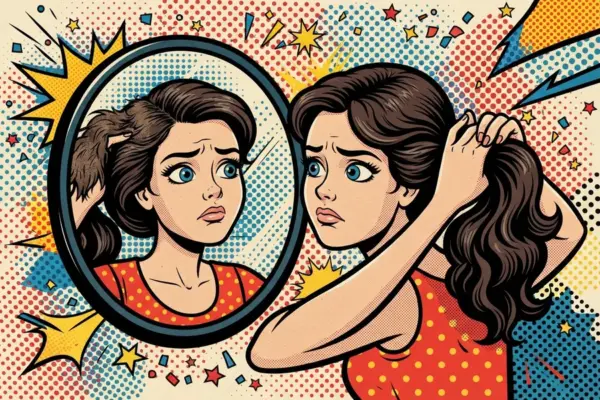
You gather it up for bed and your hand disappears into it — soft, weightless, but your fist can't close all the way. The mirror barely shows a hint of scalp. Fine strands, dense coverage, and skin that pulls tight the moment you rinse.
Every strand you touch gives way easily, the coverage swallows your hand whole, and your skin tightens the moment the water's off. Ask seven other people about their own mix of these three traits, and every one of those answers is just as ordinary as yours.
This test never watched you deal with last summer's highlights, never asked what your curl does once you leave it alone. The tightness is a tendency, not a diagnosis. That much hair on top traps warmth, letting dryness underneath go unnoticed far longer than it should.
Velvet Gleam
«You wash it, and by evening it's already glowing again.»
The test is new — you are among the first hundred to take it.
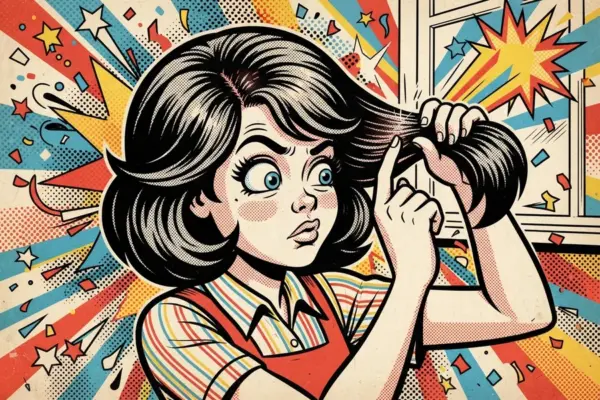
You run a hand over your scalp that evening and it's already filmy, though the mirror shows barely any skin through all that hair. One section near the crown catches light before you've dried off. Fine strands, dense coverage, and a scalp already finding its shine.
A strand this soft barely announces itself, and the coverage on top hides your scalp almost entirely — until the oil finds a way through anyway. None of that says a thing about your porosity, curl, or color history; the shine underneath is a tendency, not a diagnosis.
Combinations like this exist in seven other exact shapes besides yours, no rarer and none of them more real than yours. The trade is a scalp that announces wash day early, no matter how much hair you keep on top of it.
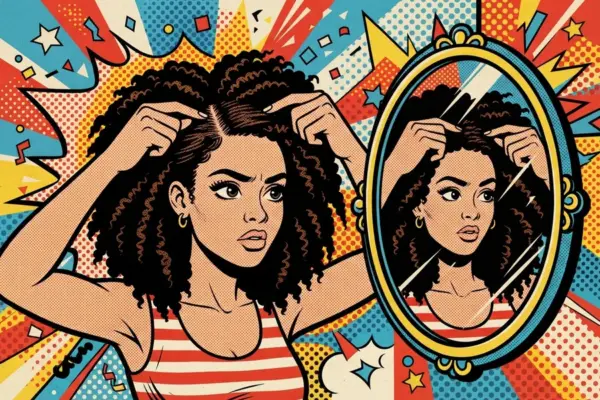
Open Frame
«One strand argues with your fingers, and your scalp agrees.»
The test is new — you are among the first hundred to take it.
You part your hair at the crown and a wide strip of scalp opens before you've pulled your fingers apart, while the one hair caught between them won't lie flat. It springs, it resists, it makes itself known. Coarse strands, sparse coverage, and a scalp that tightens fast between washes.
A strand like this won't lie flat no matter how you try, and the part stays wide before you've even reached for a comb. Eight different combinations of these three traits exist, and every single one shows up about as often as yours does.
This test only reads what's happening on the surface of your hair right now, nothing about how it got that way. The dryness is a tendency, not a diagnosis. A tight, flaky scalp is harder to hide with less hair standing between it and the world.
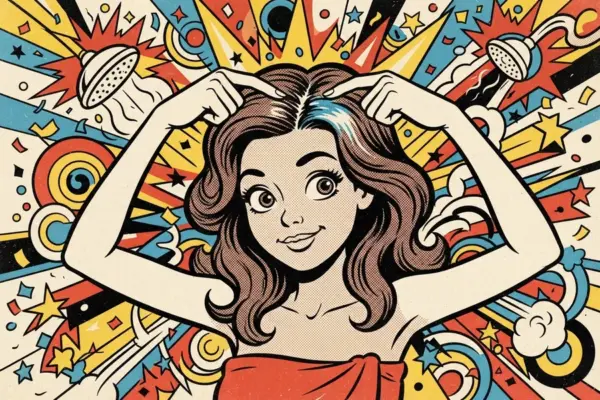
Bright Wire
«Your hair pushes back, and your scalp shows up fast.»
The test is new — you are among the first hundred to take it.
You catch your reflection under bright light and your part is already wider than you'd like, a shine building where the scalp shows through, while every strand near it feels wiry between your fingers. Nothing about it is shy. Coarse strands, sparse coverage, and a scalp catching the light.
A strand like this pushes back the instant you grip it, the part stays wide enough to show skin under most lighting, and the shine sets in early — not the rare draw of the eight, just the one that happened to be yours.
This test never asked about the porosity underneath all that texture of yours — that conversation doesn't happen here. The shine is a tendency, not a diagnosis. Less hair to work with means that shine reads faster on you, with nowhere to hide.
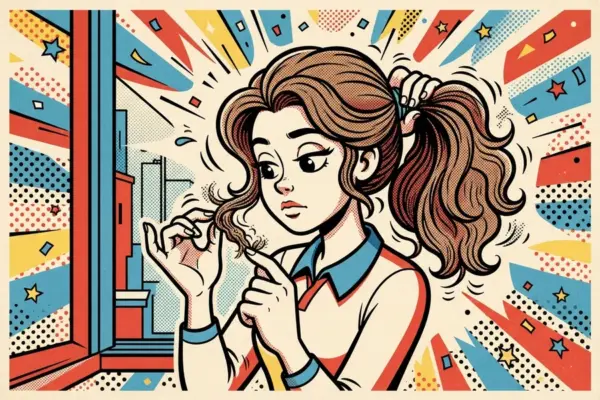
Iron Weave
«You could lose a comb in there and feel every strand.»
The test is new — you are among the first hundred to take it.
You gather it all into one hand and your grip barely closes around it, thick and springy, while the mirror shows almost no scalp. By the second day, your roots feel tight and rough to the touch. Coarse strands, dense coverage, and a scalp leaning dry between washes.
Each strand holds firm under your grip, the coverage keeps your scalp out of sight, and the dryness sets in early and stays. One of eight equally normal combinations, no rarer and no more correct than the rest.
Ever wonder if heat styling or your natural curl factors into any of this? It doesn't — this test stays well away from both. The dryness is a tendency, not a diagnosis. A scalp like this can hide dryness and flaking under all that hair longer than it probably should.
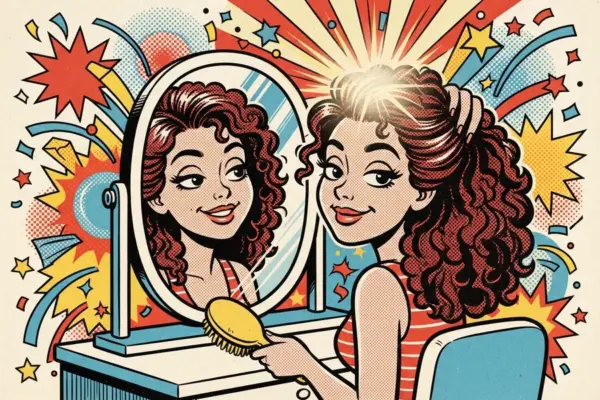
Storm Front
«You've got hair to spare, and a shine to match.»
The test is new — you are among the first hundred to take it.
You brush it out at the mirror and every strand pushes back against the bristles, while your scalp is catching light before you're done. A lot is happening under all that coverage. Coarse strands, dense coverage, and a scalp quick to shine between washes.
Every strand here pushes back the second you grip it, and the coverage overhead keeps most of your scalp tucked away — right up until that oil finds a gap regardless. Curl, porosity, or last summer's dye job: none of it is what gets read here; the shine coming through is a tendency, not a diagnosis.
Seven other combinations sit right alongside this one, no more unusual and no less typical than any of them. Big hair with a quiet shine underneath, until it isn't quiet anymore — that's the trade you're carrying.
About this test
How this test works
Three things about hair sit at the center of this quiz, and each is independent of the other two: how thick a single strand feels between your fingers, how much scalp shows through when the hair is parted or gathered, and whether the scalp tends dry or oily in the days after a wash. All three come from simple self-observation — touch, sight, and a bit of timing — not from any device, so the result is a description of what someone notices, not a clinical reading.
A few things stay outside this quiz on purpose. It says nothing about how a strand holds moisture, nothing about the shape of an individual curl, and nothing about a head's history with color or heat tools. It also stops short of naming any scalp condition — what it calls a tendency is exactly that, never a label for something to treat. And it never turns into a plan of what to buy or do next; describing is the whole job.
These three get folded into a single profile rather than boiled down to one headline trait because none of them tracks the others — thickness, coverage, and scalp behavior can land anywhere on their own scale no matter where the other two land, which is exactly why all eight mixes turn up about equally often. Strand thickness on its own has a real genetic basis, covered in more depth in this explainer on hair texture genetics.
Frequently asked questions
What hair type does this quiz give me?
It won't hand you a single label like fine or oily and call it a day. Instead it looks at three things about your hair on their own terms — how thick the strand is, how much scalp shows, and how the scalp behaves between washes — and lines them up side by side. You land on one of eight possible mixes, and none of them is more usual than another.
How accurate is this quiz?
As accurate as you are with yourself while answering — it runs entirely on what you notice about your own strand and your own scalp in your own mirror. That makes it useful for putting a name to what you're already seeing, not for replacing an actual measurement. Treat the outcome as a snapshot, not a certificate.
Does this work if I have curly hair?
Yes, and nothing changes for it. Curl is a property this quiz never touches — the three things it does check sit on their own scale no matter how the hair bends or coils. Straight, wavy, curly, coily: the questions read the same for all of them.
Sources
- Dhurat, R., & Saraogi, P. (2009). Hair evaluation methods: Merits and demerits. International Journal of Trichology. doi:10.4103/0974-7753.58553
Three more tests on the same theme


Breakdown
There's a reason you answer the way you do
Most tests show you a slice of who you are. This one gets to the core: the classic 16-type personality test that goes back to Carl Jung, rebuilt from the ground up and way more accurate. It takes ten minutes, you only ever do it once — and you walk away with an answer most people never quite figure out: why you are the way you are. Why some people just get you, and why with others it's complicated. And that answer won't change: your type is yours for life.
Take the free testHow you compare
The test is new — you are among the first hundred to take it.
Three more tests on the same theme
About this test
How this test works
Three things about hair sit at the center of this quiz, and each is independent of the other two: how thick a single strand feels between your fingers, how much scalp shows through when the hair is parted or gathered, and whether the scalp tends dry or oily in the days after a wash. All three come from simple self-observation — touch, sight, and a bit of timing — not from any device, so the result is a description of what someone notices, not a clinical reading.
A few things stay outside this quiz on purpose. It says nothing about how a strand holds moisture, nothing about the shape of an individual curl, and nothing about a head's history with color or heat tools. It also stops short of naming any scalp condition — what it calls a tendency is exactly that, never a label for something to treat. And it never turns into a plan of what to buy or do next; describing is the whole job.
These three get folded into a single profile rather than boiled down to one headline trait because none of them tracks the others — thickness, coverage, and scalp behavior can land anywhere on their own scale no matter where the other two land, which is exactly why all eight mixes turn up about equally often. Strand thickness on its own has a real genetic basis, covered in more depth in this explainer on hair texture genetics.
Frequently asked questions
What hair type does this quiz give me?
It won't hand you a single label like fine or oily and call it a day. Instead it looks at three things about your hair on their own terms — how thick the strand is, how much scalp shows, and how the scalp behaves between washes — and lines them up side by side. You land on one of eight possible mixes, and none of them is more usual than another.
How accurate is this quiz?
As accurate as you are with yourself while answering — it runs entirely on what you notice about your own strand and your own scalp in your own mirror. That makes it useful for putting a name to what you're already seeing, not for replacing an actual measurement. Treat the outcome as a snapshot, not a certificate.
Does this work if I have curly hair?
Yes, and nothing changes for it. Curl is a property this quiz never touches — the three things it does check sit on their own scale no matter how the hair bends or coils. Straight, wavy, curly, coily: the questions read the same for all of them.
Sources
- Dhurat, R., & Saraogi, P. (2009). Hair evaluation methods: Merits and demerits. International Journal of Trichology. doi:10.4103/0974-7753.58553
