AKC Dog Breed Quiz
Ever wonder which dog would actually fit into your real, everyday life, not the Instagram version of it? Answer a few honest questions about your space, your time, and your patience for noise and mess, and get matched to the functional dog group that fits you best. Takes about 4 minutes, and yes, we kept the science honest: it’s a fun lifestyle match, not a lab report.
No sign-up. Your result right away.

Sporting & Gundog
«You'd rather be busy together than resting apart.»
The test is new — you are among the first hundred to take it.
You're already halfway out the door before anyone asks if you're up for it — a walk, a game, a spontaneous errand, doesn't matter, you're in. Your days run on shared momentum, and somewhere along the way, alone stopped being the default.
Leave that same eagerness without company or activity for too long. You'll watch restlessness creep in, looking for anything to fill the gap.
None of this predicts one particular animal's Tuesday — it's a documented pattern for the group, not a promise — but if your days already run on shared motion, this is where you land.
Herding
«Structure isn't a burden to you — it's simply how days work.»
The test is new — you are among the first hundred to take it.
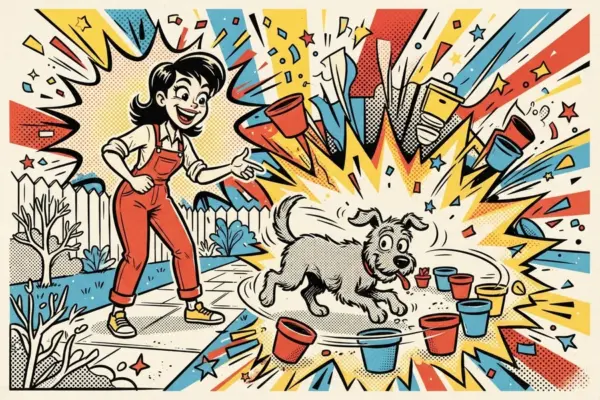
You've already got a system running before breakfast is even over — a checklist, a set route, an order things happen in — and if anyone messes with that order, you're the very first one to notice, and the first to fix it.
That same radar runs on empty when there's nothing to organize — pointed instead at the people and pets around you, herding them into some order they never asked for.
Does that mean one specific animal will act exactly like the research says? Of course not. Group patterns aren't promises about a single one, but if you're the type who fixes the order before anyone notices it's broken, this is your shape.
Working
«You'd rather carry the weight than watch someone else struggle.»
The test is new — you are among the first hundred to take it.
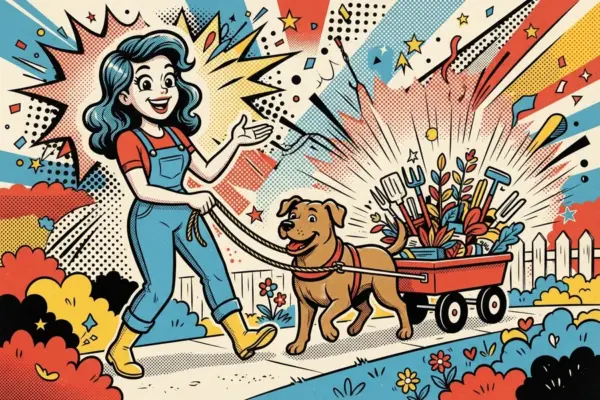
You're the one who ends up moving the couch alone, hauling the extra bags, taking the heavier end of anything without being asked — not because nobody else offered, but because you're already halfway across the room before they finish offering.
That capability asks for a lot in return — real space, real experience, hours nobody warns you about (this describes the group, not a guarantee about one particular animal) — and it isn't for a household still finding its footing.
Your household already runs on capability, not convenience — which is precisely the point.

Hound
«You give space before you give instructions, every single time.»
The test is new — you are among the first hundred to take it.
Once something catches your attention, you follow it all the way to the end, past the point where anyone reasonable would have turned back, moving at your own pace and checking in only when you're good and ready.
If that sounds like giving up control, it kind of is. You get fewer check-ins in trade for a companion this self-sufficient. No single result here promises exactly how any one animal will move through a room — the group's pattern just tends this way.
You're not looking for a shadow that follows your every move — you're looking for company that shows up on its own terms.

Terrier
«You want something that finishes what it started, loudly.»
The test is new — you are among the first hundred to take it.
You're the one still crouched by the fence an hour later, sleeves pushed up, absolutely committed to whatever small, stubborn project you started — long after anyone else would have called it a lost cause and gone back inside.
Compared to a partner built for constant company, this one is built for focus and follow-through instead — real strengths, just different ones. Neither research nor this quiz can tell you exactly how one particular animal will behave, only what the group tends toward.
That same stubbornness is exactly what makes your small wins feel enormous. That's the whole trade, and you'd take it again.

Toy & Companion
«Closeness is the whole plan for you, not a bonus.»
The test is new — you are among the first hundred to take it.
You're curled up on the same cushion again before anyone even asks if you want to go out, and the best part of your day is someone else's shoulder within easy reach, no plans required, nowhere else you'd rather be.
That kind of closeness leaves little room for going off and doing something alone — which is honestly fine, since being alone was never really the plan for either of you.
Will every dog in this group be a lap-sitter? No — the group has a well-recorded lean, and any single animal can wander off it. Still, you didn't come here for independence; you came for company, and that's a completely fair thing to want.
About this test
How this test works
Frequently asked questions
Just how reliable is a dog breed quiz result?
Reliable enough to point you in a sensible direction, not reliable enough to bet the house on. Individual dogs differ a lot even within the same functional group, so what you're reading is a believable lean toward a lifestyle fit rather than a locked-in fact about a dog you haven't met.
Which dog breed quiz gives the most accurate answer?
None of them, honestly, can nail down one individual animal's behavior with real precision — that's simply not how the underlying research works. It's exactly why this test hands you a functional group instead of pretending to name one specific breed for you.
Can this stand in for actually spending time with a dog?
Not really. Treat your result as a useful first clue, nothing more final than that. Real time around an animal, plus a conversation with people who work with dogs day to day, will always teach you more than a quiz result on a screen.
How is a quiz like this different from a dog DNA test?
They're solving two unrelated problems. A DNA kit reads an animal's genetic ancestry after the fact; this quiz reads your everyday habits beforehand and points you toward a lifestyle fit. Neither one hands you a guarantee about how one particular dog will act.
Will I have to sign up or hand over my email to get a result?
Nope. Your match appears the moment you finish the last question — no email, no account, no extra step in between.
Sources
- Morrill, K., Hekman, J., Li, X., McClure, J., Logan, B., Goodman, L., et al., & Karlsson, E. K. (2022). "Ancestry-inclusive dog genomics challenges popular breed stereotypes." Science, 376(6592), eabk0639. doi:10.1126/science.abk0639.
- Turcsán, B., Kubinyi, E., & Miklósi, Á. (2011). "Trainability and boldness traits differ between dog breed clusters based on conventional breed categories and genetic relatedness." Applied Animal Behaviour Science, 132(1-2), 61–70. doi:10.1016/j.applanim.2011.03.006.
- Hsu, Y., & Serpell, J. A. (2003). "Development and validation of a questionnaire for measuring behavior and temperament traits in pet dogs." Journal of the American Veterinary Medical Association, 223(9), 1293–1300.
Three more tests on the same theme



Breakdown
There's a reason you answer the way you do
Most tests show you a slice of who you are. This one gets to the core: the classic 16-type personality test that goes back to Carl Jung, rebuilt from the ground up and way more accurate. It takes ten minutes, you only ever do it once — and you walk away with an answer most people never quite figure out: why you are the way you are. Why some people just get you, and why with others it's complicated. And that answer won't change: your type is yours for life.
Take the free testHow you compare
The test is new — you are among the first hundred to take it.
Three more tests on the same theme
About this test
How this test works
Six kinds of dogs, sorted by the work they were originally bred for, behave in recognizably different ways as a group — that's the research finding behind this quiz, not a claim about any specific dog you might meet. Your everyday answers get matched against those six patterns: how physical your days already are, how much repetition you bring to teaching something new, how much room and strength you can offer, how you feel about coat upkeep and shedding, what vocal presence you can tolerate, and who else already shares your household. The honest caveat, worth stating plainly: which functional group a dog belongs to explains only part of how that particular dog behaves. Plenty of individual variation sits outside any group pattern. Read your result as a documented tendency — what a household near that profile tends to experience — rather than a prophecy about one future dog. One more thing this quiz isn't: encouragement to get a dog. That choice belongs to a different moment in your life, made with more information than a short quiz can offer. Everything here is self-reported and self-scored, and on an exact tie between two groups, a preset sequence breaks it automatically — not a vote on which group deserves to win. The wider idea — that dogs cluster into functional types with distinct behavioral leanings — is common ground across canine research and kennel organizations worldwide, not one company's invention.Frequently asked questions
Just how reliable is a dog breed quiz result?
Reliable enough to point you in a sensible direction, not reliable enough to bet the house on. Individual dogs differ a lot even within the same functional group, so what you're reading is a believable lean toward a lifestyle fit rather than a locked-in fact about a dog you haven't met.
Which dog breed quiz gives the most accurate answer?
None of them, honestly, can nail down one individual animal's behavior with real precision — that's simply not how the underlying research works. It's exactly why this test hands you a functional group instead of pretending to name one specific breed for you.
Can this stand in for actually spending time with a dog?
Not really. Treat your result as a useful first clue, nothing more final than that. Real time around an animal, plus a conversation with people who work with dogs day to day, will always teach you more than a quiz result on a screen.
How is a quiz like this different from a dog DNA test?
They're solving two unrelated problems. A DNA kit reads an animal's genetic ancestry after the fact; this quiz reads your everyday habits beforehand and points you toward a lifestyle fit. Neither one hands you a guarantee about how one particular dog will act.
Will I have to sign up or hand over my email to get a result?
Nope. Your match appears the moment you finish the last question — no email, no account, no extra step in between.
Sources
- Morrill, K., Hekman, J., Li, X., McClure, J., Logan, B., Goodman, L., et al., & Karlsson, E. K. (2022). "Ancestry-inclusive dog genomics challenges popular breed stereotypes." Science, 376(6592), eabk0639. doi:10.1126/science.abk0639.
- Turcsán, B., Kubinyi, E., & Miklósi, Á. (2011). "Trainability and boldness traits differ between dog breed clusters based on conventional breed categories and genetic relatedness." Applied Animal Behaviour Science, 132(1-2), 61–70. doi:10.1016/j.applanim.2011.03.006.
- Hsu, Y., & Serpell, J. A. (2003). "Development and validation of a questionnaire for measuring behavior and temperament traits in pet dogs." Journal of the American Veterinary Medical Association, 223(9), 1293–1300.
