
Smell Test
Your nose sends you signals all day without asking permission — from the pan on the stove to the look on someone’s face when they catch a whiff of your cologne. This quiz turns a handful of those everyday moments into one honest picture of how much you’re actually catching, not a verdict on how good your sense of smell really is. It takes about 4 minutes, no scents required, and it’s built for noticing, not for diagnosing anything.
No sign-up. Your result right away.

First Whiff
«Your nose clocks it before your brain even asks.»
The test is new — you are among the first hundred to take it.
Garlic hits the pan and you're already turning around before anyone calls your name. Nobody's had to point out smoke, spoiled milk, or a fragrance gone quiet on you — every cue arrives exactly on schedule. Right now, this reads as barely any noticing in everyday smell noticing.
That kind of quiet reliability is nice. It means nothing is currently asking you to double-check against anyone else's nose. But nothing here proves your nose is textbook-sharp, only that daily life hasn't handed it a reason to raise a hand yet.
So enjoy the streak. If something ever does shift, you'll likely be the first to smell it coming, the same way you always have been.
Second Sniff
«A few small things slip by, and you shrug them off.»
The test is new — you are among the first hundred to take it.
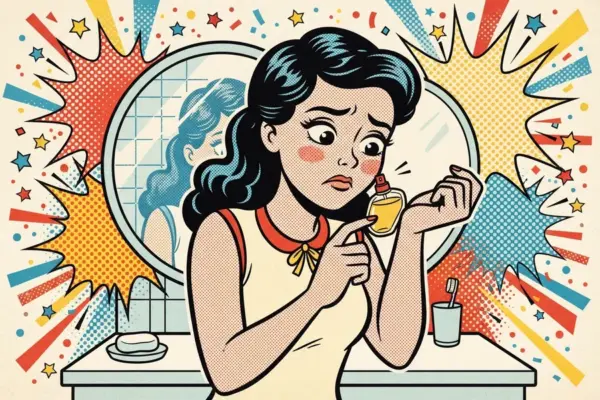
Your own perfume seems to vanish halfway through one evening, though a friend later swears she caught it from across the room. A candle that always registers barely shows up once, then fades back to normal. Right now, this reads as a few occasional slips in everyday smell noticing.
You can easily wave this away one incident at a time — a candle here, a compliment there, nothing repeating in the same spot twice. But the honest version is that scattered moments like these are also what an early pattern looks like before it earns a name.
Neither reading cancels the other out yet. Nothing about a handful of one-offs demands a verdict today. Keep noticing the small stuff — it's doing more work for you than you probably credit it for.

The Cat Knows
«Some of your signals check out; others just don't add up.»
The test is new — you are among the first hundred to take it.
You pour milk straight from a carton you're sure is fine, while the cat backs away from the fridge like it knows something you don't. Burnt toast, though, you catch before anyone else even looks up. Right now, this reads as a mixed, inconsistent signal in everyday smell noticing.
That split isn't a glitch. Some parts of your smell world are clearly fine. Others clearly aren't. Neither side is winning yet.
No self-report quiz, including this one, is built to settle which story wins for you on a single try. What matters more is whether this same split shows up again in your answers next month, or resolves on its own before then.

The Window Opener
«More than one part of your day is pointing the same way.»
The test is new — you are among the first hundred to take it.
Dinner's smell doesn't reach the hallway the way it used to, a friend's had to ask twice this month if you catch the toast burning, and you open the window on instinct now, before naming why. Right now, this reads as a fairly consistent pattern in everyday smell noticing.
This pattern is different from a stray moment you'd normally brush off. Food, timing, and other people's reactions are converging on one story about you, not staying separate. That's actually useful to you — concrete enough to say out loud instead of shrugging off one piece at a time.
What it doesn't tell you is how this pattern got here. Maybe it arrived overnight, maybe it built up slowly. Either way, that's a detail a short self-report can't resolve on its own, only notice.
The Longer Talk
«Nearly everything you're noticing is pointing in the same direction.»
The test is new — you are among the first hundred to take it.
Cooking smells, strong scents, food that's turned, and comments from people around you all line up the same way lately, plus a smell you catch with nothing there to cause it — not just one strange week. Right now, this reads as a wide, persistent pattern in everyday smell noticing.
This test can't tell you what's behind a pattern this wide, and isn't trying to. A single self-report reading is the least reliable signal you have, and nothing proves your nose is lab-sharp.
What it can tell you is that a pattern this broad and steady is worth a doctor's look, by official guidance. Not because a quiz can name the cause for you — only a proper exam with real odor testing can tell an ordinary reason from one worth checking, a call for a professional, not a quiz.
About this test
How this test works
This quiz is a short self-report checklist about daily life, not a scent test — nothing here asks you to smell an actual odor. It tracks whether a smell-related shift keeps building or has settled down as time passes, whether the people around you noticed something before you did, whether a familiar smell has ever turned strange or shown up with nothing behind it, how reliably cooking and food smells register while a meal comes together, how well your own fragrance or a strong smell nearby still lands, and how early a bit of food that's gone bad tips you off before you check it any other way.
What it does not do is measure how sharp your sense of smell actually is. That kind of accuracy needs real testing with physical scents, administered by a trained specialist under controlled conditions — something a set of multiple-choice questions can't reproduce. Judging your own nose from memory alone tends to line up poorly with how someone actually performs on that kind of test, which is exactly why this quiz sticks to noticing rather than trying to estimate sharpness.
This isn't a diagnostic tool, and it doesn't identify, screen for, or clear you of any medical condition. If a change in smell is persistent or getting worse, that's worth raising with a doctor, and a closer medical overview of smell changes can be a useful read before that conversation.
Frequently asked questions
How do I know if I've lost my sense of smell?
Noticing is the first clue, not a diagnosis. Pay attention to whether cooking, spoiled food, or strong scents register the way they used to, and for how long a change like that sticks around. Something that lingers or keeps building is worth mentioning to a doctor — a quiz like this one only points you toward paying attention, nothing more.
How accurate are online smell tests?
Not very, and that's by design here. Real accuracy comes from testing done in person, using actual scents under a specialist's supervision, not from answering questions on a screen. This quiz asks what you notice in daily life, which is a different question entirely from how well your nose performs under controlled conditions.
Can a smell test detect Parkinson's disease?
No. Spotting a specific condition like that is a medical and research question that depends on far more than a self-report questionnaire, and this quiz was never built to answer it. If something like that is part of a bigger pattern that worries you, that's a conversation for a doctor, not for an online quiz.
Why can't I smell my perfume anymore?
Most often it's simple habituation — your nose adjusts to a scent you wear constantly, so it fades from your own awareness while it's still just as noticeable to everyone else. A stuffy nose can do the same thing for a while. It's usually only worth a closer look if it turns up in several unrelated smells together, not just the one bottle on your dresser.
Sources
- Adams DR, Wroblewski KE, Kern DW, et al. "Factors Associated with Inaccurate Self-Reporting of Olfactory Dysfunction in Older US Adults." Chemical Senses 2017;42(3):223–231, doi:10.1093/chemse/bjw108.
- Zou L, Linden L, Cuevas M, et al. "Self-reported mini olfactory questionnaire (Self-MOQ): A simple and useful measurement for the screening of olfactory dysfunction." Laryngoscope 2020;130(12):E786–E792, doi:10.1002/lary.28419.
- Zou L, Haehner A, Menzel S, et al. "Reliability and validity of a brief version of the questionnaire of olfactory disorders (brief QOD) in patients with olfactory dysfunction." Rhinology 2022;60(1):54–61, doi:10.4193/Rhin21.059.
Three more tests on the same theme



Breakdown
There's a reason you answer the way you do
Most tests show you a slice of who you are. This one gets to the core: the classic 16-type personality test that goes back to Carl Jung, rebuilt from the ground up and way more accurate. It takes ten minutes, you only ever do it once — and you walk away with an answer most people never quite figure out: why you are the way you are. Why some people just get you, and why with others it's complicated. And that answer won't change: your type is yours for life.
Take the free testHow you compare
The test is new — you are among the first hundred to take it.
Three more tests on the same theme
About this test
How this test works
This quiz is a short self-report checklist about daily life, not a scent test — nothing here asks you to smell an actual odor. It tracks whether a smell-related shift keeps building or has settled down as time passes, whether the people around you noticed something before you did, whether a familiar smell has ever turned strange or shown up with nothing behind it, how reliably cooking and food smells register while a meal comes together, how well your own fragrance or a strong smell nearby still lands, and how early a bit of food that's gone bad tips you off before you check it any other way.
What it does not do is measure how sharp your sense of smell actually is. That kind of accuracy needs real testing with physical scents, administered by a trained specialist under controlled conditions — something a set of multiple-choice questions can't reproduce. Judging your own nose from memory alone tends to line up poorly with how someone actually performs on that kind of test, which is exactly why this quiz sticks to noticing rather than trying to estimate sharpness.
This isn't a diagnostic tool, and it doesn't identify, screen for, or clear you of any medical condition. If a change in smell is persistent or getting worse, that's worth raising with a doctor, and a closer medical overview of smell changes can be a useful read before that conversation.
Frequently asked questions
How do I know if I've lost my sense of smell?
Noticing is the first clue, not a diagnosis. Pay attention to whether cooking, spoiled food, or strong scents register the way they used to, and for how long a change like that sticks around. Something that lingers or keeps building is worth mentioning to a doctor — a quiz like this one only points you toward paying attention, nothing more.
How accurate are online smell tests?
Not very, and that's by design here. Real accuracy comes from testing done in person, using actual scents under a specialist's supervision, not from answering questions on a screen. This quiz asks what you notice in daily life, which is a different question entirely from how well your nose performs under controlled conditions.
Can a smell test detect Parkinson's disease?
No. Spotting a specific condition like that is a medical and research question that depends on far more than a self-report questionnaire, and this quiz was never built to answer it. If something like that is part of a bigger pattern that worries you, that's a conversation for a doctor, not for an online quiz.
Why can't I smell my perfume anymore?
Most often it's simple habituation — your nose adjusts to a scent you wear constantly, so it fades from your own awareness while it's still just as noticeable to everyone else. A stuffy nose can do the same thing for a while. It's usually only worth a closer look if it turns up in several unrelated smells together, not just the one bottle on your dresser.
Sources
- Adams DR, Wroblewski KE, Kern DW, et al. "Factors Associated with Inaccurate Self-Reporting of Olfactory Dysfunction in Older US Adults." Chemical Senses 2017;42(3):223–231, doi:10.1093/chemse/bjw108.
- Zou L, Linden L, Cuevas M, et al. "Self-reported mini olfactory questionnaire (Self-MOQ): A simple and useful measurement for the screening of olfactory dysfunction." Laryngoscope 2020;130(12):E786–E792, doi:10.1002/lary.28419.
- Zou L, Haehner A, Menzel S, et al. "Reliability and validity of a brief version of the questionnaire of olfactory disorders (brief QOD) in patients with olfactory dysfunction." Rhinology 2022;60(1):54–61, doi:10.4193/Rhin21.059.
