
Which Character Are You Quiz
Twelve character roles exist, and you can probably already guess which ones definitely aren’t you — this test finds out which one actually is. You’ll walk away with a named role, not a number, in about five minutes. It’s built for fun and a little self-recognition, not a verdict on who you are.
No sign-up. Your result right away.

The Innocent
«You still believe most people are trying their best.»
The test is new — you are among the first hundred to take it.
Someone in your life drops the ball again — cancels last minute, forgets what mattered — and within the hour you've already found the kind explanation. Of the twelve roles this quiz sorts through, that reflex belongs to the one called Innocent, and it's yours.
The catch shows up right after someone actually lets you down once. You clock it, you feel it, and within the week you're extending trust to that same person again. Other systems call this same shape the Idealist — different word, identical instinct.
This trust doesn't erase the other eleven roles in you — they're simply quieter for now. Nobody's running a lab-grade instrument on you here — the pattern's genuine, just not that exact. Still, a world with fewer people willing to believe the best would be a worse one.
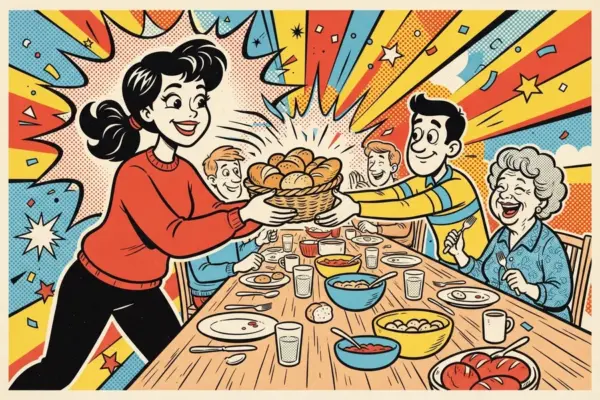
The Everyman
«You'd rather be reliable than impressive, full stop.»
The test is new — you are among the first hundred to take it.
You clock the exits and the backup plan before anyone else in the room even thinks to ask what happens if this goes wrong. This test lines up twelve of these roles side by side, and yours, reliably, is the Everyman.
The instinct to expect the rough version of events runs deep — you're braced for the delay before you've even left the house. You feel most at home around people who've had it hard. Other names for this same role: Orphan in the older books, Realist on the newest chart.
Several of these twelve roles sit quietly behind whichever one is loudest in you right now; whatever sorted you here works, but it was never built to double as a diagnosis. Still: reliable beats impressive, every time.

The Hero
«You'd rather act and be wrong than freeze and be safe.»
The test is new — you are among the first hundred to take it.
The room goes quiet when something breaks, and you're already moving before anyone's finished asking what happened — hands on the problem, questions later. Twelve roles walk through this quiz; the one that keeps showing up as you is the Hero.
Push you toward the edge of a hard situation and something shifts. You push back harder, not softer — it's the one move you don't have a backup for. Being seen as weak or unfair scares you more than getting hurt ever does.
Ask the people who've watched you handle a crisis — this isn't the only gear you have. Eleven quieter roles sit behind it. Sorting people this way is a genuine exercise, not a formal verdict, and it never claimed to be one. You'll take the dent over the retreat, and you already know it.

The Caregiver
«You noticed they needed help before they said a word.»
The test is new — you are among the first hundred to take it.
Someone in your life goes quiet in that particular way that means something's wrong, and you're already reorganizing your evening around them before they've asked for anything. Of the twelve roles this quiz measures, the one quietly running your calendar is the Caregiver.
Saying no to a person who needs something is close to physically difficult for you, even on the weeks you have nothing left to give, because what scares you isn't failing — it's watching someone go unhelped.
Would the other eleven roles in you vanish if this one went quiet for a week? Not likely — they're simply overshadowed. A quiz can spot a real pattern without ever getting close to a clinical exam. Still, somebody's glad tonight that you picked up the phone.

The Explorer
«You can't stay in one place for long without something feeling wrong.»
The test is new — you are among the first hundred to take it.
Six months into anything routine, you're already scanning for the exit, the side road, the version of this life you haven't tried yet. Out of the twelve roles on offer here, the Explorer is the one that keeps answering for you.
The same restlessness that gets you out the door can leave a half-finished life behind you — a course dropped, a city left, a plan abandoned two-thirds through. What actually scares you is getting stuck in one train of thought with no new door in sight.
Several of these twelve roles travel with you at once, this one simply getting more of the mileage right now. This reads more like a compass than a lab result — real direction, not exact science. Wherever the next door is, you're already halfway toward it.
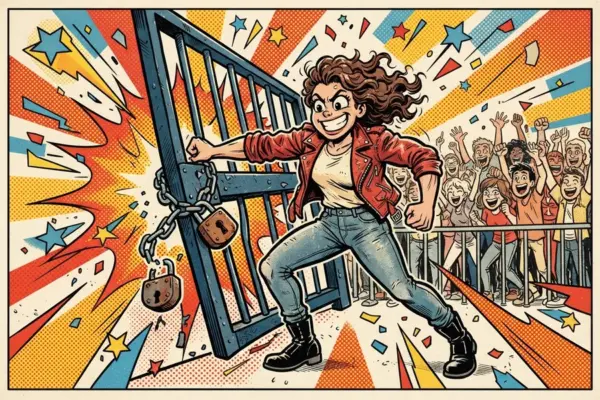
The Outlaw
«A rule doesn't earn your respect just for existing.»
The test is new — you are among the first hundred to take it.
Someone hands you a policy that makes no sense, and your first move isn't to follow it — it's to find out who benefits from it staying exactly as broken as it is. Twelve roles, and yours is the loudest to argue back: the Outlaw.
Even once an argument's been fully heard out, you tend to hold the opposing corner a little longer than the room wants. This exact role runs under two other names in the older material: Destroyer, then Revolutionary.
Rejecting the label doesn't make the other eleven roles disappear — they simply answer to you less often. Call this a rough sketch of you, not a clinical file — true in outline, not exact in every line. Systems get better because somebody refuses to just go along.

The Lover
«You'd trade almost anything for one undistracted hour together.»
The test is new — you are among the first hundred to take it.
You remember the small detail nobody else in the group bothered to notice about someone you care about, and you bring it up months later, exactly when it matters. This test sorts for twelve roles total; the one built for closeness, the Lover, is yours.
Open conflict with someone close is the thing you'll quietly delay for weeks if there's any other option on the table, and once two people in your circle are at odds, you can find yourself pulled toward a side before you've decided to pick one.
Think of this less as diagnosis and more as an honest, modest guess. Watch yourself for a week and you'll catch the other roles taking their turns too — this one just tends to run loudest in you. Closeness like that isn't a small thing to be good at.
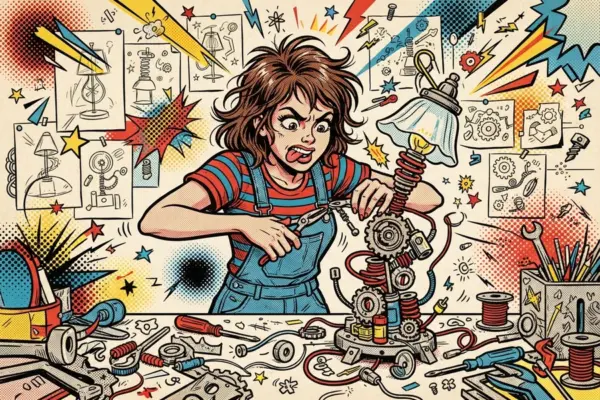
The Creator
«You'd rather build something imperfect than copy something proven.»
The test is new — you are among the first hundred to take it.
Somebody hands you a template, and within minutes you've mentally thrown half of it out for a version that's actually yours, even if it takes three times as long. Of the twelve possible roles here, the Creator is the one already building in your head.
There's a drawer somewhere. A folder, a garage corner, full of things you started with real excitement and left unfinished once the next idea arrived. And the ones you do finish rarely clear the bar you privately set for them.
Ever wonder what the other eleven roles in you are doing while this one builds? Mostly waiting their turn. Nothing about this was calibrated to clinical standards — it's a real read, kept intentionally rough around the edges. The unfinished drawer is the price, and the made thing is the point.

The Ruler
«Somebody has to run this, and it might as well be you.»
The test is new — you are among the first hundred to take it.
A group project stalls with no direction and six opinions pulling six ways, and you're the one who steps in, assigns the pieces, and sets a deadline nobody argues with. Twelve roles sit behind this quiz, and the one already organizing the room is the Ruler.
Once you're actually in charge of something, there's a real pull to run it strictly by the book, since disorder, more than most things, is what quietly unsettles you.
The sorting behind this is real work, just not the kind a clinic would sign its name to. Running the room doesn't cancel the other eleven roles in you — they simply wait for their moment. Somebody has to hold the whole shape of a thing together, and you're built for exactly that.

The Magician
«You see the one move that changes everything else.»
The test is new — you are among the first hundred to take it.
Everyone else is arguing over which piece to fix first, and you're the one who spots the single upstream adjustment that makes the other problems disappear on their own. Twelve roles hide behind these questions, and the Magician is the one running the pattern-match in your head.
The same instinct that finds the leverage point can talk you into believing one big move will fix everything. Certain problems actually need slow, unglamorous work instead of one clean stroke. You have to watch that the influence you carry doesn't tip into steering people rather than helping them see clearly.
Picture an ordinary Tuesday — nothing to fix. The other eleven roles run things then, and the sorting behind all this is a decent map, not a lab certificate. Not every room needs fixing, but when one does, you know where to press.

The Sage
«You need to actually understand something before you'll act on it.»
The test is new — you are among the first hundred to take it.
A decision gets rushed at you with half the facts missing, and you're the one who stops everyone to ask what's actually known here before a single step gets taken. Of the twelve roles this test tracks, the Sage is the one quietly gathering the facts before you speak.
Give you a hard question and there's a real chance you disappear into researching it instead of staying present with the people going through it. And once you've reasoned your way to a conclusion, you tend to hold it, even when the room pushes back hard.
Several of these roles run in you at once, this one simply holding the floor right now. What you're holding is evidence rather than proof: solid enough to trust, far too loose to certify. Being right isn't everything, but it's never nothing, either.

The Jester
«You can't sit in a tense room without reaching for a joke.»
The test is new — you are among the first hundred to take it.
The meeting turns awkward, someone says the wrong thing, and you crack the exact line that lets everyone breathe again and keep talking. Twelve roles sit behind this quiz, and yours is the one already looking for the joke: the Jester.
The unglamorous, repetitive parts of anything — the paperwork, the follow-up email, the third rehearsal of the same thing — are where your attention genuinely wanders, and every so often, a joke that felt light to you lands on someone as dismissing what they're actually carrying.
What happens to the other eleven roles while this one's cracking jokes? They're still there, just quieter. None of this comes from a lab coat; it's a real pattern, read honestly, not a clinical scorecard. A heavy room needs someone willing to lighten it, and that's usually you.
About this test
How this test works
The twelve roles behind this quiz trace back to a well-documented set of character archetypes, the kind used in both personality psychology and story analysis, not a private scoring method dreamed up on the spot. Each role rests on three ingredients: a driving want, a specific fear, and the habitual way it handles the two colliding.
What you choose across the quiz gets weighed against that framework rather than reduced to a single number on a scale, drawing loosely on narrative identity research — the study of how people build a sense of self through the stories they tell about their own lives. The output names a role, the one your everyday habits line up with best, and stops there: it isn't sizing up a trait on a sliding scale, and it isn't claiming you're the twin of anyone from a film, novel, or game.
A short list of honest caveats. Everything here comes from how you rated your own responses, not from watching you operate in the wild. Archetype research along these lines does exist and holds up decently, but it sits well below the bar of a clinical assessment, and most people show traces of several roles rather than exactly one — what surfaces here is simply whichever currently reads loudest, not a life sentence. Treat the whole thing as a fun way to think about your own patterns, not a screening result or anything resembling one.
Frequently asked questions
What kind of “character” does this quiz actually give me?
This isn't naming one specific character lifted from a movie, a novel, or a game. Think of it more as a personality role: your answers get sorted into one of twelve documented archetypes, each built around its own motivation rather than borrowed from someone else's story.
How many types are there, and where do they come from?
Twelve, taken from a long-running character-archetype framework already used in psychology and storytelling circles — nobody invented these specifically for this page. Every one of them centers on a distinct want, a distinct fear, and a typical way of handling both.
Is this test scientifically accurate?
Read it as a mirror, not a lab report. The framework behind this has some genuine research support, though on a modest scale rather than a clinical one — this is meant for fun and self-recognition, and landing on the same label as a friend doesn't mean you're carbon copies.
Do I only fit one of these roles, or could I get a different result later?
Very likely, yes. Most quiz-takers see pieces of themselves across a good handful of these twelve, and this result is just whichever one currently sits loudest for you — not proof the rest are missing.
What does OC mean, and is this an OC quiz?
OC stands for “original character” — someone's own invented character, usually for fan fiction or art. This is a separate exercise altogether: this quiz isn't asking you to build a character, it's typing the personality you already have.
Sources
- Pearson, C. S. (1991). Awakening the Heroes Within: Twelve Archetypes to Help Us Find Ourselves and Transform Our World. HarperOne.
- Mark, M., & Pearson, C. S. (2001). The Hero and the Outlaw: Building Extraordinary Brands Through the Power of Archetypes. McGraw-Hill.
- McPeek, R. (2008). The Pearson-Marr Archetype Indicator and Psychological Type. Journal of Psychological Type, 68(7), 52–66.
Three more tests on the same theme



Breakdown
There's a reason you answer the way you do
Most tests show you a slice of who you are. This one gets to the core: the classic 16-type personality test that goes back to Carl Jung, rebuilt from the ground up and way more accurate. It takes ten minutes, you only ever do it once — and you walk away with an answer most people never quite figure out: why you are the way you are. Why some people just get you, and why with others it's complicated. And that answer won't change: your type is yours for life.
Take the free testHow you compare
The test is new — you are among the first hundred to take it.
Three more tests on the same theme
About this test
How this test works
The twelve roles behind this quiz trace back to a well-documented set of character archetypes, the kind used in both personality psychology and story analysis, not a private scoring method dreamed up on the spot. Each role rests on three ingredients: a driving want, a specific fear, and the habitual way it handles the two colliding.
What you choose across the quiz gets weighed against that framework rather than reduced to a single number on a scale, drawing loosely on narrative identity research — the study of how people build a sense of self through the stories they tell about their own lives. The output names a role, the one your everyday habits line up with best, and stops there: it isn't sizing up a trait on a sliding scale, and it isn't claiming you're the twin of anyone from a film, novel, or game.
A short list of honest caveats. Everything here comes from how you rated your own responses, not from watching you operate in the wild. Archetype research along these lines does exist and holds up decently, but it sits well below the bar of a clinical assessment, and most people show traces of several roles rather than exactly one — what surfaces here is simply whichever currently reads loudest, not a life sentence. Treat the whole thing as a fun way to think about your own patterns, not a screening result or anything resembling one.
Frequently asked questions
What kind of “character” does this quiz actually give me?
This isn't naming one specific character lifted from a movie, a novel, or a game. Think of it more as a personality role: your answers get sorted into one of twelve documented archetypes, each built around its own motivation rather than borrowed from someone else's story.
How many types are there, and where do they come from?
Twelve, taken from a long-running character-archetype framework already used in psychology and storytelling circles — nobody invented these specifically for this page. Every one of them centers on a distinct want, a distinct fear, and a typical way of handling both.
Is this test scientifically accurate?
Read it as a mirror, not a lab report. The framework behind this has some genuine research support, though on a modest scale rather than a clinical one — this is meant for fun and self-recognition, and landing on the same label as a friend doesn't mean you're carbon copies.
Do I only fit one of these roles, or could I get a different result later?
Very likely, yes. Most quiz-takers see pieces of themselves across a good handful of these twelve, and this result is just whichever one currently sits loudest for you — not proof the rest are missing.
What does OC mean, and is this an OC quiz?
OC stands for “original character” — someone's own invented character, usually for fan fiction or art. This is a separate exercise altogether: this quiz isn't asking you to build a character, it's typing the personality you already have.
Sources
- Pearson, C. S. (1991). Awakening the Heroes Within: Twelve Archetypes to Help Us Find Ourselves and Transform Our World. HarperOne.
- Mark, M., & Pearson, C. S. (2001). The Hero and the Outlaw: Building Extraordinary Brands Through the Power of Archetypes. McGraw-Hill.
- McPeek, R. (2008). The Pearson-Marr Archetype Indicator and Psychological Type. Journal of Psychological Type, 68(7), 52–66.
