
Idiot Test
Something today was sitting right in front of you, and you walked straight past it — this test turns that into a named pattern for your everyday attention, not a score, in about 4 minutes, with no hidden correct answer to catch you out.
No sign-up. Your result right away.

Steel Trap
«Nothing gets past you, and it never feels accidental.»
The test is new — you are among the first hundred to take it.
You're the friend the group chat quietly leans on before a trip — you already caught the wrong date, the missing address, and the reservation booked for the wrong night, all in one scroll. Memory, plain sight, fine print — none of it slips past you.
That kind of coverage doesn't come free, though — it runs in the background even when you'd rather it didn't, and switching it off for an evening takes real, deliberate effort. Being the designated catcher for everyone else gets tiring, even when nobody notices you're doing it.
This describes attention, not intelligence — it isn't ranking you against anyone else, here or anywhere. Even a steel trap needs a night off.

Steady Catch
«You don't run on high alert — you just don't need to.»
The test is new — you are among the first hundred to take it.
You leave the house most mornings without a second thought, keys already in hand. Then, out of nowhere, you're in the driveway patting your pockets for a phone sitting on the counter — proof that your attention holds until one particular condition breaks it.
The slips that do get through tend to land at the worst possible second — right as you're already out the door, phone forgotten, or backing out of the driveway — nothing dramatic, just a small tax paid at an inconvenient time.
None of this is a comment on how capable you are — it's just where your attention happens to hold and where it happens to give, no ranking involved. You're steady enough that the exceptions are the whole story.
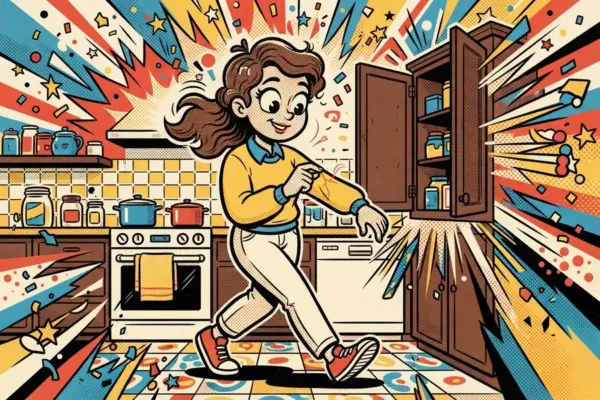
Half Awake
«You're locked in for some of this, elsewhere for the rest.»
The test is new — you are among the first hundred to take it.
You'll double-check a form before hitting submit and catch every typo, then walk straight past your own reflection in a shop window without noticing the coffee stain on your shirt. Depending on the room, you're either fully locked in or somewhere else completely.
You catch every line of small print on a lease the same afternoon you completely miss the pot boiling over on the next burner. One area gets the full beam of your attention; the rest gets whatever's left over.
This isn't about intelligence or effort — it's about which kind of attention a given moment happens to call for, and whether that's the kind you brought that day; next week, the same two tasks might trade places entirely.
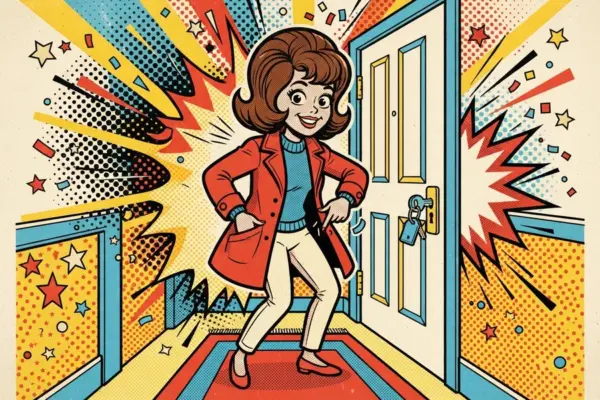
The Second Look
«Twice today, something was right there and you still missed it.»
The test is new — you are among the first hundred to take it.
You reread the same paragraph of the lease three times and still sign in the wrong spot. An hour later, you walk right past your own car in the parking lot, keys already in hand, scanning every row but the right one. Paperwork, parking lot — same day, same slip.
You still miss the street sign that's been there for years, and you still send off a reply answering the wrong question entirely. Small on their own — but a whole week of them leaves you with a lot of second looks.
None of this says anything about how capable you are in general — these are documented lapses that show up in plenty of otherwise attentive people, under exactly these everyday conditions. So why does the parking lot always know before you do?

Autopilot
«You checked twice, and the mistake still made it through.»
The test is new — you are among the first hundred to take it.
You set a reminder specifically so you wouldn't forget, and you still walk past it. You proofread the email a second time before sending, on purpose, slowly, and the wrong name is still in the greeting when it lands in someone's inbox.
It isn't one bad day repeating — it's memory, things right in front of you, and the exact words on a page all giving way at once, even when you've built in a safety net for each one. The net catches some of it. Not all.
This is a pattern of attention, not a verdict on your mind — the same everyday conditions produce exactly this in people who are, by every other measure, paying close attention. Whatever you came here worried about, it isn't this.
About this test
How this test works
This test works as a self-report: you're describing how often certain daily lapses in attention or memory turn up for you. None of it is scored as correct or incorrect, and none of the fifteen scenarios hides a trap — you're simply reporting how these moments actually go for you. It looks at three ordinary areas: objects or details that sat in plain view yet went unnoticed (a pattern researchers call inattentional blindness), how much of what you read or hear actually sinks in before you act on it, and small day-to-day slips in memory and attention. Since it leans on what you say about your habits, rather than a stopwatch or an outside observer, it carries the ordinary limits of any self-report — the same territory as everyday absent-mindedness research. IQ and general intelligence sit outside what any of this measures, and it never lines your abilities up against somebody else's.
Frequently asked questions
Is the idiot test real?
Yes — just not in the way a trivia quiz is real. There's no version of this where an answer counts as a win or a miss, no hidden timer, and no item built to trip you up. You're simply telling it what these small moments actually look like in your own life, and it hands that back as a pattern, not a grade.
What does it mean if I get a low score?
This test doesn't score you as pass or fail, so a low score isn't really the right way to read it. A result toward the higher-slip end just points to a pattern in how attention behaved on these fifteen scenes — it says nothing about who you are as a person, and it isn't a diagnosis of any kind.
Is this the same as an IQ test?
No — intelligence and IQ aren't part of what this measures at all, and it doesn't sit you next to anybody else on a scale. It's a much narrower, more ordinary question: how often small everyday details get past your attention.
Why do smart people fall for trick questions or miss obvious things?
Attention has limits for everyone, and those limits show up under completely ordinary conditions — a busy moment, a distracting task, a page skimmed instead of read closely. Studies of everyday attention lapses find exactly this in people who are, by any other measure, paying close attention. It's a feature of how attention works under everyday pressure, not a comment on how capable you are.
Sources
- Broadbent, D. E., Cooper, P. F., FitzGerald, P., & Parkes, K. R. (1982). The Cognitive Failures Questionnaire (CFQ) and its correlates. British Journal of Clinical Psychology, 21(1), 1–16. doi:10.1111/j.2044-8260.1982.tb01421.x
- Simons, D. J., & Chabris, C. F. (1999). Gorillas in our midst: Sustained inattentional blindness for dynamic events. Perception, 28(9), 1059–1074. doi:10.1068/p281059
- Krosnick, J. A. (1991). Response strategies for coping with the cognitive demands of attitude measures in surveys. Applied Cognitive Psychology, 5(3), 213–236. doi:10.1002/acp.2350050305
Three more tests on the same theme



Breakdown
There's a reason you answer the way you do
Most tests show you a slice of who you are. This one gets to the core: the classic 16-type personality test that goes back to Carl Jung, rebuilt from the ground up and way more accurate. It takes ten minutes, you only ever do it once — and you walk away with an answer most people never quite figure out: why you are the way you are. Why some people just get you, and why with others it's complicated. And that answer won't change: your type is yours for life.
Take the free testHow you compare
The test is new — you are among the first hundred to take it.
Three more tests on the same theme
About this test
How this test works
This test works as a self-report: you're describing how often certain daily lapses in attention or memory turn up for you. None of it is scored as correct or incorrect, and none of the fifteen scenarios hides a trap — you're simply reporting how these moments actually go for you. It looks at three ordinary areas: objects or details that sat in plain view yet went unnoticed (a pattern researchers call inattentional blindness), how much of what you read or hear actually sinks in before you act on it, and small day-to-day slips in memory and attention. Since it leans on what you say about your habits, rather than a stopwatch or an outside observer, it carries the ordinary limits of any self-report — the same territory as everyday absent-mindedness research. IQ and general intelligence sit outside what any of this measures, and it never lines your abilities up against somebody else's.
Frequently asked questions
Is the idiot test real?
Yes — just not in the way a trivia quiz is real. There's no version of this where an answer counts as a win or a miss, no hidden timer, and no item built to trip you up. You're simply telling it what these small moments actually look like in your own life, and it hands that back as a pattern, not a grade.
What does it mean if I get a low score?
This test doesn't score you as pass or fail, so a low score isn't really the right way to read it. A result toward the higher-slip end just points to a pattern in how attention behaved on these fifteen scenes — it says nothing about who you are as a person, and it isn't a diagnosis of any kind.
Is this the same as an IQ test?
No — intelligence and IQ aren't part of what this measures at all, and it doesn't sit you next to anybody else on a scale. It's a much narrower, more ordinary question: how often small everyday details get past your attention.
Why do smart people fall for trick questions or miss obvious things?
Attention has limits for everyone, and those limits show up under completely ordinary conditions — a busy moment, a distracting task, a page skimmed instead of read closely. Studies of everyday attention lapses find exactly this in people who are, by any other measure, paying close attention. It's a feature of how attention works under everyday pressure, not a comment on how capable you are.
Sources
- Broadbent, D. E., Cooper, P. F., FitzGerald, P., & Parkes, K. R. (1982). The Cognitive Failures Questionnaire (CFQ) and its correlates. British Journal of Clinical Psychology, 21(1), 1–16. doi:10.1111/j.2044-8260.1982.tb01421.x
- Simons, D. J., & Chabris, C. F. (1999). Gorillas in our midst: Sustained inattentional blindness for dynamic events. Perception, 28(9), 1059–1074. doi:10.1068/p281059
- Krosnick, J. A. (1991). Response strategies for coping with the cognitive demands of attitude measures in surveys. Applied Cognitive Psychology, 5(3), 213–236. doi:10.1002/acp.2350050305
